VLoveof Nature

ONE HOME, MANY GREEN CORNERS

A greener home, corner by corner.

From a single desk pot to a whole balcony. Find the right spot, start small and keep care simple.

02 · Balconies & yards

Narrow sunny balcony

Compact pots for sun-loving plants

Your actual conditions

Presets are a starting point. Real light and growing space determine whether plants can thrive.

Exclude the walkway. For pots this is the starting footprint; for plants in open soil it is the open strip for roots. It is not the mature canopy size.

Only removes plants whose profile says they do not suit it (frost, heat, sea wind and salt); this is not a climate map. Temperate trees appear only in the uplands.

Kept in this tab, never in the link. This does not mean edible or safe for young children.

A manageable planting layout

Start with 2–3 pots along the inner edge and keep the middle clear. One kind per pot: a succulent, a seasonal flower and something edible such as chilli; larger plants need their own pot and canopy space.

Simple, steady care

Check the mix more often in heat or wind; reduce watering in rain. Group plants with similar water needs for one easy round of care.

Before you plant

Keep pots inside the railing. Western exposure and wind can dry small pots very quickly.

Plants to start with

Suggestions for your current conditions: 10

Layout ideas to check against your local climate, season and cultivar. Start with 1–3 pots; expand once they settle in.

Low edging or ground cover

Lower maintenance

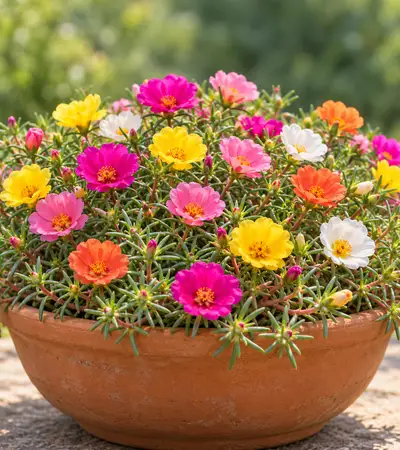
Moss rose

Portulaca grandiflora

Low and drought-tolerant, flowers in full sun and fills gaps from cuttings.

One thing to remember

Let the mix dry well inside before watering; check with a wooden stick or lift the pot. Avoid a fixed watering calendar.

Children & pets

The genus Portulaca is listed by ASPCA as toxic to dogs, cats and horses due to soluble calcium oxalates (tremors, salivation, rarely kidney failure). Keep pets from chewing it.

Minimum starting space (pot or open soil strip)
20 cm
Profile size at maturity (height × spread)
20 × 30 cm

Young plants grow. Cultivar, growing conditions and pruning affect size; relocate when the canopy outgrows the space.

See planting & care

Succulent, drought-tolerant

Lower maintenance

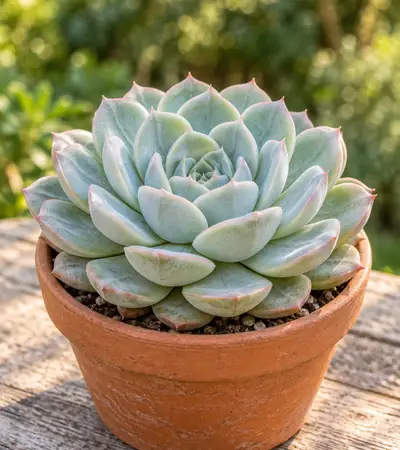
Mexican snowball

Echeveria elegans

A succulent rosette for a small pot, non-toxic to dogs and cats; needs bright light, cactus mix and very little water.

One thing to remember

Let the mix dry well inside before watering; check with a wooden stick or lift the pot. Avoid a fixed watering calendar.

Children & pets

ASPCA lists Echeveria elegans (hens and chickens) as non-toxic to dogs, cats and horses. Still discourage pets from chewing the fleshy leaves.

Minimum starting space (pot or open soil strip)
15 cm
Profile size at maturity (height × spread)
15 × 20 cm

Young plants grow. Cultivar, growing conditions and pruning affect size; relocate when the canopy outgrows the space.

See planting & care

Flowering plant

Lower maintenance

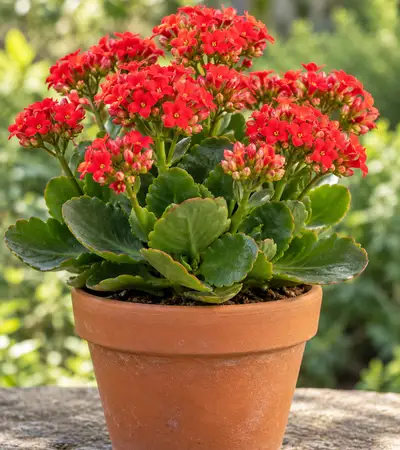
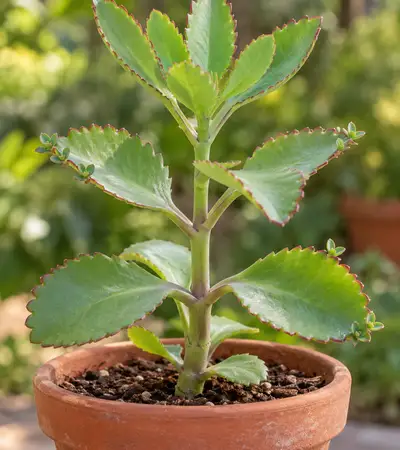
Flaming Katy

Kalanchoe blossfeldiana

Small flower heads last for weeks on drought-tolerant succulent leaves; water sparingly, avoid standing water, and it is toxic to pets.

One thing to remember

Let the mix dry well inside before watering; check with a wooden stick or lift the pot. Avoid a fixed watering calendar.

Children & pets

Kalanchoe contains bufadienolides: ASPCA lists it as toxic to dogs and cats (vomiting, diarrhea, rarely abnormal heart rhythm). Keep away from pets and children.

Minimum starting space (pot or open soil strip)
25 cm
Profile size at maturity (height × spread)
30 × 30 cm

Young plants grow. Cultivar, growing conditions and pruning affect size; relocate when the canopy outgrows the space.

See planting & care

Succulent, drought-tolerant

Lower maintenance

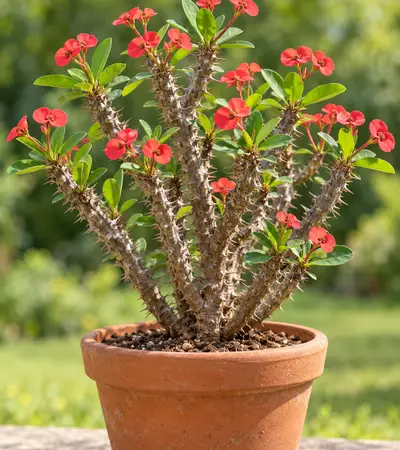
Crown of thorns

Euphorbia milii

Small bright flowers and excellent sun and drought tolerance; spiny stems and an irritating, toxic sap, so keep off narrow walkways.

One thing to remember

Let the mix dry well inside before watering; check with a wooden stick or lift the pot. Avoid a fixed watering calendar.

Children & pets

All parts are toxic if eaten; the white latex causes contact dermatitis, stinging of skin and eyes, nausea and vomiting in people and pets (Euphorbia is listed by ASPCA as toxic to dogs, cats and horses due to irritant sap). Wear gloves and eye protection when pruning, wash hands and tools afterwards; keep from children and pets.

Minimum starting space (pot or open soil strip)
40 cm
Profile size at maturity (height × spread)
80 × 60 cm

Young plants grow. Cultivar, growing conditions and pruning affect size; relocate when the canopy outgrows the space.

See planting & care

Herb or edible

Lower maintenance

Edible

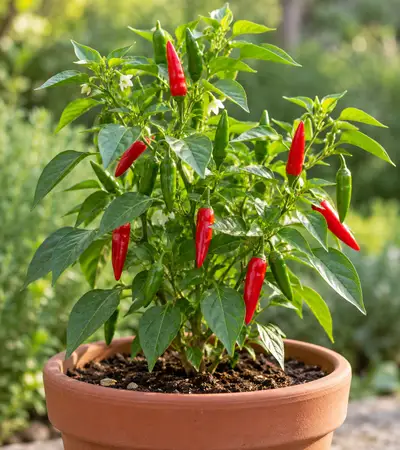
Chili pepper

Capsicum annuum

Chilli in a pot 25–30 cm deep for picking fruit gradually; needs 6–8 hours of sun, afternoon shade in extreme heat and hand washing after picking.

One thing to remember

Check the top 2–3 cm; water thoroughly only when dry and let it drain fully. Never leave the pot base sitting in water.

Children & pets

Chili fruit contains capsaicin which burns: do not rub eyes after touching, wash hands after picking and wear gloves when processing large amounts; keep from young children. Note ASPCA's 'ornamental pepper' is a Solanum (toxic), not Capsicum chili.

Minimum starting space (pot or open soil strip)
40 cm
Profile size at maturity (height × spread)
80 × 50 cm

Young plants grow. Cultivar, growing conditions and pruning affect size; relocate when the canopy outgrows the space.

See planting & care

Herb or edible

Lower maintenance

Edible

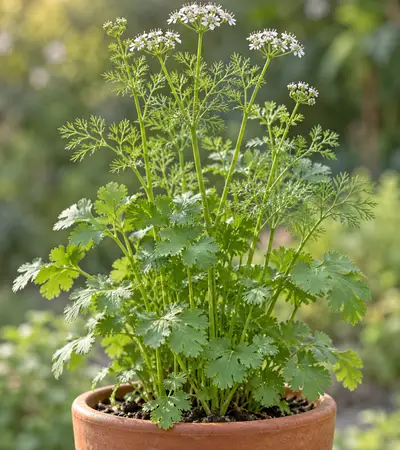
Coriander

Coriandrum sativum

Coriander is sown in place, resown every 2–3 weeks, and bolts early in heat, so shade it from afternoon sun.

One thing to remember

Keep the mix lightly moist and check more often in heat; avoid both sogginess and complete drying. Needs more regular checks than drought-tolerant plants.

Children & pets

ASPCA lists cilantro as non-toxic to dogs, cats and horses. Wash before eating.

Minimum starting space (pot or open soil strip)
25 cm
Profile size at maturity (height × spread)
40 × 20 cm

Young plants grow. Cultivar, growing conditions and pruning affect size; relocate when the canopy outgrows the space.

See planting & care

Herb or edible

Lower maintenance

Fragrant

Edible

Folk use

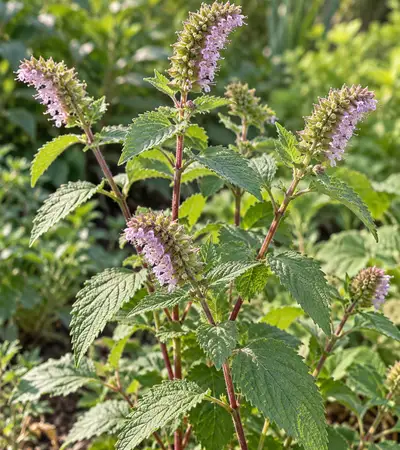
Vietnamese balm

Elsholtzia ciliata

A lemon-scented herb for meat, soups and salads that grows fast in sun and moist soil. Give it its own pot and cut the flowers before they seed so it does not spread as a weed.

One thing to remember

Keep the mix lightly moist and check more often in heat; avoid both sogginess and complete drying. Needs more regular checks than drought-tolerant plants.

Traditional use

PFAF records folk use for colds, fevers, headaches and diarrhoea (rated 2/5), harvested in flower and dried.

Folk-use notes are quoted from reference sources, are not treatment advice and do not replace medical advice. Never treat an illness with a plant on your own.

Children & pets

PFAF lists no known hazards. Wikipedia notes Connecticut (USA) bans it and classes it as a noxious weed because it spreads, so do not let it seed everywhere and never release it into the wild. No toxicity rating exists for dogs, cats or young children, so it is not claimed safe. The folk-use information below does not replace medical advice.

Minimum starting space (pot or open soil strip)
25 cm
Profile size at maturity (height × spread)
60 × 30 cm

Young plants grow. Cultivar, growing conditions and pruning affect size; relocate when the canopy outgrows the space.

See planting & care

Herb or edible

Lower maintenance

Edible

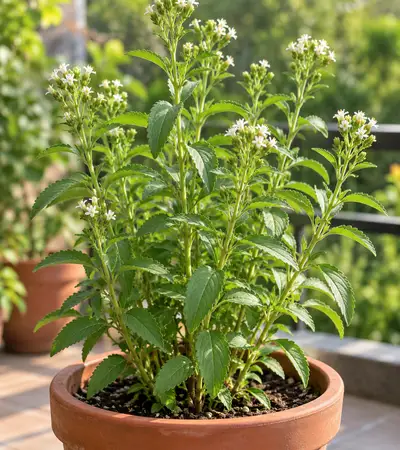
Stevia

Stevia rebaudiana

Sweet leaves that stand in for sugar in tea and drinks; needs full sun and moist soil and cannot take frost. Use in moderation, with care if you have diabetes.

One thing to remember

Keep the mix lightly moist and check more often in heat; avoid both sogginess and complete drying. Needs more regular checks than drought-tolerant plants.

Children & pets

PFAF says it may cause dizziness, headache, flatulence, nausea and muscle pain, with caution for diabetic patients and people on blood-pressure-lowering drugs. Wikipedia says the WHO's JECFA allows a daily intake of up to 4 mg of steviol glycosides per kg of body mass, while in 2019 the US FDA placed an import alert on stevia leaves and crude extracts over safety concerns. No rating exists for dogs, cats or young children. PFAF rates its medicinal use 0/5 and records no traditional medicinal uses, so this is a sweet culinary herb, not a medicine.

Minimum starting space (pot or open soil strip)
30 cm
Profile size at maturity (height × spread)
50 × 30 cm

Young plants grow. Cultivar, growing conditions and pruning affect size; relocate when the canopy outgrows the space.

See planting & care

Succulent, drought-tolerant

Lower maintenance

Folk use

Cathedral bells

Kalanchoe pinnata

Easy to propagate and undemanding; contain in a pot to limit spread.

One thing to remember

Let the mix dry well inside before watering; check with a wooden stick or lift the pot. Avoid a fixed watering calendar.

Traditional use

Wikipedia records leaf juice used in folk medicine for kidney stones (some preliminary research), headaches and fevers, without full evidence. The plant contains bufadienolides that cause heart poisoning in animals, so keep it from dogs, cats and young children.

Folk-use notes are quoted from reference sources, are not treatment advice and do not replace medical advice. Never treat an illness with a plant on your own.

Children & pets

Kalanchoe contains bufadienolide cardiac glycosides: ASPCA lists it as toxic to dogs and cats (vomiting, diarrhea, rarely abnormal heart rhythm); NParks Singapore notes it is toxic if ingested. Do not use it as medicine; keep from pets and children.

Minimum starting space (pot or open soil strip)
40 cm
Profile size at maturity (height × spread)
100 × 60 cm

Young plants grow. Cultivar, growing conditions and pruning affect size; relocate when the canopy outgrows the space.

See planting & care

Low edging or ground cover

Lower maintenance

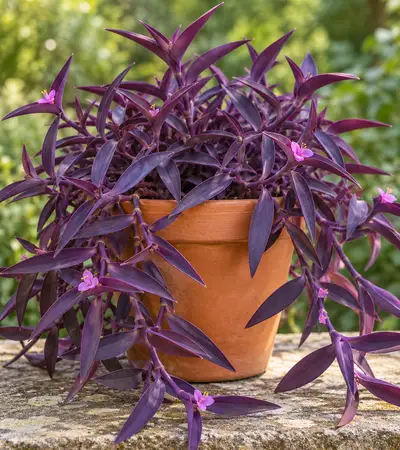
Purple heart

Tradescantia pallida

Low and easy from cuttings; pinch for fullness and contain in its bed.

One thing to remember

Check the top 2–3 cm; water thoroughly only when dry and let it drain fully. Never leave the pot base sitting in water.

Children & pets

Tradescantia is listed by ASPCA as toxic to dogs, cats and horses (dermatitis). The sap contains calcium oxalate and may irritate skin or cause a rash in sensitive people. Wear gloves when pruning; keep away from pets and children.

Minimum starting space (pot or open soil strip)
25 cm
Profile size at maturity (height × spread)
30 × 50 cm

Young plants grow. Cultivar, growing conditions and pruning affect size; relocate when the canopy outgrows the space.

See planting & care
Explore the full plant library

Four habits for lasting greenery

01

Match the light

Observe morning and afternoon sun at the actual spot. Acclimatise new plants gradually; low light never means no light.

02

Check before watering

Set aside a weekly check. Heat, wind and hanging pots need more frequent checks. Water only the plants that need it, not every pot for convenience.

03

Group to simplify

Group similar water needs. Use draining pots and remove damaged leaves. Feed only during active growth, following the label; do not force a struggling plant.

04

Start small, then expand

Try 1–3 pots for a few weeks. Yellow leaves and soft stems: check moisture and drainage first. Scorched leaves: reassess sun. Isolate plants with pests.

Further reading

Species references are on each care page. Green-roof advice must be adapted to the actual structure and local climate.