
Purple heart
Tradescantia pallida
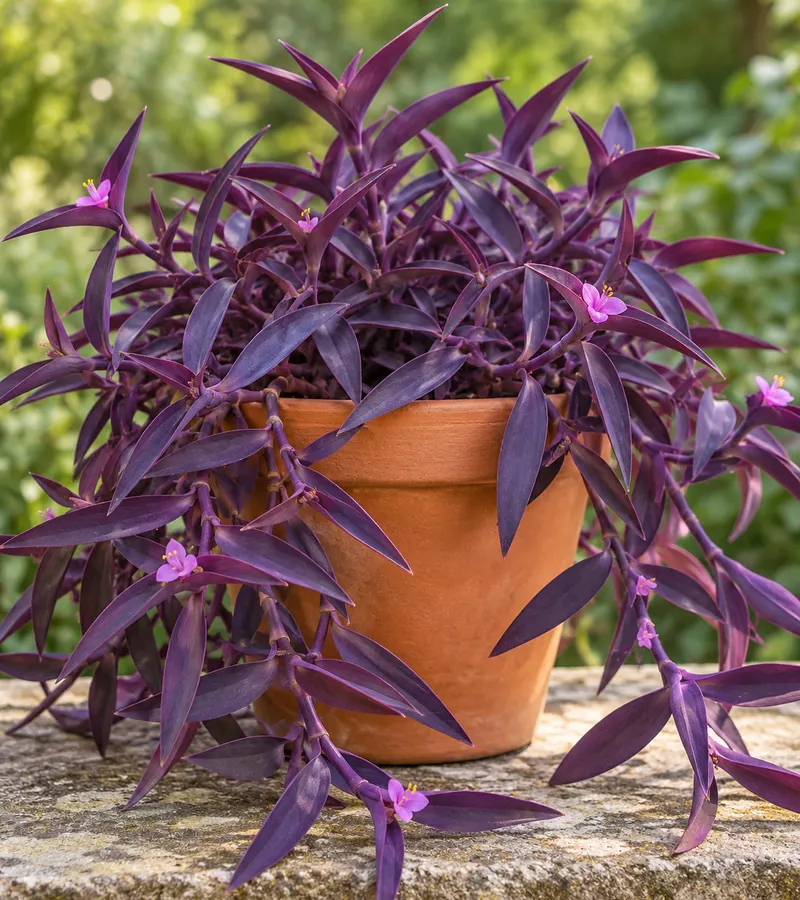
Deep purple trailing stems and leaves quickly fill a pot or bed edge.
Care and placement
Likes plenty of light (4–6 hours of sun or very bright indirect light) for deep purple colour; let the top 2–3 cm dry between waterings; very easy to grow.
Draft mature dimensions
Maximum height (cm): 30 cm · Maximum spread (cm): 50 cm
Things to consider
Tradescantia is listed by ASPCA as toxic to dogs, cats and horses (dermatitis). The sap contains calcium oxalate and may irritate skin or cause a rash in sensitive people. Wear gloves when pruning; keep away from pets and children.
How to grow and care for it
Planting and pot
Plant in a pot or hanging basket with a light, well-draining mix (add perlite), or as a sunny border. Repot when roots fill the pot.
Light
Bright light gives the deepest purple; dim spots fade leaves to greenish-brown. Some sources note that very harsh sun can dull the colour.
Watering
Err on the dry side: let the top 2–3 cm dry, then water thoroughly. Overwatering causes root rot.
Feeding
Half-strength balanced liquid fertilizer monthly in spring and summer; stop in autumn and winter.
Pruning
Pinch and trim stems regularly, cutting just above a node, to keep it full rather than stretched.
Propagation
Very easy from cuttings: take 10–15 cm stem sections, strip the lowest 2–3 cm of leaves, root in water (no leaves submerged) or moist mix; roots form quickly.
Pests and common problems
Generally pest-resistant; aphids and spider mites occasionally (indoors), scale or mealybugs outdoors. Overwatering causes root rot.
For plentiful, healthy leaves
For abundant, deep purple foliage: plenty of light, frequent pinching, sparing water and light feeding in warm months. Small pink flowers appear sporadically in good sun.