
Cathedral bells
Kalanchoe pinnata
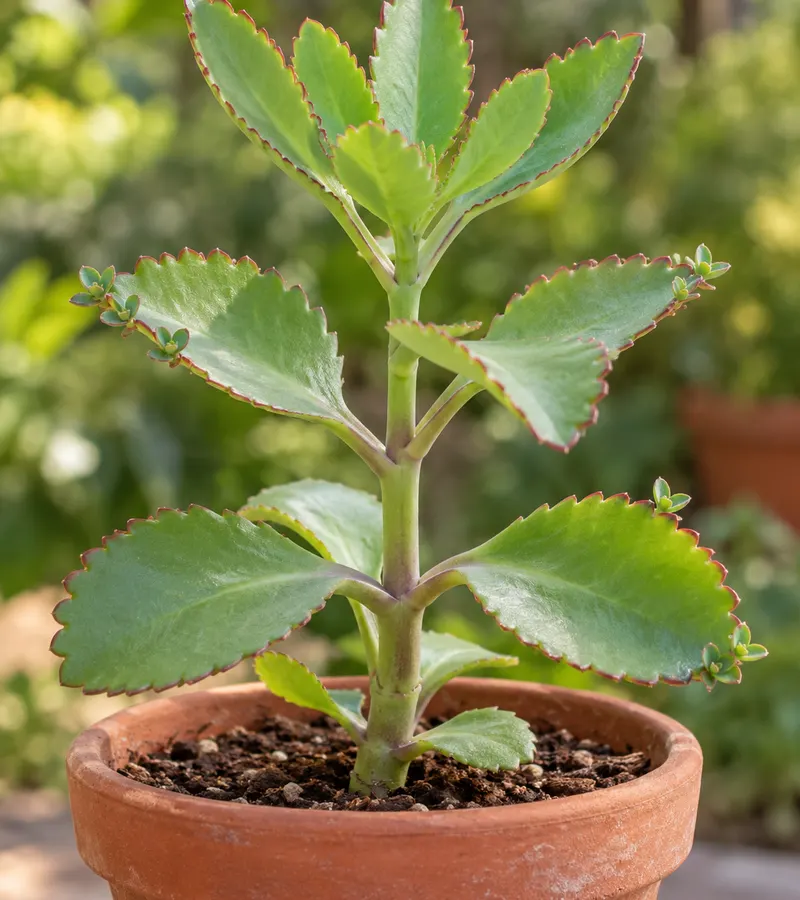
Fleshy scalloped leaves sprout plantlets along their edges and survive easily.
Care and placement
Prefers bright indirect light to gentle sun and tolerates drought: let the mix dry fully between waterings; well-drained soil; protect from frost.
Draft mature dimensions
Maximum height (cm): 100 cm · Maximum spread (cm): 60 cm
Things to consider
Kalanchoe contains bufadienolide cardiac glycosides: ASPCA lists it as toxic to dogs and cats (vomiting, diarrhea, rarely abnormal heart rhythm); NParks Singapore notes it is toxic if ingested. Do not use it as medicine; keep from pets and children.
How to grow and care for it
Planting and pot
Use a well-draining mix (cactus mix or soil with sand or perlite) in a pot with drainage holes; plantlets or leaves laid on moist mix will root.
Light
Bright indirect light to gentle sun (NParks: full sun to semi-shade). Low light makes it leggy; prolonged harsh sun can burn leaves.
Watering
Leaves and stems store water so it tolerates drought: let the mix dry fully between waterings (about weekly in summer, once or twice a month when cool). Waterlogging is the main enemy and rots roots.
Feeding
Diluted balanced fertilizer monthly in spring and summer; it does not need heavy feeding.
Pruning
Cut tips for bushiness and remove leggy or yellowed stems; pick up fallen leaves so plantlets do not spread everywhere.
Propagation
Very easy: small plantlets form in the notches of leaf margins; set a leaf (with a bit of stalk) on moist soil to root, or pot up the plantlets. Stem cuttings and air layering also work.
Pests and common problems
Few pests; root rot from waterlogging is the main issue. In warm climates it can turn weedy since plantlets form from fallen leaves — control leaf drop and plantlets.
For plentiful, healthy leaves
For plump leaves and many plantlets: bright light, sparing water, sharp drainage and light feeding in warm months. Mature plants bear drooping bell-shaped flower clusters.