
Moss rose
Portulaca grandiflora
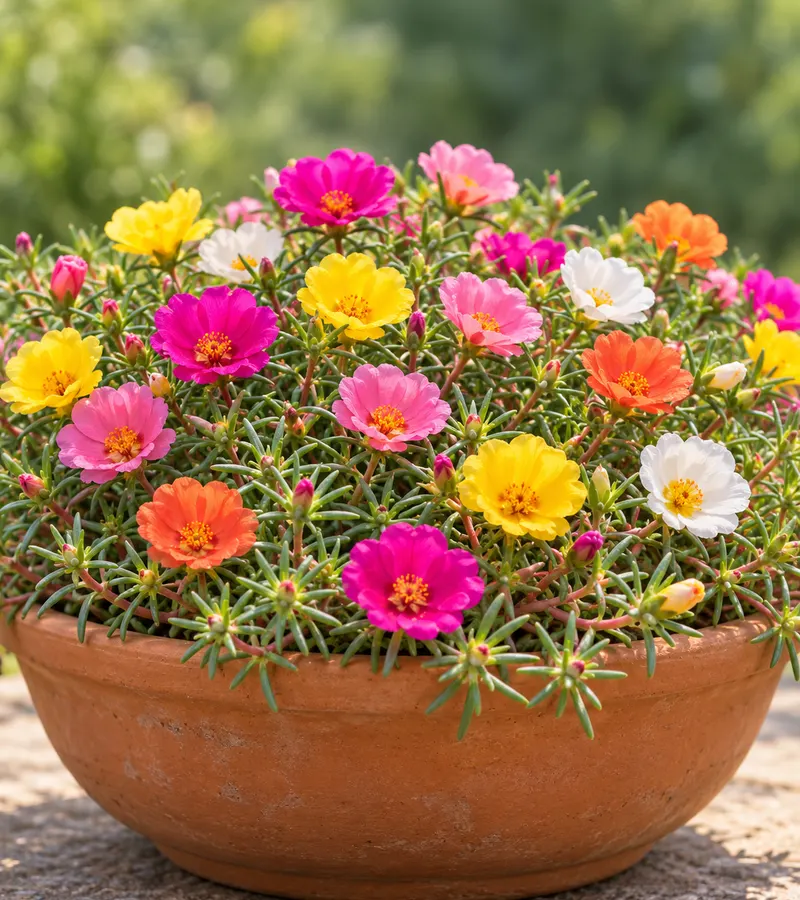
Colourful flowers open in sunshine over a low carpet that thrives in heat.
Care and placement
Needs full sun (6–8 hours), sandy well-drained soil, sparing water and little fertilizer; loves heat; flowers open in sunshine.
Draft mature dimensions
Maximum height (cm): 20 cm · Maximum spread (cm): 30 cm
Things to consider
The genus Portulaca is listed by ASPCA as toxic to dogs, cats and horses due to soluble calcium oxalates (tremors, salivation, rarely kidney failure). Keep pets from chewing it.
How to grow and care for it
Planting and pot
Use sandy, well-drained soil (pH 6.5–7.5) in a shallow pot or sunny bed. Direct-sow once nights stay above about 15 °C; roots are shallow so avoid waterlogging.
Light
Full sun, at least 6–8 hours; shade makes it leggy with few flowers. Blooms open with sun and close when overcast.
Watering
Shallow roots rot easily: water when the top 2–5 cm is dry, then soak, or 1–2 times a week, more in hot dry spells. Tolerates drought well.
Feeding
Prefers lean soil: little or no fertilizer; rich soil or overfeeding gives leaves instead of flowers. One source uses 5-10-10 monthly in the growing season.
Pruning
Trim spent flowers to keep it tidy and bloom more (some sources say flowers self-clean and need little deadheading). A leggy plant can be cut back by half in midsummer with one light feed.
Propagation
Seed (germinates in 10–14 days at 21–27 °C; barely cover since light aids germination; blooms about 45 days after sowing) or 10 cm non-flowering tip cuttings with the lower half stripped, set in moist mix with afternoon shade; roots form in 7–14 days and keep the parent's flower colour.
Pests and common problems
Few problems; mainly root rot when overwatered and legginess in low sun. It self-seeds and can spread.
For more flowers
For abundant flowers: the sunniest spot, lean well-drained soil, sparing water, little fertilizer, deadheading when needed, and renewing old plants from cuttings.