
Chili pepper
Capsicum annuum
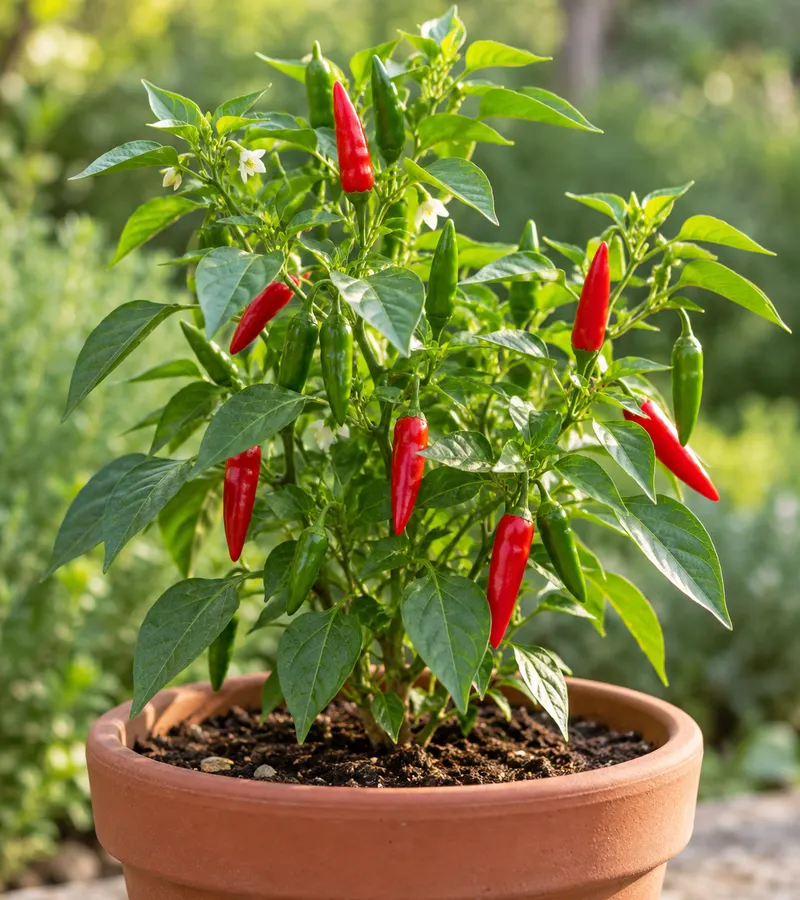
Small green and red fruit on a low plant, fine in pots on a sunny balcony.
Care and placement
Needs 6–8 hours of sun, a pot at least 25–30 cm deep, even moisture without waterlogging and 18–26 °C; flowers drop above about 29–35 °C so shade from afternoon sun; balanced feed plus phosphorus and potassium at flowering.
Draft mature dimensions
Maximum height (cm): 80 cm · Maximum spread (cm): 50 cm
Things to consider
Chili fruit contains capsaicin which burns: do not rub eyes after touching, wash hands after picking and wear gloves when processing large amounts; keep from young children. Note ASPCA's 'ornamental pepper' is a Solanum (toxic), not Capsicum chili.
How to grow and care for it
Planting and pot
Plant in a pot at least 25–30 cm deep with drainage holes (a heavy pot steadies it in wind), loose humus-rich mix; sow seed or set transplants when warm. Mulch to hold moisture.
Light
Full sun 6–8+ hours; above 35 °C fruit set drops and flowers abort — shade the afternoon sun and keep moisture steady.
Watering
Keep soil moist but not soggy; erratic watering causes blossom-end rot and stress, overwatering causes root rot; mulch to conserve moisture.
Feeding
Balanced liquid fertilizer (10-10-10 or 20-20-20) at half strength every 2–3 weeks while growing; add phosphorus and potassium at flowering and fruiting and avoid excess nitrogen. (Sources differ on stopping once fruit sets.)
Pruning
Pinch young plants to branch; remove yellow leaves; lightly thin dense branches for airflow.
Propagation
Sow seed (start in trays then plant out when warm). The plant is self-pollinating; gentle shaking or hand-pollination improves fruit set.
Pests and common problems
NC State: watch for aphids and whiteflies; also cutworms, pepper maggots, Colorado potato beetles and spider mites. Sunscald (large tan sunken soft areas); blossom-end rot from erratic watering. Flowers drop with extreme heat or cold, strong wind, high humidity or nutrient problems.
For heavy fruiting
For heavy fruiting: 6–8 hours of sun, 18–26 °C (shade in extreme heat), steady watering, extra phosphorus–potassium at flowering, no excess nitrogen, shaking to aid pollination and regular picking of ripe fruit to prompt more.