
Crown of thorns
Euphorbia milii
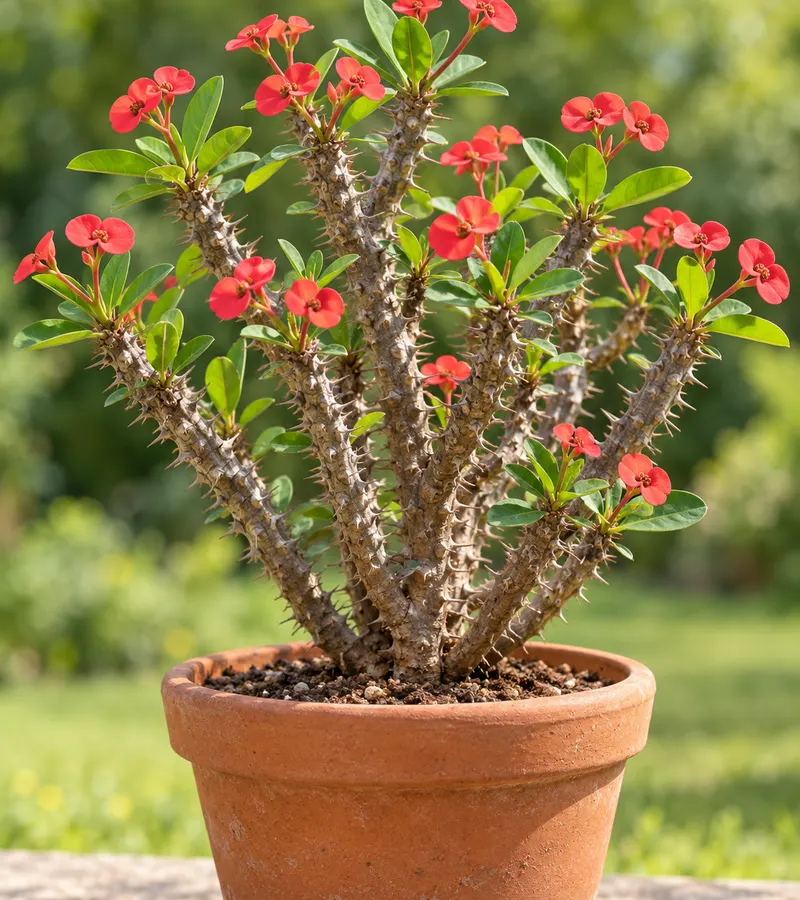
Thorny stems with small bright flowers, very tolerant of heat and drought.
Care and placement
Needs full sun (at least about 4 hours), very free-draining mix and a soak-and-dry routine; tolerates heat and drought; thorny stems and toxic latex.
Draft mature dimensions
Maximum height (cm): 80 cm · Maximum spread (cm): 60 cm
Things to consider
All parts are toxic if eaten; the white latex causes contact dermatitis, stinging of skin and eyes, nausea and vomiting in people and pets (Euphorbia is listed by ASPCA as toxic to dogs, cats and horses due to irritant sap). Wear gloves and eye protection when pruning, wash hands and tools afterwards; keep from children and pets.
How to grow and care for it
Planting and pot
Use cactus mix with perlite or coarse sand in a pot with drainage holes; a slightly snug pot promotes blooming. Thorny and toxic: wear gloves when repotting.
Light
Needs strong direct sun, at least about 4 hours daily; more sun gives more flowers, though 3–4 hours still flowers. In hot climates give midday shade. Low light drops leaves, stretches it and stops flowering.
Watering
Soak-and-dry: let the mix dry between waterings; this limits leaf drop and encourages blooms. The mix must drain freely to avoid root rot.
Feeding
Diluted low-nitrogen fertilizer (half strength) from every 2–4 weeks to monthly in spring and summer; high nitrogen gives foliage but few flowers. Reduce or stop from late autumn to early spring.
Pruning
In late spring cut just above a node to shape and branch; remove dead, weak or overgrown stems. Deadheading faded bracts triggers new flushes. Wear gloves and eye protection.
Propagation
Tip cuttings: rinse or blot the cut end to stop the sap, let it callus for several days to a week, set in dry gritty mix and water sparingly until rooted; spring and summer are best.
Pests and common problems
Mainly root rot from overwatering; no flowers from too little sun, overwatering or too much nitrogen. Mealybugs and spider mites may appear — treat with neem oil.
For more flowers
For near year-round blooms: plenty of sun (4+ hours), soak-and-dry watering, low-nitrogen feeding, a slightly snug pot, deadheading and pruning after each flush.