
Ginger
Zingiber officinale
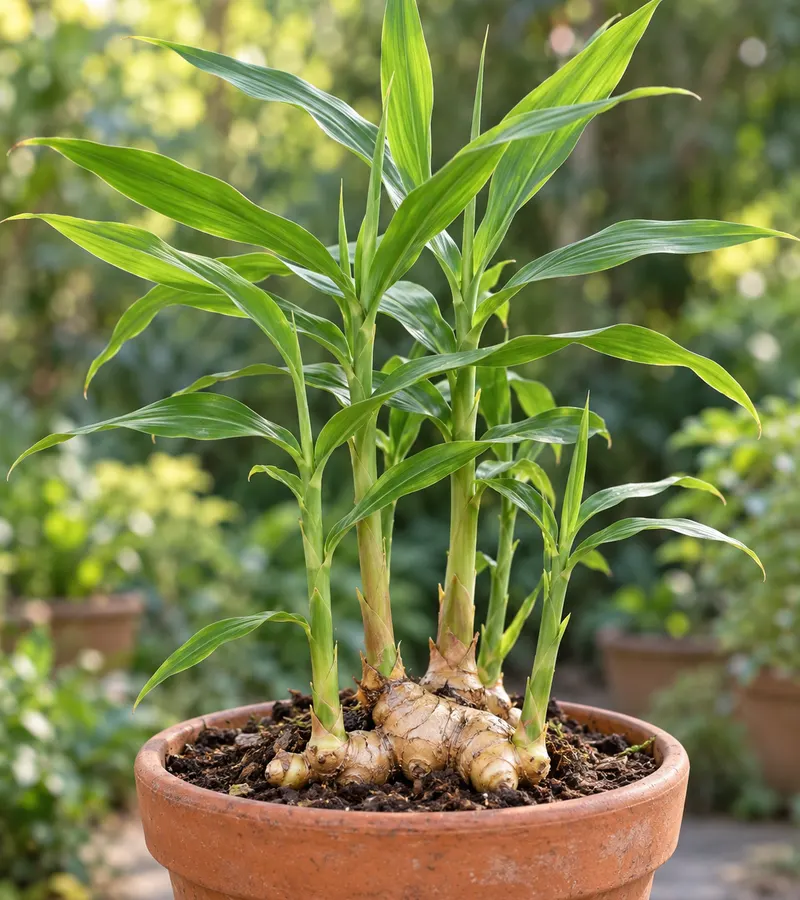
A pungent rhizome that can be potted, even on a gently sunny balcony.
Care and placement
Prefers part shade or filtered light, 21–32 °C and loose, humus-rich, well-drained soil; water sparingly until shoots appear then keep evenly moist; harvest after 8–10 months.
Draft mature dimensions
Maximum height (cm): 80 cm · Maximum spread (cm): 40 cm
Things to consider
Ginger is a familiar culinary plant; use only washed rhizomes from unsprayed plants. Rhizome rot from waterlogging is the main risk — discard soft, rotten or mouldy pieces.
How to grow and care for it
Planting and pot
Cut seed rhizomes into pieces with 2–3 buds and let the cuts callus somewhere cool and dry for at least 2 days; plant 5–10 cm deep, buds up; one piece per 30 cm pot or 20 cm apart. Use loose, well-drained soil.
Light
Filtered light or part shade; gentle morning sun is fine, strong prolonged sun scorches leaves. Bring pots somewhere warm when below about 10 °C (50 °F).
Watering
Water very sparingly until shoots appear since the rhizome has no leaves to use it; after that keep evenly moist, never waterlogged. Waterlogging is the main cause of rhizome rot.
Feeding
A moderate feeder: light feeding every 3–4 weeks during active growth; too much early nitrogen gives many leaves and small rhizomes.
Pruning
No pruning needed; remove yellowed or damaged leaves.
Propagation
Propagated by rhizome: keep a few strong pieces after harvest as seed for next season (see planting).
Pests and common problems
Rhizome rot from waterlogging (most common), bacterial wilt and root rot; pests: aphids, scale, mealybugs, thrips, spider mites, root-knot nematodes and fungus gnats (larvae damage fine roots).
For a bigger harvest
For big rhizomes: plump seed pieces, correct depth, loose draining soil, even watering without waterlogging, light feeding and the full 8–10 months (baby ginger at 4–6 months). Harvest when leaves yellow and stems fall; cure 3–5 days before storing.