
Katuk
Breynia androgyna
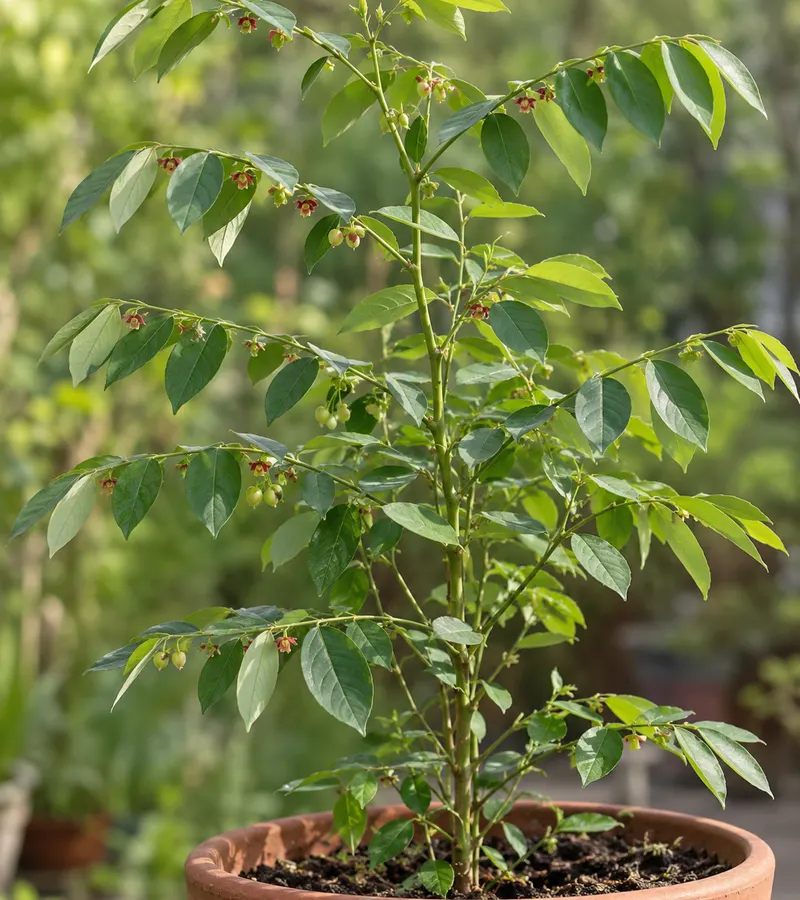
A lush green leafy bush for soup, though it should be eaten only in sensible amounts.
Care and placement
Likes part shade or filtered light (sun if soil stays moist), nitrogen-rich evenly moist soil, kept to 1–2 m; pick young tips; it MUST be cooked, never juiced raw.
Draft mature dimensions
Maximum height (cm): 150 cm · Maximum spread (cm): 80 cm
Things to consider
Eating very large amounts of raw leaves or drinking raw juice has been reported to cause bronchiolitis obliterans (serious, often irreversible; suspected papaverine) — recorded cases involved weight-loss juicing of over 100 g/day for months. Eat katuk only well cooked as part of a varied diet; never as a raw smoothie green or concentrated raw juice.
How to grow and care for it
Planting and pot
Plant in part shade or filtered light in humus-rich, nitrogen-rich soil (generous well-rotted manure) and water deeply after planting. Acclimate over 5–7 days before full sun.
Light
Part shade; in very hot places light shade is preferred and full sun is tolerated if the soil stays moist.
Watering
Keep soil consistently moist at moderate to high water but never long-term waterlogged; tolerates short shallow flooding.
Feeding
A heavy feeder needing nitrogen-rich soil: regular well-rotted manure or organic fertilizer (commercial growers in Southeast Asia apply manure generously).
Pruning
Keep to about 1–2 m since tall plants bend under their weight; harvest young shoots and the top 10–20 cm (snap where the stem turns from tender to woody) to stay bushy and not leggy; prune hard after flowering if needed.
Propagation
Stem cuttings 20–50 cm long from healthy plants at least 1–2 m tall; or transplant suckers from the shallow roots; or seed.
Pests and common problems
(The sources checked name no specific pests.) It may lose leaves or die back in harsh cold; root rot with prolonged waterlogging.
For a bigger harvest
For plentiful shoots: nitrogen-rich moist soil, light shade, regular tip harvest, a low plant and periodic organic feeding. Always cook before eating.