
Perilla
Perilla frutescens
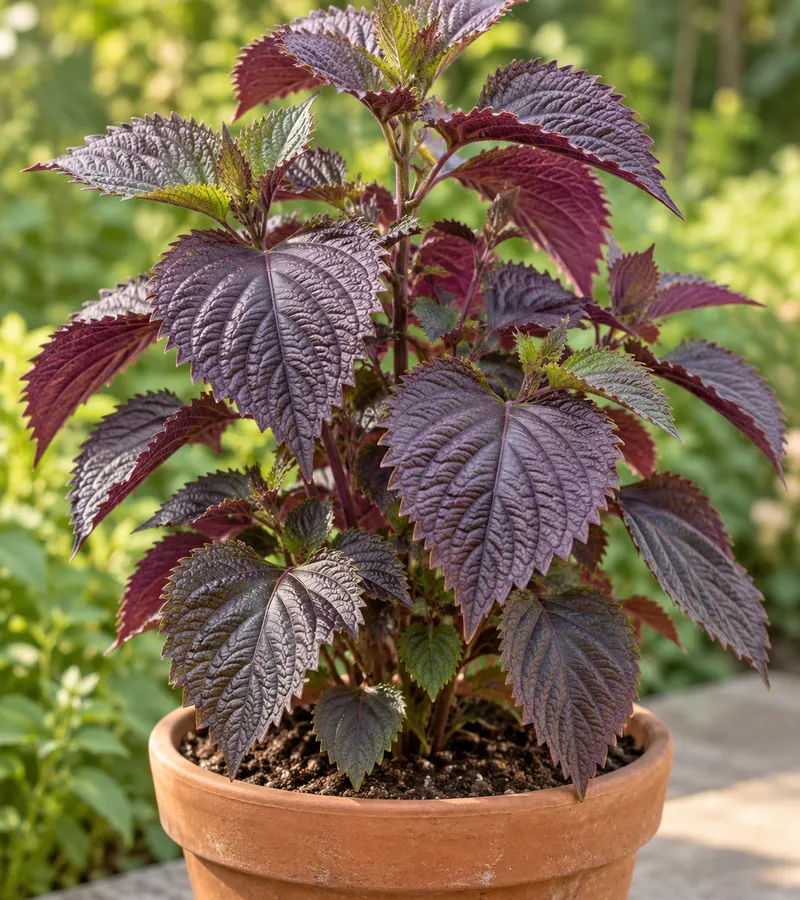
Fragrant purple or green leaves, eaten with noodles, congee and grilled dishes.
Care and placement
Likes full sun to part shade (afternoon shade in heat) and evenly moist humus-rich soil; pinch at 15 cm and remove flower spikes so leaves stay tender, not coarse and bitter.
Draft mature dimensions
Maximum height (cm): 70 cm · Maximum spread (cm): 40 cm
Things to consider
Perilla is toxic to ruminants and horses (NC State, Wikipedia); leaves are eaten by people. Do not feed it to livestock; it self-seeds and can spread, so remove flowers if you do not want volunteers.
How to grow and care for it
Planting and pot
Seed needs light to germinate: surface-sow without covering; start at 20–22 °C or direct-sow when warm; germinates in 7–14 days at 22–28 °C (some sources pre-chill 2–3 days). Space 30–45 cm apart.
Light
Full sun to part shade; afternoon shade in hot summers.
Watering
Keep evenly moist but not waterlogged; it wilts dramatically when dry but usually recovers if watered promptly; extra water in very hot weather.
Feeding
Humus-rich soil is enough; a light organic feed early in the season is optional. (The sources checked give no specific schedule.)
Pruning
Pinch the tip at about 15 cm for a bushy plant; keep pinching every few weeks to delay flowering; remove flower spikes promptly since flowering makes leaves coarse and bitter.
Propagation
Sow seed; let a few plants ripen seed in late summer to early autumn, then cut and dry the seed heads and thresh.
Pests and common problems
Slugs and snails strip young plants; aphids, spider mites and flea beetles; downy mildew and leaf spot when humid and crowded — space widely, water at soil level and remove affected leaves.
For a bigger harvest
For plenty of leaves: pinch often, remove flowers early, water evenly and pick outer leaves once 20–30 cm tall, leaving foliage so it keeps growing (50–100 leaves per plant per season).