
Dawn redwood
Metasequoia glyptostroboides
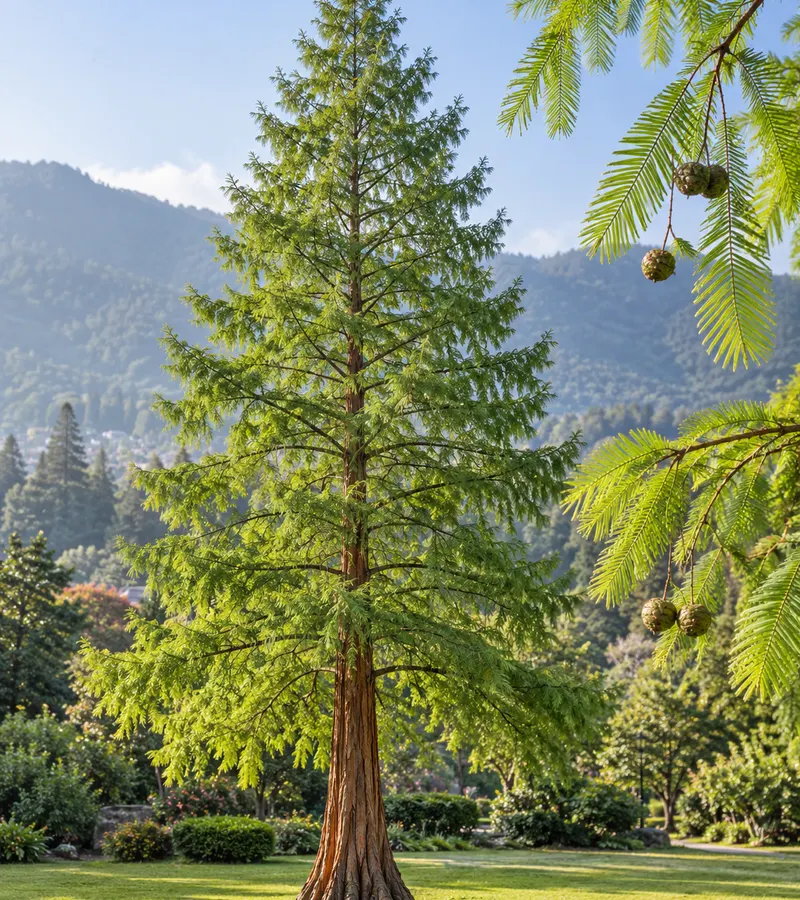
A deciduous conifer with a narrow conical crown and soft feathery leaves in opposite pairs; it needs room and moist soil.
Care and placement
Needs full sun (6+ hours), deep, moist, slightly acidic to neutral soil and even watering, especially when young; plant at least 6–9 m from buildings and other trees. Every source describes temperate cultivation (USDA 4–8), with afternoon shade advised in hot regions; no source confirms it does well in Vietnam's hot humid climate.
Draft mature dimensions
Maximum height (cm): 2500 cm · Maximum spread (cm): 600 cm
Things to consider
The sources consulted give no toxicity rating, so the tree is not claimed safe or toxic; one source says it is mostly allergy-free. Main city risks: it is very tall with a trunk base that widens, so it needs generous room; tall limbs can be damaged by snow or ice storms in cold climates and the sources say nothing about tropical storm wind; and the leaves are shed in the cool season.
Sources to cross-check
Kew Plants of the World Online · Metasequoia glyptostroboidesNC State Extension Plant Toolbox · Metasequoia glyptostroboidesEpic Gardening · Dawn redwood treesWoodlawn Arboretum · Metasequoia glyptostroboidesKhoaHoc.tv · Thủy sam (Metasequoia glyptostroboides)Wikipedia · Metasequoia glyptostroboidesHow to grow and care for it
Planting and pot
Plant in full sun in deep, moist, slightly acidic to neutral soil (pH about 5.5 to 7.0) and avoid alkaline ground. The tree reaches tens of metres and its trunk base swells and flutes with age, so keep it at least 6–9 m (20–30 ft) from buildings and other trees; a source says there is no evidence of roots harming foundations but it says nothing about buried pipes or overhead lines, so those distances need a site survey. It has grown in narrow pavement cutouts, but it still wants room. Planting on public land needs permission from the owner or the tree-management authority.
Light
Needs full sun, at least 6 hours a day, and tolerates part shade; do not plant it under larger trees. In hot regions some sources advise shade from the harshest afternoon sun to avoid scorched foliage, and the tree grows fastest at about 16–21 °C.
Watering
Keep the soil evenly moist, especially while young and in the dry season; it tolerates wet soil and occasional flooding, but long waterlogging causes root rot. It suffers from drought before it is established, and spider mites attack when the soil is very dry. Where the rainy season is long, choose a spot where water does not stand for weeks.
Feeding
Feeding is usually unnecessary unless the soil is very poor; mulch or well-rotted compost around the base is enough, and avoid heaping on rich compost at once. If the soil is alkaline, one source suggests agricultural sulfur to lower the pH.
Pruning
Very little pruning is needed: the conical shape forms by itself and young saplings should not be pruned; only remove dead or broken wood. For a street tree, take off the lowest branches early so the trunk is clear to the height needed for traffic and pedestrians. Leave tall trees to a professional arborist.
Propagation
The easiest start is a nursery sapling. Seed germinates poorly (about 5%) and takes years to reach transplant size; cuttings from a 2- to 3-year-old tree in late spring or early summer are more reliable.
Pests and common problems
In the city: the tree is very tall with a widening base, so it needs a lot of room; the leaves drop in the cool season and leave a layer of fine litter to clear; the sources say nothing about tropical storm or coastal wind, and Wikipedia says heavy winter de-icing salt harms it badly (no source on sea salt). Pests and diseases are few: spider mites when dry, honey fungus. No source confirms it thrives in year-round hot humid climates; the sources describe temperate sites where a cold season gives winter dormancy and early growth can be hit by frost.
For plentiful, healthy leaves
For a fine canopy: give full sun, deep evenly moist soil and plenty of room; the foliage is fresh green in spring, deep green in summer, then copper to red-bronze before it falls. The sources do not say whether it colours well in hot humid regions.