
Formosan sweetgum
Liquidambar formosana
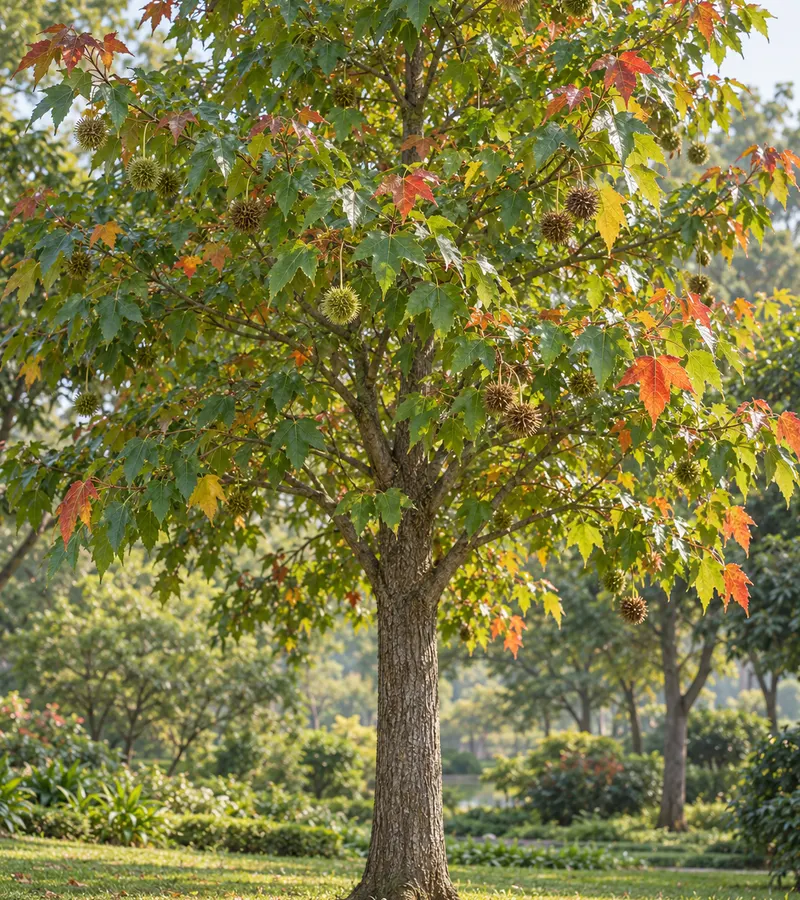
A deciduous shade tree with three-lobed leaves and spiky round fruit, known in Vietnam as sau sau or phong hương.
Care and placement
Needs full sun (6+ hours of direct sun), deep moist, well-drained, non-alkaline soil; the strong roots call for planting at least 4 m from buildings and paving; it does not tolerate strong wind. The sources do not say how well it copes with lowland heat and humidity.
Draft mature dimensions
Maximum height (cm): 1500 cm · Maximum spread (cm): 850 cm
Things to consider
The sources consulted do not give a toxicity rating, so the tree is not claimed safe or toxic. Main city risks: spiky round fruit and small twigs drop in large numbers in autumn and winter onto roads and patios; the strong roots can lift pavements; and it does not tolerate strong wind. Young leaves are eaten in local cooking, but do not eat it or use it as medicine on your own.
How to grow and care for it
Planting and pot
Plant in full sun in deep soil that is moist but well drained and not alkaline (alkaline soil causes yellowing from iron shortage). The strong roots can lift pavements, so keep the tree at least 4 m from buildings and paving; for streets, one source suggests a planting strip wider than about 1.8 m (6 ft) and no pavement right at the trunk. Distance from buried pipes and overhead lines needs a site survey because the sources do not give it. Planting on public land needs permission from the owner or the tree-management authority.
Light
Needs full sun, at least 6 hours of direct sun a day; NC State rates it as intolerant of shade. Other sources say it copes with light shade but the leaf colour is poorer, and a sunny spot gives the best colour.
Watering
Keep the soil moist to occasionally wet but well drained: water regularly, more in the hot season and less in the cool one. NC State lists it as drought tolerant and it copes with short dry spells, but long waterlogging causes root rot. In heavy rainy seasons it needs drainage, so avoid hollows where water stands.
Feeding
The tree likes deep, nutrient-rich soil, so add well-rotted compost around the canopy at the start of the growing season. If leaves turn yellow while the veins stay green (iron shortage, common on alkaline soil), chelated iron can help. The sources give no rates, so follow the product label.
Pruning
Pruning is not essential; use it to keep one strong central leader, remove dead or damaged branches and thin crowded areas for airflow. Do it once the leaves have fallen or at the end of the cool season. The small twigs resist breaking but still drop in numbers, so expect regular clean-up.
Propagation
Propagate from seed collected in autumn, ideally cold-stratified before sowing, or by semi-hardwood cuttings or air layering in the warm season. Seedlings become very large trees, so choose a permanent site with enough room from the start.
Pests and common problems
In the city: spiky fruit and small twigs drop in autumn and winter and make pavements messy and slippery; roots can lift pavements; TreeEbb rates the tree as wind-intolerant, so it is vulnerable in strong-typhoon or coastal sites (the sources say nothing about salt). Pests and diseases include aphids, spider mites, borers, leaf spots and cankers. The sources do not mention allergenic pollen or strong scent. No source confirms good performance in hot humid lowlands; it is recorded growing wild and showing clear leaf colour where winters are cool, such as Cao Bằng.
For plentiful, healthy leaves
For good leaf colour: give full sun and moist, nutrient-rich, non-alkaline soil, and avoid waterlogging. Young leaves are purplish-red, turn deep green in summer, then yellow to dark red before falling; no source says whether it is as vivid in hot humid regions.