
English ivy
Hedera helix
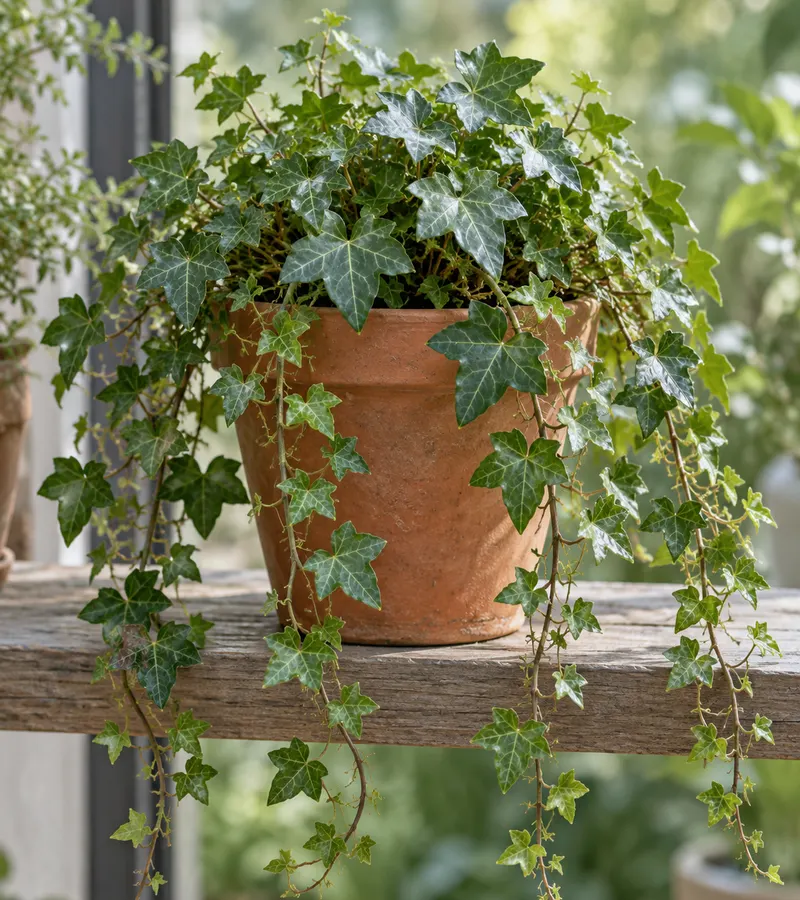
A trailing and climbing vine with lobed leaves that suits cool rooms or air-conditioned offices and copes poorly with heat; it is poisonous if eaten and the sap can irritate skin.
Care and placement
Does best at about 15–25 °C so it copes poorly with heat; bright indirect light or part shade, water when the soil is dry 2–3 cm down, a loose draining mix; propagated by stem cuttings.
Draft mature dimensions
Maximum height (cm): 100 cm · Maximum spread (cm): 60 cm
Things to consider
The whole plant is poisonous, the foliage more than the berries: ASPCA lists it as toxic to dogs, cats and horses (saponins; vomiting, belly pain, drooling, diarrhoea) and NC State as toxic to people. The sap can cause contact dermatitis in sensitive people. Keep it out of reach of children and pets, wear gloves when pruning and wash hands afterwards.
How to grow and care for it
Planting and pot
Plant in a pot or hanging basket with drainage holes, in a loose mix such as coir or sawdust blended with soil, perlite or crushed charcoal and a little aged manure; avoid garden soil, which compacts. Keep it indoors or in a controlled pot: in many regions ivy is treated as invasive, smothering trees and damaging walls.
Light
It tolerates part shade and even fairly deep shade, but too little light leaves the foliage pale and weak; it does best in bright indirect light near a window, away from harsh midday sun. No source gives a minimum lux, and a windowless room needs a plant grow light on for many hours a day.
Watering
Water only when the soil is dry 2–3 cm down, soaking until water runs out of the base before putting it back, and avoid evening watering. Misting the leaves 2–3 times a week helps hold off spider mites in hot, dry weather. If the soil is not dry yet, do not water.
Feeding
Feed with diluted 20-20-20 or a slow-release organic fertiliser once a month in spring and summer; reduce or stop in cold weather.
Pruning
It grows quickly, so trim regularly to keep its shape and stop it tangling; cut long, dry or yellow stems so new shoots can form. Wear gloves because the sap irritates skin, and keep the clippings away from where pets play.
Propagation
Stem cuttings are easiest: put a healthy stem in clean water, roots appear in about 2 weeks, and you change the water weekly before potting up once the roots are long enough. NC State also lists division, root cuttings and seed.
Pests and common problems
It copes poorly with heat: its comfortable range is about 15–25 °C, so it suits cool northern rooms in the cool season, highland homes or air-conditioned offices, while a hot lowland balcony in summer will leave it struggling. Hot, dry air breeds spider mites; mealybugs, aphids, scale, leaf spots, stem rot and powdery mildew also occur. Move it somewhere cool and airy in hot weather.
For plentiful, healthy leaves
For a dense green trail: a cool spot in bright indirect light, watering by how dry the soil is, reasonable air humidity, light feeding in the warm season and regular trimming. Hang the pot high so the strands trail nicely while staying out of reach of small children.