
Lemongrass
Cymbopogon citratus
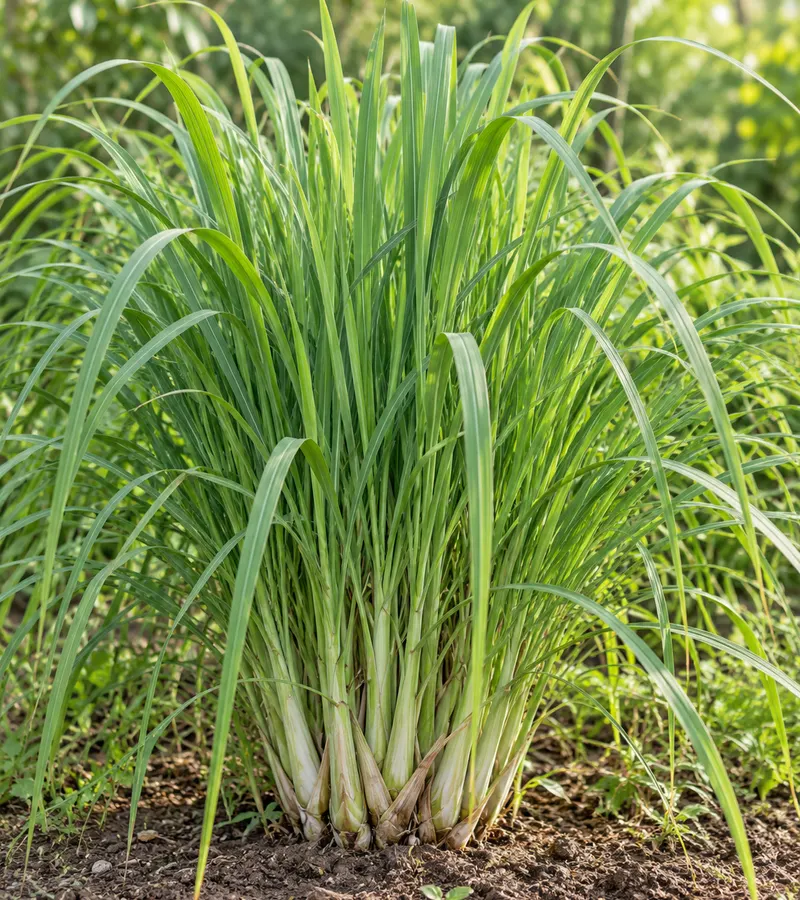
Tall lemon-scented grass for soups and marinades, also used as a mosquito deterrent.
Care and placement
Needs 6–8 hours of sun, a pot 30 cm or wider, even watering, slow-release feed every 4–6 weeks and stalks cut when about 1 cm thick; frost-sensitive.
Draft mature dimensions
Maximum height (cm): 120 cm · Maximum spread (cm): 80 cm
Things to consider
ASPCA lists lemongrass as toxic to dogs, cats and horses (essential oils, cyanogenic glycosides; mostly stomach upset in dogs and cats); one other source says non-toxic, so be cautious. For people it is a normal seasoning; sharp leaf edges can cut hands.
How to grow and care for it
Planting and pot
Plant in a pot at least 30 cm wide with drainage holes (a mature clump suits about 20 L) or in sunny ground; loose, humus-rich soil.
Light
Full sun, at least 6–8 hours; tolerates part shade with slower growth.
Watering
Keep soil evenly moist, not waterlogged; water deeply when the top 2–3 cm is dry; established plants tolerate some drought. Overwatering causes root rot.
Feeding
Balanced slow-release fertilizer every 4–6 weeks in the growing season; pots can take fish emulsion or seaweed monthly in summer. Too much gives leaves at the expense of essential oil.
Pruning
Cut outer stalks near the base when about 1 cm thick and at least 30 cm tall, letting the centre keep growing; harvest in the morning when oil is highest; remove dry, old leaves.
Propagation
Division: dig the clump, split into sections each with roots, trim leaves to about 15 cm and replant; wait a few weeks before heavy harvesting. Division also refreshes compacted potting mix.
Pests and common problems
Generally pest-free; the main concern is root rot in poorly drained soil; yellow leaves may be iron deficiency. Good airflow prevents fungal disease.
For a bigger harvest
For a dense, many-stalk clump: full sun, even water, on-schedule slow-release feeding, regular harvest of outer stalks and division when crowded. First harvest comes 4–8 months after planting.