
Four-season orchid
Cymbidium ensifolium
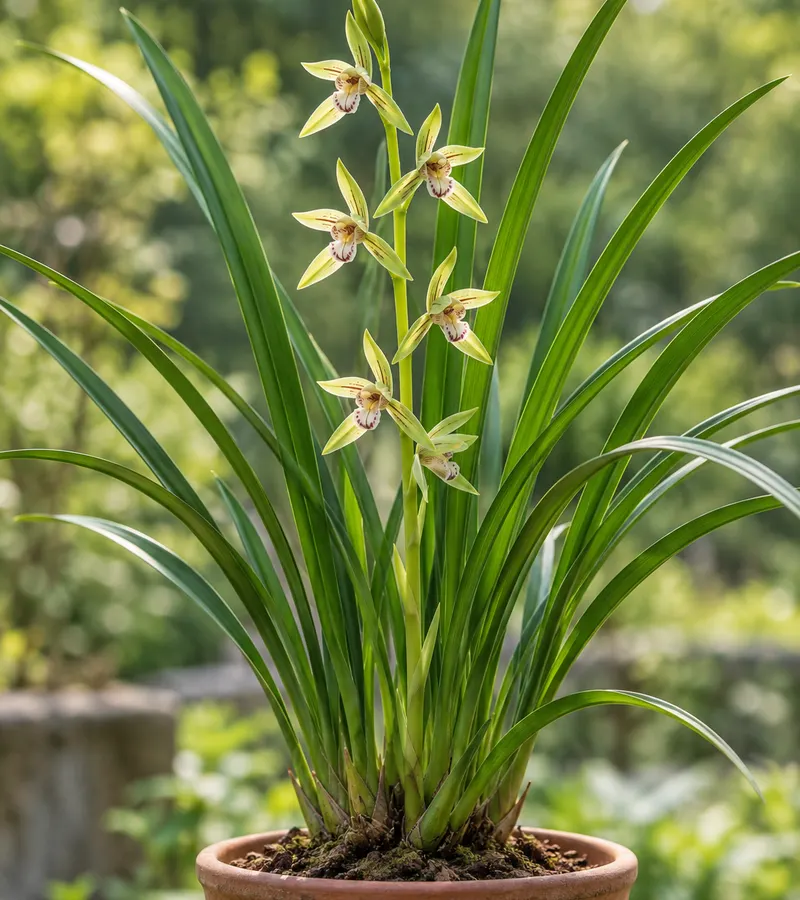
Long sword-like leaves and lightly scented flowers, a long-loved orchid hobby.
Care and placement
Prefers bright filtered light (yellow-green leaves mean right light), an airy mix, even moisture and a day–night temperature drop to set flower spikes; RHS notes it may cause skin allergy so wear gloves when handling.
Draft mature dimensions
Maximum height (cm): 50 cm · Maximum spread (cm): 40 cm
Things to consider
RHS lists Cymbidium ensifolium as a skin allergen: wear gloves when handling and repotting and wash hands afterwards. There is no official toxicity rating for pets, so it is not claimed safe or toxic; keep children and pets from chewing it.
How to grow and care for it
Planting and pot
Roots are long and fat so use a tall, narrow pot with a fast-draining mix (fine fir bark, perlite, pumice, a little peat or sphagnum). It likes being slightly crowded, so avoid oversized pots. Repot only every 2–3 years in spring after flowering, setting the plant slightly high and trimming dead roots.
Light
Bright filtered light shaded from the hottest sun (one source: 90–95% shade in midsummer); yellow-green leaves are right, pale yellow means too much light, dark lush green means too little and fewer flowers.
Watering
Keep the root zone evenly moist but airy; water when the top 1 cm of mix is dry and never let the pot sit in water since roots rot; less in cool months. Humidity 50–70% with gentle air movement.
Feeding
Balanced fertilizer at half strength every 2–3 weeks in the growing season; flush the pot with plain water between feeds to prevent salt build-up. Brown tips usually mean low humidity or mineral salts.
Pruning
Only remove fully dry or brown leaves and dead roots when repotting; remove spent flower stalks.
Propagation
Divide at repotting: each division needs at least 3 older pseudobulbs (RHS; other sources 3–5); sterilise the knife between plants and dust cuts with fungicidal powder or cinnamon; dormant back bulbs can be potted separately and bloom in 2–4 years. Water lightly after dividing and keep in bright shade for 1–2 weeks.
Pests and common problems
Mites, scale and mealybugs: inspect regularly and use insecticidal soap or neem; airflow helps prevent bacterial and fungal disease and botrytis flower spotting. Root rot if waterlogged.
For more flowers
To flower: enough filtered light, a day–night temperature drop (nights about 15–18 °C in late summer to early autumn per the sources), even moisture, light regular feeding and a slightly snug pot. Lightly scented flowers open in summer, some forms several times.