
Sago palm
Cycas revoluta
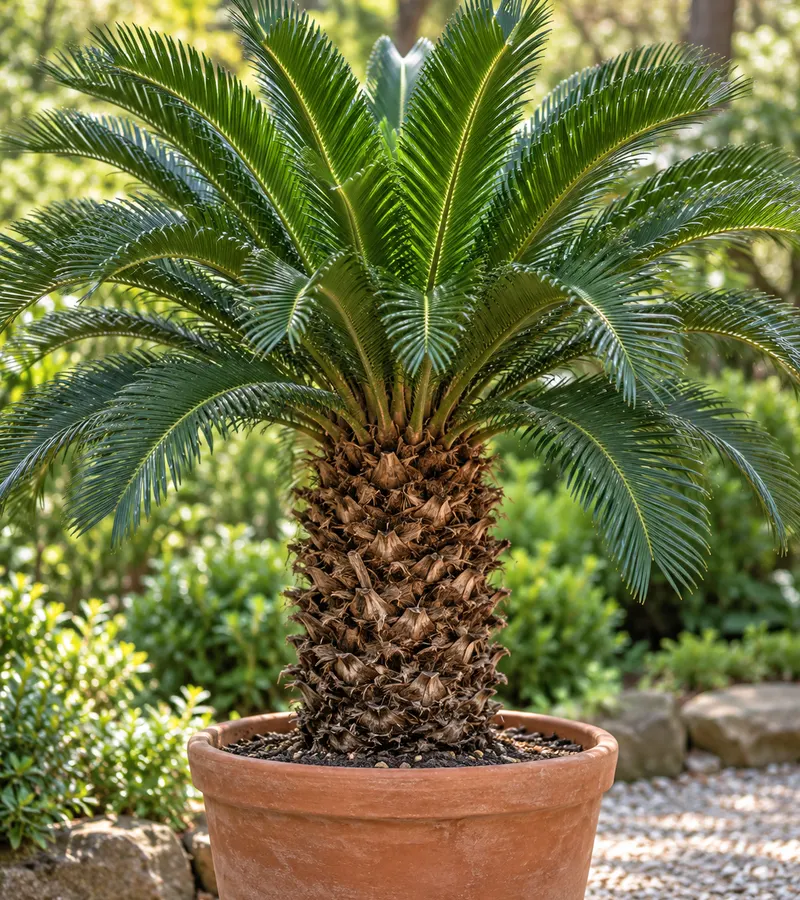
A stout trunk with a stiff crown of fronds; slow-growing but long-lived.
Care and placement
Likes strong light (bright indirect up to sun) and a dry-leaning regime: water only when the top 2–3 cm is dry, onto the soil not the crown; grows slowly.
Draft mature dimensions
Maximum height (cm): 150 cm · Maximum spread (cm): 150 cm
Things to consider
HIGHLY TOXIC: every part (especially the seeds) contains cycasin, causing vomiting (possibly bloody), diarrhea, liver failure and death in dogs, cats and horses (ASPCA, Cycas/Zamia entry). Do not grow where pets or children can reach it; call a vet immediately if poisoning is suspected.
How to grow and care for it
Planting and pot
Plant in a pot or ground with very good drainage (cactus mix or sandy loam) and drainage holes. Do not bury the trunk deep; choose a sunny spot.
Light
From bright indirect light to full sun, near a south or west window; low light weakens and thins the crown. Some sources advise avoiding harsh direct sun right after moving it.
Watering
Keep on the dry side: water thoroughly when the top 2–3 cm is dry with free drainage, less when cool. Water the soil, not the crown, since a wet crown rots. Overwatering is the most common cause of death in containers.
Feeding
Feed only in the growing season: half-strength liquid fertilizer monthly from spring to autumn, or a slow-release palm fertilizer every 6–8 weeks.
Pruning
Cut old or yellow fronds at the base with clean tools and gloves since all parts are toxic. Do not cut healthy green fronds; regrowth is slow.
Propagation
Separate pups (basal offsets): cut with a sterilized knife once large enough (about 10 cm across), let the cut callus for a few days and plant in well-draining mix. Seeds also work (1–3 months to germinate) but are highly toxic — wear gloves.
Pests and common problems
Aphids, scale, thrips, mealybugs and sooty mould; root rot and pink rot from overwatering. Treat pests with horticultural oil or insecticidal soap; for rot, cut back watering and improve drainage.
For plentiful, healthy leaves
For a full crown and new flushes of fronds: plenty of light, excellent drainage, regular feeding in the growing season and no waterlogging; a flush typically appears yearly in good conditions. Male and female plants bear separate cones, rare indoors.