
Coleus
Coleus scutellarioides
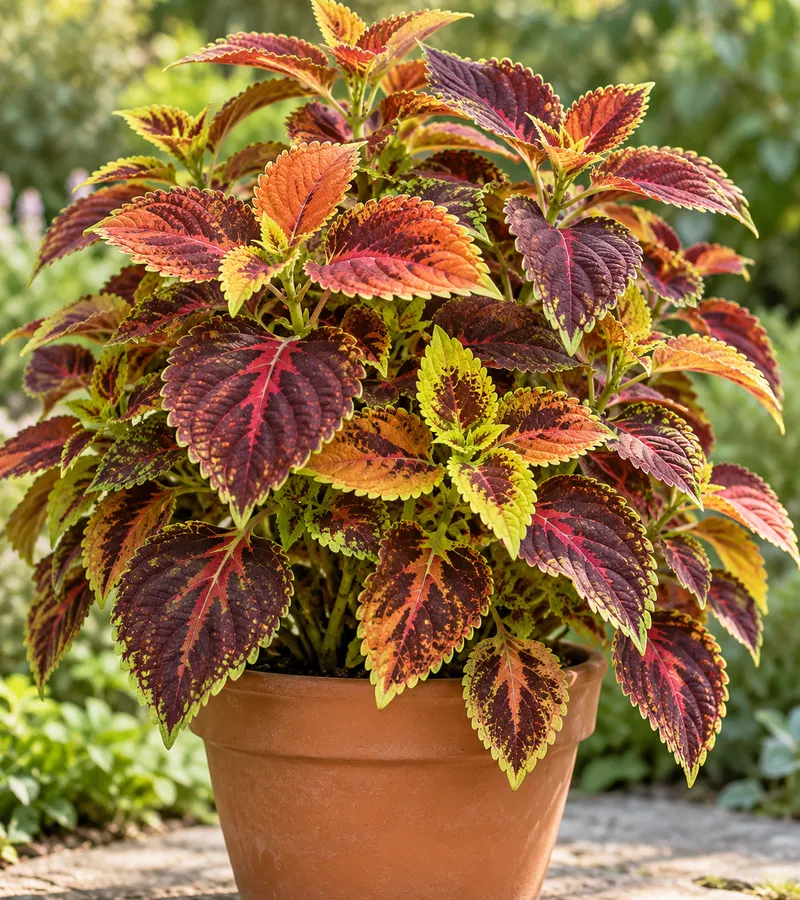
Leaves in orange, red, purple and yellow brighten balcony pots.
Care and placement
Likes moist, rich, loose soil; outdoors in part shade to gentle sun, indoors bright light; a tender tropical often grown as an annual.
Draft mature dimensions
Maximum height (cm): 50 cm · Maximum spread (cm): 40 cm
Things to consider
NC State notes low-severity poison characteristics; ASPCA lists a related Coleus (C. amboinicus) as toxic to dogs, cats and horses (essential oils: vomiting, diarrhea). Keep pets and children from chewing it.
How to grow and care for it
Planting and pot
Plant in loose, humus-rich, well-drained soil; set outdoors only once nights stay above about 10 °C (50 °F). Pots need drainage holes.
Light
Depends on cultivar: dark red types take more sun while pale types scorch at midday. It does well in part shade; too dark gives leggy stems and faded colour.
Watering
Keep soil consistently moist and well-drained; prolonged dryness dulls colour. Water in the morning so leaves are not wet overnight (limits fungus). Containers may need water every 2–3 days in summer.
Feeding
Diluted balanced fertilizer every 2–4 weeks in the growing season (indoors half strength every 4 weeks, March to September). Excess makes soft leaves that pests favour.
Pruning
Pinch tips at about 15 cm for bushiness; remove flower spikes so energy goes to foliage; hard-prune old plants to rejuvenate.
Propagation
Very easy from softwood cuttings in water or clean moist mix, rooting within weeks; rooting hormone is optional. Seed gives variable offspring.
Pests and common problems
Aphids, whiteflies, mealybugs and spider mites — especially indoors; downy mildew and stem rot when too wet. Check leaf undersides, rinse with a strong spray, use neem oil, strip infected leaves and keep airflow.
For plentiful, healthy leaves
For dense, vivid foliage: pinch early and often, remove flowers, match sun to the cultivar, keep moisture steady and feed lightly.