
Natal lily
Clivia miniata
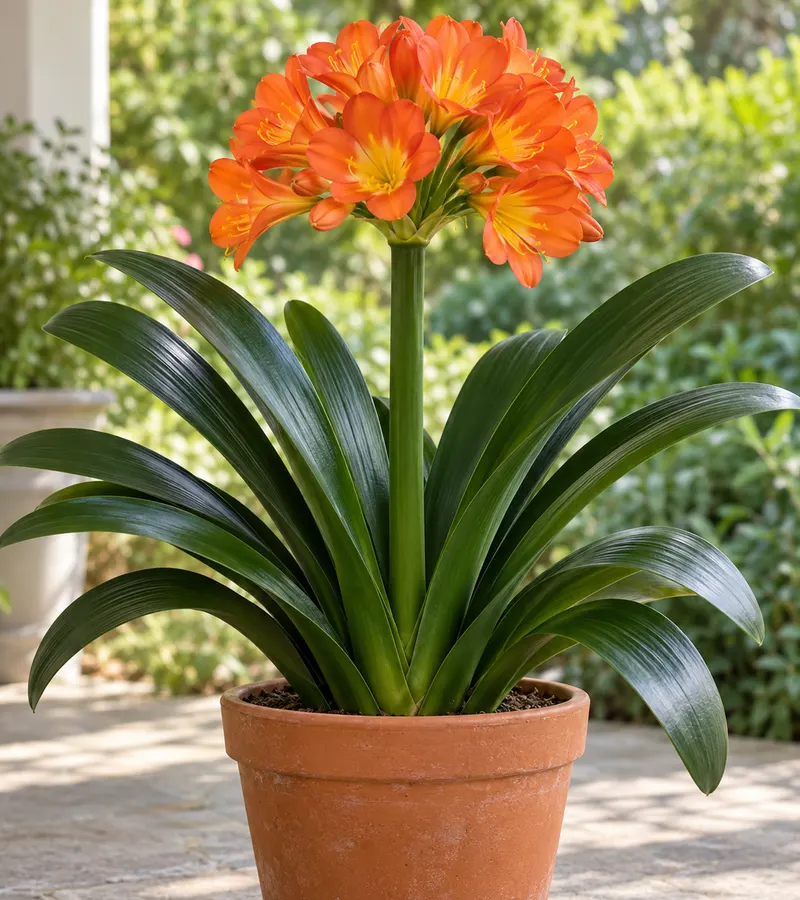
Not a true orchid but a member of the amaryllis family, with dark strap-shaped leaves and clusters of orange flowers; every part is poisonous, the base most of all.
Care and placement
Prefers shade to part shade and cool conditions of about 15–25 °C; grow it snug in a draining pot, water moderately, and give a cool rest with nights below about 10 °C for a month or two to flower; propagate by dividing offsets.
Draft mature dimensions
Maximum height (cm): 60 cm · Maximum spread (cm): 75 cm
Things to consider
Every part is poisonous (lycorine and other alkaloids), the bulb-like base most of all. ASPCA lists it as toxic to dogs, cats and horses: eating it causes vomiting, drooling and diarrhoea, and large amounts can cause convulsions, low blood pressure, tremors and irregular heartbeat. NC State says it does not cause contact dermatitis. Keep it away from children and pets and wash hands after handling.
How to grow and care for it
Planting and pot
Plant in a pot with drainage holes in a loose, humus-rich, slightly acidic mix, for example rotted leaf mould with smoked rice husk, a little sand and organic fertiliser. It likes being rootbound and can stay in one pot for up to five years, so repot only when roots fill it completely. A shaded balcony works, but bring it indoors in very hot weather.
Light
It tolerates shade from dappled sun to fairly deep shade and likes cool, airy spots with gentle morning or late-afternoon sun; harsh direct sun scorches the leaves. It can live under indoor lamps, so a windowless room needs a plant grow light on for many hours a day. No source gives a minimum lux or says what too little light does; if it fails to flower for years, try moving it somewhere with more morning light.
Watering
Keep the mix slightly moist, about once a week indoors and about twice a week outdoors; the plant is fairly drought tolerant, so too little water is less risky than too much. Water early in the day, keep water off the foliage and give good air circulation, since overwatering causes crown rot and overhead watering causes leaf rust.
Feeding
Feed once a month in the growing season with diluted NPK (for example 20-10-10) or an organic feed such as worm castings, applied around the base. It is slow growing and undemanding, so there is no need to feed heavily.
Pruning
Little pruning is needed: cut old or yellow leaves off at the base and remove the flower stalk once the blooms fade. The flowers last well and can be cut for a vase. Wash your hands afterwards because every part is poisonous.
Propagation
The easiest way is dividing offsets: lift the parent, shake off the soil, separate the side shoots, set them in clean sand, water once and wait about 2 weeks for the cuts to dry before planting in soil; roots form within 1–2 months. Seed is slow: berries take about a year to ripen and seedlings need at least 6 years to flower.
Pests and common problems
Mealybugs, scale and mites are the usual pests, and snails eat the flowers outdoors. Overwatering causes crown rot and overhead watering causes leaf rust. The comfortable range is 15–25 °C and NC State wants nights below about 10 °C for the rest period, so in hot lowland areas the plant often gives leaves but few flowers; a cool northern winter or the highlands suits it better. Growth stalls in strong heat, so move it somewhere cool.
For more flowers
To flower: use a mature plant (it takes a few years to bloom), keep the pot snug, give a cool rest with nights below about 10 °C for a month or two with less water, then care for it evenly as buds form. NC State lists blooms from early winter to mid-spring and they last well, with about 12–18 small flowers per cluster according to the Vietnamese source.