
Key lime
Citrus × aurantiifolia
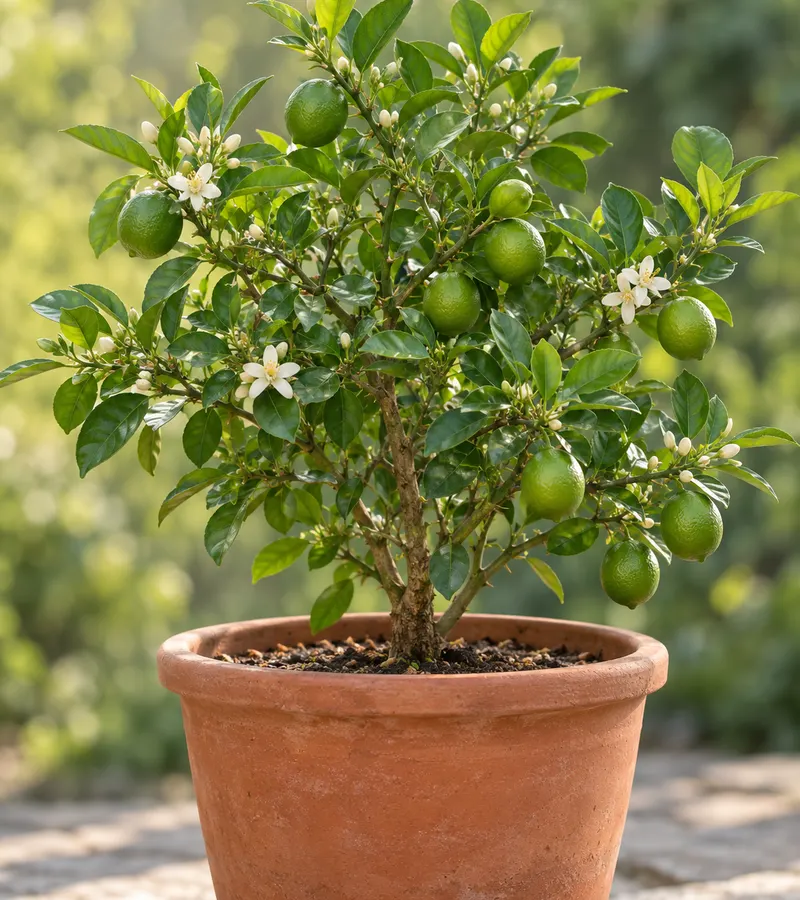
Small fragrant green fruit essential to Vietnamese meals; fine in large pots.
Care and placement
Needs at least 6–8 hours of sun (8–10 for heavy fruit), a draining mix and watering when the top 5 cm is dry; very cold-sensitive; large pot with drainage holes.
Draft mature dimensions
Maximum height (cm): 300 cm · Maximum spread (cm): 200 cm
Things to consider
ASPCA lists lime (Citrus aurantifolia) as toxic to dogs, cats and horses due to essential oils and psoralens (vomiting, diarrhea, possible dermatitis); the fruit is edible for people but peel and plant material are not for pets. Thorny branches can scratch.
How to grow and care for it
Planting and pot
Use a large pot (a dwarf cultivar is best) with a loose, well-draining mix; go up one size when roots outgrow the pot, usually every 2–3 years. Place in the sunniest spot.
Light
Full sun: at least 6–8 hours of direct sun, 8–10 ideal for fruit; low light means weak growth, few flowers and little fruit.
Watering
Potted limes dry out faster than in-ground trees: test by pushing a finger 5 cm down; water when dry and less in cool months. Do not let it dry out entirely (leaves wilt and drop) nor stay waterlogged.
Feeding
Balanced citrus fertilizer (roughly 2:1:1 NPK, or 6-6-6 with magnesium, iron and zinc) every 6–8 weeks from spring to early autumn. Excess nitrogen favours leaves over fruit; yellow leaves may mean magnesium/iron deficiency or overwatering — use a trace-element citrus feed.
Pruning
Prune in late winter to early spring (or before blooming) to remove dead or crossing branches and keep the shape; prune every year or two to keep size down. Wear gloves because of thorns.
Propagation
Fresh seed (soak 12–24 hours; germinates in about 2–8 weeks), root cuttings, layering or grafting; grafting is preferred for named cultivars.
Pests and common problems
Aphids, scale and citrus leafminer; avoid overhead watering to reduce leafminer and fungal problems; watch for citrus canker and greening (huanglongbing). Key lime is very susceptible to lime anthracnose (withertip, blossom blight). Treat early with neem oil or insecticidal soap.
For heavy fruiting
For heavy fruiting: enough sun (8–10 hours), steady balanced feeding with extra potassium around flowering and fruit set, no excess nitrogen, even watering and an open canopy. The fragrant white flowers are self-fertile; fruit ripens about 5–6 months after flowering.