
Chittagong wood
Chukrasia tabularis
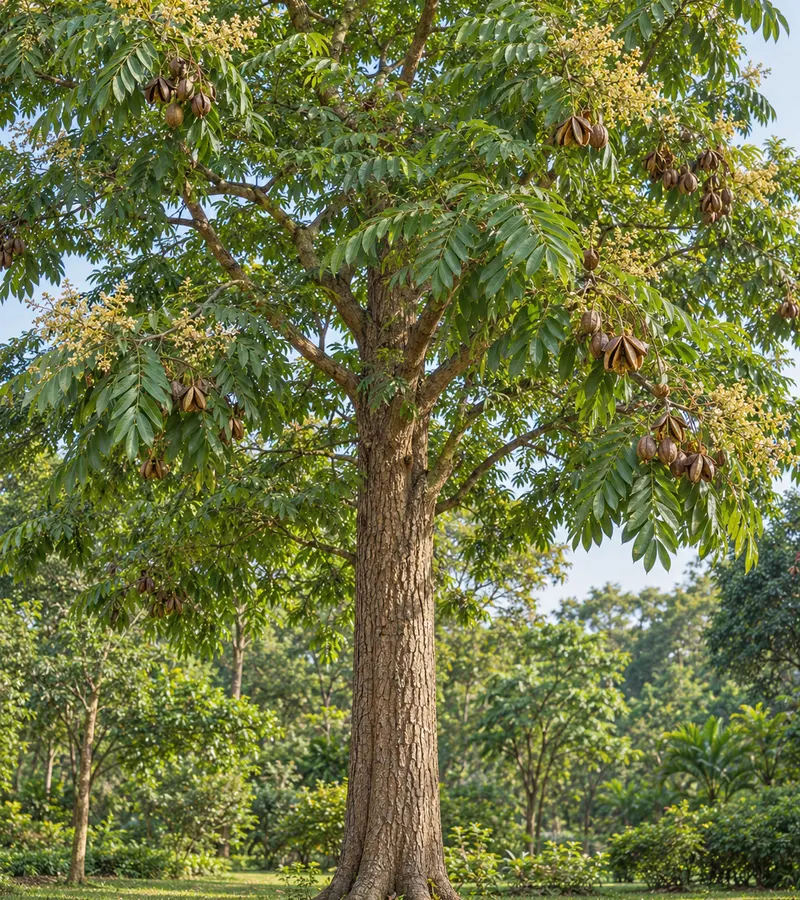
A large mahogany-family tree with pinnate leaves and fragrant flower panicles, both a shade tree and a prized Vietnamese timber species.
Care and placement
Needs full sun and deep soil that is moist yet drained, and does not suit heavy, shallow or waterlogged soil; a 25–30 m tree (up to 40 m) for roomy sites only; prune to a single leader because shoot borers can fork the tree; propagated by seed.
Draft mature dimensions
Maximum height (cm): 2800 cm · Maximum spread (cm): 1200 cm
Things to consider
A 25–30 m tree that can reach 40 m, so large limbs and woody fruit capsules 2.5–5 cm long can drop onto walkways; big trees need regular inspection. The sources consulted give no toxicity or allergenic-pollen information, so safety is not claimed; keep children and pets from chewing it. Planting, pruning or felling on public land needs the authority's permission.
How to grow and care for it
Planting and pot
The tree has a straight trunk, buttresses that may reach about 1.5 m high and a spreading crown, so plant it only where there is real room; distances to buildings, pavements, buried pipes and overhead lines need a site survey, and the decree requires the electricity safety corridor to be kept. Choose deep, moist soil at pH about 5–6; avoid shallow soil, a high water table, heavy soil or stony ground. Plant in spring or autumn on humid mild days, and planting on public land needs the tree authority's permission.
Light
A light-demanding tree, so plant it in full sun once it is grown. Young trees tolerate shade, so light shelter is fine just after planting, but do not leave them under big trees for long.
Watering
Water moderately and steadily in the first year and the dry season. The tree does not suit heavy or excessively wet soil, so the ground must drain and water should not stand around the base, especially in the rainy season.
Feeding
The sources consulted give no fertiliser schedule for city trees. For young trees, nurseries use a mix of about 80% topsoil and 20% compost; you can do the same at planting, then in the first year loosen the soil and clear vines and weeds within about 1 m of the base.
Pruning
The aim is one straight leader: in the second year remove shoots competing at the top, and in the third year prune to a single leader. Shoot borers can fork the top, so remove extra shoots to keep a single leader. Pruning shade trees 10 m or taller on public land needs a permit under the decree.
Propagation
Propagate by seed: fruit ripens from November to January, fresh seed germinates at about 70–90% within 1–4 weeks and needs no pre-treatment (a 3–4 hour soak in 35–40 °C water is also used). Sow in light, porous soil and water sparingly because seedlings damp off, and prick them out at 7–10 cm tall. Planting stock should be about 7–8 months old and 0.7–0.9 m tall.
Pests and common problems
Shoot borers (Hypsipyla) often attack young tops and cause forking, though trees over 8 years old are usually unharmed; leaf-eating caterpillars also occur in nurseries. The tree is deciduous, so expect seasonal leaf litter, woody capsules and wind-blown winged seeds; the sources do not give the timing of leaf fall. No source describes its roots, branch brittleness or pollen, so assess the site before planting near buildings or roads.
For plentiful, healthy leaves
For a straight tree with a good crown: use healthy seedlings from a proper seed source, plant in full sun in deep, moist, drained soil, keep a single leader and watch for shoot borer in the early years. Fragrant cream to pale yellow flower panicles open in April–May.