
Ylang-ylang
Cananga odorata
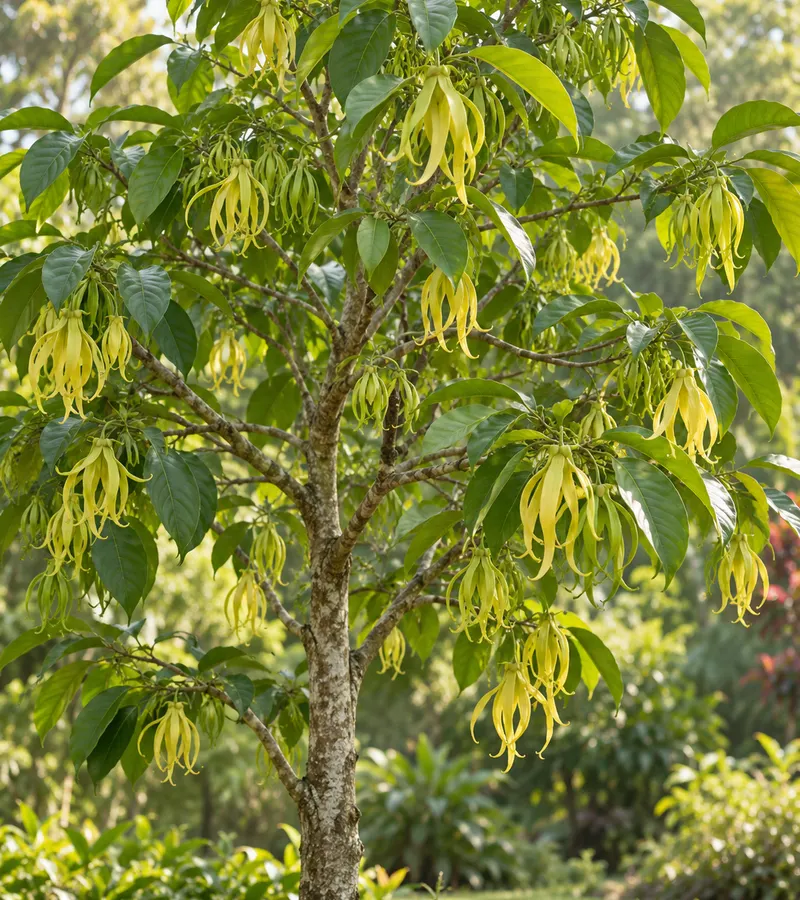
Drooping yellow-green flowers whose rich scent is used in essential oils.
Care and placement
Needs full sun (6+ hours), rich well-drained soil at pH 5.5–7.0 and even moisture; prune early to keep it low; dies at about 5 °C or below; the fragrant flowers yield essential oil.
Draft mature dimensions
Maximum height (cm): 1000 cm · Maximum spread (cm): 400 cm
Things to consider
PFAF lists 'Known hazards: none'; there is no official toxicity rating for pets. Concentrated ylang-ylang essential oil is a separate matter and is commonly advised against around pets; do not apply undiluted oil to skin or use it around young children. The tree grows very tall, so prune early.
How to grow and care for it
Planting and pot
Plant in full sun in rich, well-drained soil at pH 5.5–7.0; leave plenty of room since it reaches 10–15 m unpruned. Mulch to hold moisture. A large pot keeps it small.
Light
Full sun to part shade; at least 6 hours of direct sun for good flowering; shade gives fewer blooms. Frost-sensitive (5 °C or lower can kill it).
Watering
Young trees need plenty of water and evenly moist soil; older trees are watered when the top 2–5 cm is dry. Avoid prolonged waterlogging that damages roots; even moisture supports steady flowering. Mulch to hold moisture.
Feeding
Balanced or phosphorus-rich fertilizer monthly from late spring to late summer (one source: half-strength bloom fertilizer); avoid excess nitrogen which gives foliage over flowers.
Pruning
Prune when the tree is not blooming or setting buds (late winter to early spring or autumn to winter); shape early to keep it low and easy to pick since cutting back a large tree is far harder. Disinfect tools.
Propagation
Sow seed in a warm, humid spot in a covered tray out of direct sun (germination is unpredictable); or take 15–20 cm cuttings, strip lower leaves, dip in rooting hormone and give bottom heat and high humidity.
Pests and common problems
Aphids are the main pest, clustering on new growth and buds with honeydew leading to sooty mould; also scale, mealybugs and leaf spot. Swab mealybugs with alcohol, use neem and remove spotted leaves; avoid prolonged dampness and keep airflow.
For more flowers
For plentiful flowers: enough sun, even watering, monthly phosphorus-rich feeding and early pruning to keep it low. Drooping yellow-green flowers open year-round in hot humid places with a rich sweet scent.