
Mugwort
Artemisia vulgaris
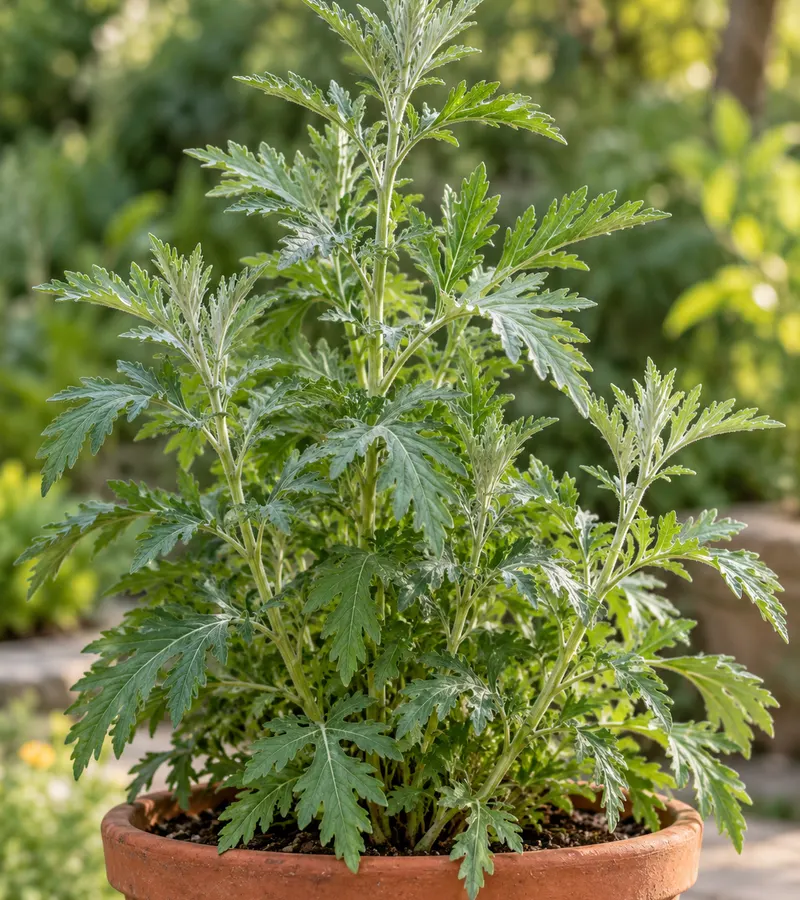
Cut leaves with silvery undersides, familiar in kitchens and folk medicine.
Care and placement
Likes full sun or part shade and drained loam (lean, dry soil gives more aroma), tolerates drought; spreads so grow in an isolated pot; remove flowers to stop self-seeding.
Draft mature dimensions
Maximum height (cm): 100 cm · Maximum spread (cm): 60 cm
Things to consider
PFAF: slightly toxic and never to be used in pregnancy (especially the first trimester) as it can cause miscarriage; large prolonged doses can damage the nervous system; handling can cause allergy or dermatitis (NC State). ASPCA lists Artemisia (tarragon) as toxic to dogs, cats and horses (essential oils). Eat mugwort only in small amounts when correctly identified and not in a risk group.
How to grow and care for it
Planting and pot
Plant in sun in well-drained, slightly alkaline loam; PFAF: longer-lived and more aromatic in poor, dry soil. Use a pot or root barrier since any root piece makes a new plant.
Light
Full sun or part shade (RHS); grows best in full sun.
Watering
Established plants tolerate drought; very moist soil causes root rot — water sparingly, only when the soil is nearly dry.
Feeding
No feeding needed; poor soil gives a more aromatic plant (PFAF).
Pruning
RHS: cut back to 5–10 cm above ground in autumn and remove flower heads to prevent self-seeding. Other sources cut in late winter to early spring. Wear gloves since it can cause skin allergy.
Propagation
RHS: seed after cold stratification, or divide the rhizome in spring or autumn; cuttings also work.
Pests and common problems
RHS: generally pest-free but may get honey fungus; NC State: aphids, mites, scale and leaf beetles; powdery mildew. It is invasive and inhibits nearby plants through root secretions (PFAF).
For a bigger harvest
For plentiful aromatic leaves: enough sun, lean well-drained soil, sparing water, regular cutting back and a pot so it does not crowd other plants.