
Makha (Afzelia)
Afzelia xylocarpa
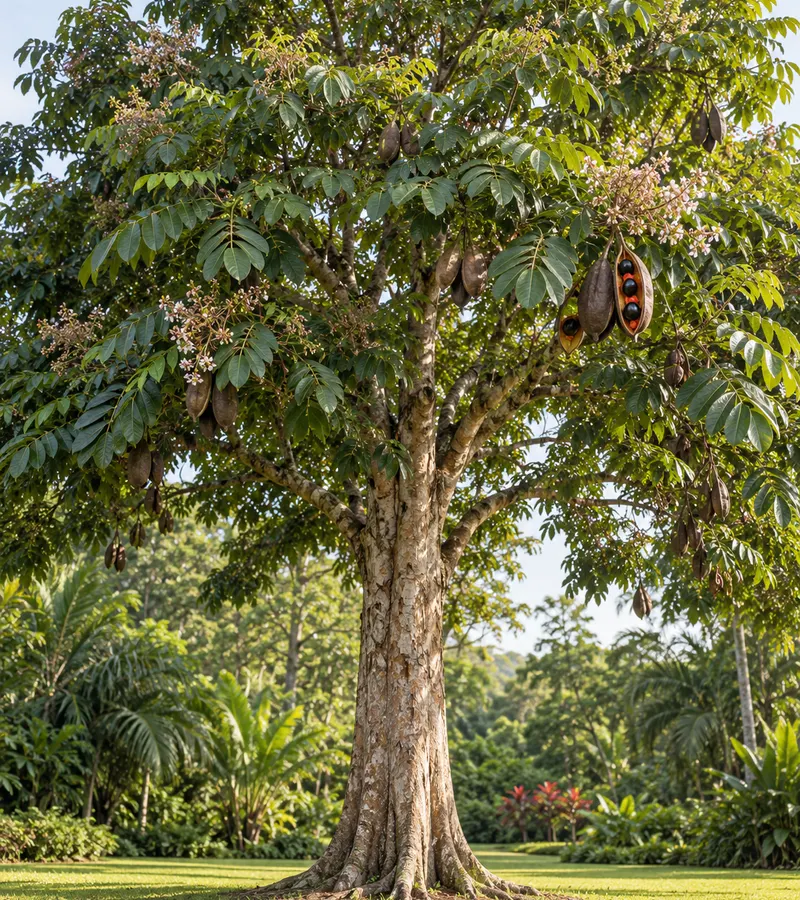
A slow-growing valuable timber tree with a wide crown, pinnate leaves and large woody black pods; it is endangered, so plant only legally sourced stock.
Care and placement
A slow-growing valuable timber tree that needs full sun once grown, deep well-drained soil and no waterlogging at the base; it tolerates about 12-39 °C but does poorly below 10 °C. IUCN lists it as Endangered, so buy only nursery stock with legally sourced seed.
Draft mature dimensions
Maximum height (cm): 2000 cm · Maximum spread (cm): 1200 cm
Things to consider
No source records significant toxicity (PFAF lists no known hazards), but there is no safety rating for children or pets, so it is not claimed safe. The hard woody pods, 15-20 cm long, can hurt people walking under the crown when they fall. The species is threatened and is a Group I precious timber in Vietnam, so felling, transport or trade needs checking with the forest protection authority.
How to grow and care for it
Planting and pot
Choose a sunny, roomy site with deep, free-draining soil that does not flood, and mound the base because the tree is prone to waterlogging and base rot. Buy legal nursery stock and never take trees or seed from the forest. The tree reaches 25-30 m (PFAF gives about 20 m tall and 12 m wide in cultivation), and one nursery lists landscape density at 500-800 trees per hectare, roughly 11-14 m apart; the safe distance from buildings, pipes, pavement and overhead lines needs a site survey. Planting on public land needs the owner's or authority's permission.
Light
Young plants like light shade but need more sun as they mature; PFAF says it cannot grow in shade. It suits a climate with a 5-6 month dry season and daytime temperatures of 20-32 °C, and it is not for cold highlands.
Watering
Water moderately, keeping soil moist but never standing in water, since it tolerates waterlogging poorly and is prone to base rot. It prefers about 1,000-1,500 mm of rain a year with a 5-6 month dry season; mature trees shed their leaves seasonally and cope with the dry spell.
Feeding
One nursery advises feeding 2-4 times a year with manure, NPK or well-rotted compost, spread about 15 cm from the trunk because fertiliser too close can burn roots. The roots carry nitrogen-fixing nodules, so it does not need much nitrogen; scientific sources give no schedule.
Pruning
The sources give no pruning schedule. The tree branches low and has a wide but open crown, so lift the crown early by removing low limbs to keep clearance for vehicles and pedestrians, and always remove dead or broken branches. Large cuts or work near power lines should be done by a qualified crew.
Propagation
Propagate by seed. The seed coat is very hard, so remove the aril (without damaging the radicle), nick the far end and soak for about 12 hours before sowing. Cold-stored seed stays viable for 1-2 years. Take seed only from legal stock, and seedlings take years to grow because growth is slow.
Pests and common problems
Waterlogging rots the base and kills the tree; stem borers are the most damaging pest according to one nursery, which paints lime around the base as prevention. It sheds leaves in waves in the dry season, so leaf litter needs sweeping, and the large, hard, woody pods and seeds drop, so do not plant it over busy walkways or parking. The sources do not cover pavement-lifting roots, typhoon wind or branch brittleness, so survey the site and inspect trees regularly; young trees need staking against wind and rain. No source mentions pollen or scent causing allergies.
For plentiful, healthy leaves
To grow a strong, handsome tree: enough sun, deep well-drained soil, no waterlogging, shelter for young trees from wind, light feeding 2-4 times a year and patience since growth is slow. Glossy pinnate leaves give broad shade, and the black woody pods ripen around October-November.