
ZZ plant
Zamioculcas zamiifolia
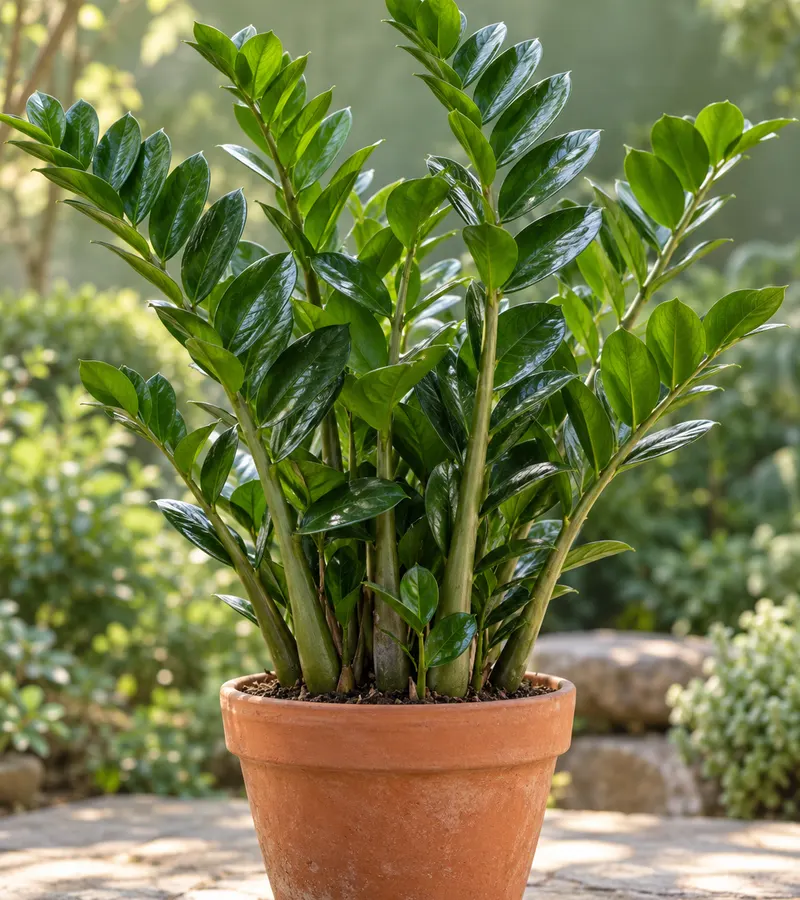
Glossy leaflets on fleshy stems tolerate rooms with little light.
Care and placement
Tolerates low to bright indirect light; water only once the mix is fully dry since the rhizome stores water; keep above about 15 °C (60 °F) and away from cold drafts.
Draft mature dimensions
Maximum height (cm): 80 cm · Maximum spread (cm): 60 cm
Things to consider
All parts contain calcium oxalate: sap irritates skin and swallowing causes mouth burning and digestive upset (NC State, Iowa State Extension). Wear gloves when dividing; keep children and pets from chewing it.
How to grow and care for it
Planting and pot
Use a very fast-draining mix (cactus mix or soil with plenty of perlite) in a pot with drainage holes. The fleshy rhizome rots if the mix stays wet; pick a moderately sized pot.
Light
Bright indirect light speeds growth, but it tolerates very low light. Harsh afternoon sun damages leaves.
Watering
Wait until the mix is completely dry, then water thoroughly until it drains and empty the saucer. About every 2–3 weeks when warm and monthly when cool. Yellow leaves almost always mean overwatering.
Feeding
A very light feeder: diluted liquid fertilizer about monthly or a few times in the growing season. Too much builds salts, burns roots and causes brown leaf spots.
Pruning
Cut yellowed or damaged stems off at the base; no shaping needed.
Propagation
Dividing the rhizome is fastest: it is thick and tough but can be split, each piece needing a shoot and roots. Leaf cuttings work but take 3–9 months. Keep the medium slightly moist, warm and out of direct sun.
Pests and common problems
Few problems; occasional mealybugs, aphids, scale and spider mites — wipe leaves and spray neem oil weekly. Rhizome rot from wet soil is the main issue.
For plentiful, healthy leaves
For more stems: place in bright indirect light, water sparingly, repot when the rhizomes crowd and divide. It grows slowly; flowers rarely appear indoors.