
Water jasmine
Wrightia religiosa
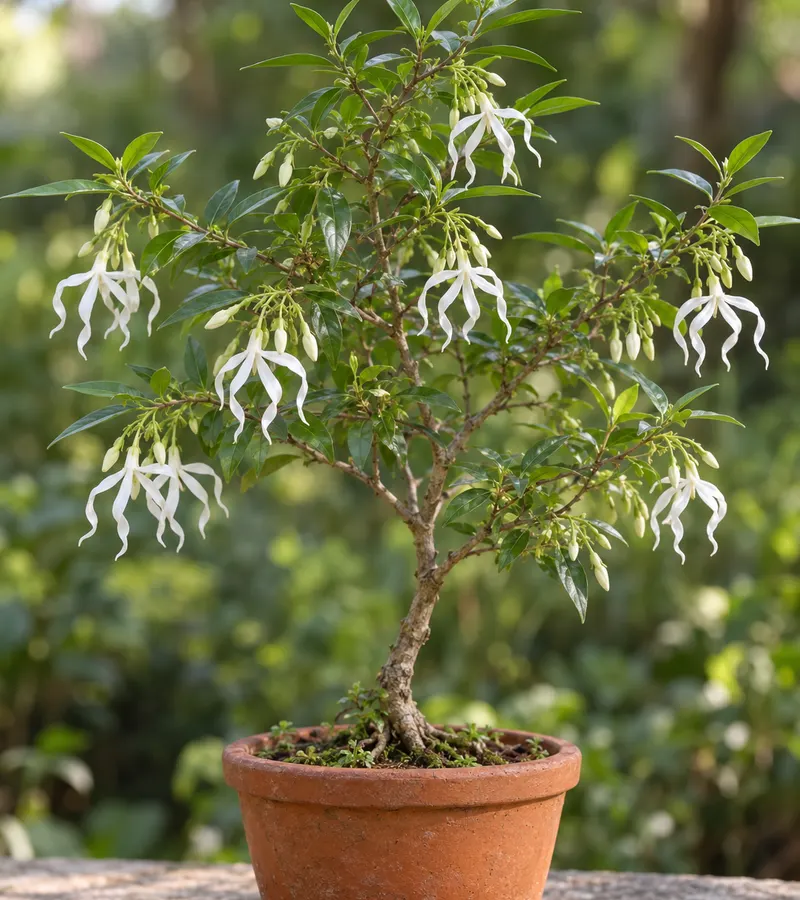
Small drooping white flowers with a soft scent, often shaped as bonsai.
Care and placement
Likes full sun to bright light, warmth above 18 °C, watering as soon as the surface starts to dry and never fully drying out; fairly hungry; prune after flowering; often grown as bonsai.
Draft mature dimensions
Maximum height (cm): 200 cm · Maximum spread (cm): 150 cm
Things to consider
The milky sap from cuts may mildly irritate skin; wear gloves when pruning, wash hands afterwards, do not eat it or use it as medicine, and keep children and pets from chewing it. There is no official toxicity rating for this plant.
How to grow and care for it
Planting and pot
Use a draining mix (bonsai mix or soil with sand or perlite); repot every 2–3 years in spring before strong growth.
Light
Likes full sun and warmth (above 18 °C, protect below about 7 °C); morning to midday sun is best, harsh sun may scorch in some conditions; good sun gives smaller leaves.
Watering
Water thoroughly as soon as the surface starts to dry; never let it dry out fully but avoid waterlogging. Yellow leaves and mushy stems mean overwatering; drooping leaves and crisp edges mean underwatering.
Feeding
A fairly hungry plant: balanced 10-10-10 every 2–4 weeks in spring and summer (or solid organic feed every 4 weeks); too much makes it leggy with fewer flowers.
Pruning
Prune larger branches in spring before strong growth (or right after flowering); as it is vigorous trim new shoots back to one leaf pair after several pairs develop; flowers appear after the third pair. Wear gloves because of the sap.
Propagation
Semi-hardwood cuttings 10–15 cm in late spring to early summer, lower leaves removed, dipped in rooting hormone into draining mix in bright indirect light; nights above about 16 °C work best. Air layering and seed also work.
Pests and common problems
Yellow leaves and mushy stems from overwatering; drooping from underwatering. Aphids, scale and spider mites may appear in dry conditions; inspect regularly.
For more flowers
For many scented white flowers: good sun, warmth, steady feeding without too much nitrogen, timely pruning and trimming new shoots back to a leaf pair. Small drooping white flowers with a soft scent.