
Marigold
Tagetes erecta
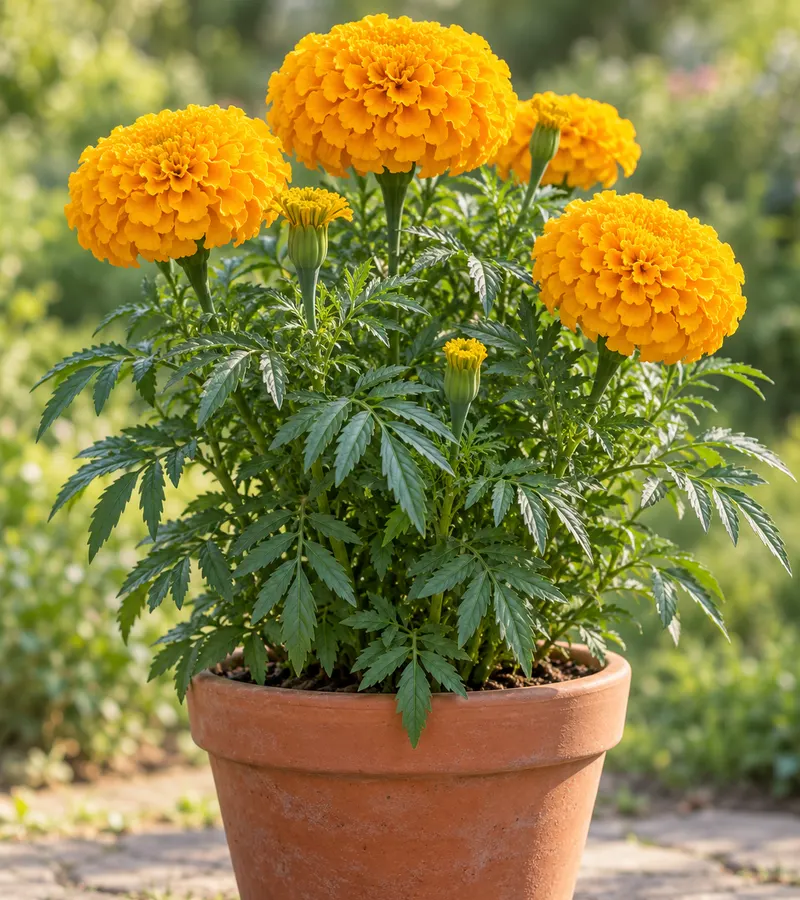
Brilliant yellow-orange blooms tied to altars and Tết, easily grown from seed.
Care and placement
Needs at least 6 hours of sun, about 25 mm of water a week at the base and little fertilizer; easy from seed; blooms about 8–10 weeks after sowing; spider mites are common in hot spells.
Draft mature dimensions
Maximum height (cm): 80 cm · Maximum spread (cm): 40 cm
Things to consider
NC State rates the poison severity as low (some sensitive people get skin irritation from sap or leaves). Marigold flowers here are for decoration and offerings; do not eat or self-medicate without proper guidance.
How to grow and care for it
Planting and pot
Sow seed thinly, barely covered, at 18–24 °C; seeds sprout in 4–14 days. Space plants 30–45 cm apart in well-drained soil, mixing in 2–5 cm of compost at planting.
Light
At least 6 hours of direct sun daily; less sun means fewer flowers and leggy stems. Light afternoon shade helps in very hot places.
Watering
About 25 mm of water a week; established plants tolerate some drought, so let the soil dry slightly between waterings. Water at ground level in the morning; soggy soil causes rot and fungus.
Feeding
A light feeder: mix in compost at planting and optionally a slow-release feed once flowering begins. Too much gives lush foliage and fewer flowers.
Pruning
Pinch seedlings at about 15 cm for a bushy plant; deadhead regularly for continued bloom; leave a few flowers if you want seed.
Propagation
Sow directly or start in trays and transplant; flowers open 8–10 weeks after sowing. Let seed heads dry on the plant and collect for the next crop.
Pests and common problems
Spider mites (on the hottest days), slugs and snails, thrips, aphids and whiteflies; bacterial leaf spot, botrytis, powdery mildew and root rot. Use insecticidal soap and space plants for airflow.
For more flowers
For plenty of big flowers: enough sun, early pinching, regular deadheading, base watering, light feeding and open spacing.