
Crape jasmine
Tabernaemontana divaricata
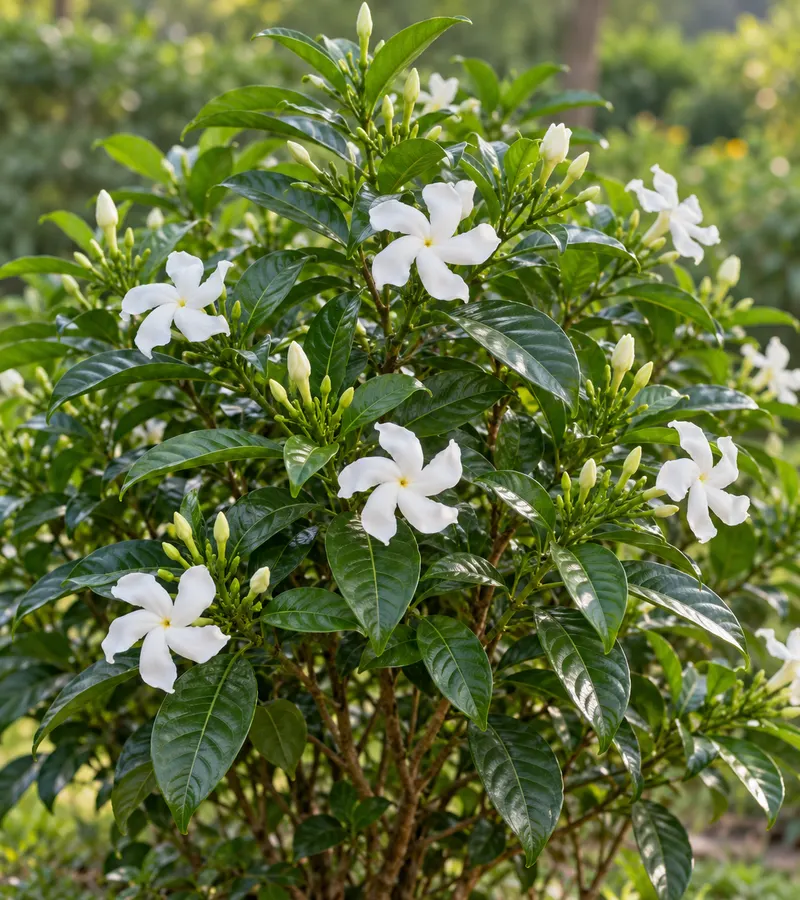
White pinwheel flowers with a light fragrance toward evening.
Care and placement
Likes full sun to part shade (about 5–6 hours of sun for good flowering), slightly acidic well-drained soil and regular watering; prune after flowering; the white latex contains alkaloids.
Draft mature dimensions
Maximum height (cm): 200 cm · Maximum spread (cm): 150 cm
Things to consider
Broken stems ooze milky latex; the plant contains over 66 alkaloids (Wikipedia) and has no official toxicity rating for dogs and cats — treat it as poisonous: wear gloves when pruning, wash hands, keep sap off eyes and skin; keep from children and pets; do not eat or self-medicate with it. It is not a true jasmine.
How to grow and care for it
Planting and pot
Plant in sun or part shade in slightly acidic, humus-rich, well-drained soil; use a large pot with drainage holes. It can be trained as a bonsai or small standard by pruning low branches.
Light
Full sun to part shade; plants are more compact in sun; afternoon shade helps in hot places. At least about 5–6 hours of direct sun for good flowering.
Watering
Needs regular watering, especially in dry spells and for pots; fairly drought-tolerant once established but still needs good drainage. Yellow leaves with green veins suggest soil that is too alkaline (iron deficiency).
Feeding
Balanced 10-10-10 every 4–6 weeks in the growing season (other sources: monthly or every 3–4 months); add organic matter or chelated iron if leaves yellow.
Pruning
Prune lightly after flowering to keep form; sterilise tools; remove lower branches to make a small standard. Wear gloves and keep the latex off skin and eyes.
Propagation
Semi-hardwood stem cuttings in a sand and peat mix kept humid; air layering or seed also work. Wear gloves because of the latex.
Pests and common problems
Aphids, mealybugs, spider mites and scale: monitor regularly, keep the plant healthy and use insecticidal soap or oil. Yellow leaves with green veins come from alkaline soil.
For more flowers
For plentiful scented white flowers: enough sun, slightly acidic soil, even watering, scheduled feeding and light pruning after each flush. The white pinwheel flowers bloom in several flushes a year in warm places.