
Arrowhead vine
Syngonium podophyllum
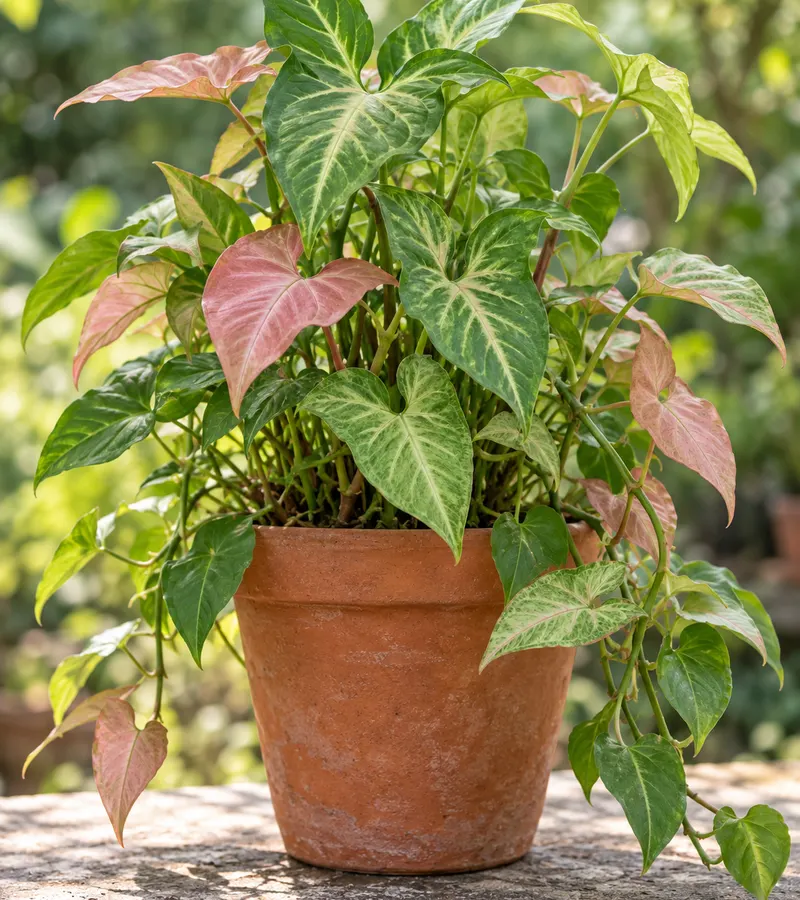
Arrow-shaped leaves change form as the plant matures, in greens and soft pinks.
Care and placement
Prefers bright indirect light, high humidity (about 60% or more) and 18–29 °C (64–85 °F); let the top 2–3 cm dry before watering.
Draft mature dimensions
Maximum height (cm): 120 cm · Maximum spread (cm): 60 cm
Things to consider
Toxic to dogs, cats and horses through insoluble calcium oxalates: burning mouth, drooling, vomiting (ASPCA). Sap irritates skin. Keep pets and children from chewing leaves.
How to grow and care for it
Planting and pot
Plant in a draining pot with a loose, moderately moisture-retentive mix. Grow in a hanging pot or on a moss pole. The root ball can be divided at repotting.
Light
Bright indirect light. It tolerates lower light; variegated forms keep colour better when brighter. Avoid harsh sun that scorches leaves.
Watering
Let the top 2–3 cm dry, then water; less in cool months. Overwatering causes root rot. Keep humidity high (pebble tray, humidifier).
Feeding
Balanced liquid fertilizer (half strength) every 4–6 weeks in spring and summer, less in autumn and winter.
Pruning
Pinch back new growth regularly for a bushy habit and to stop legginess. Remove old or damaged leaves.
Propagation
Stem cuttings: cut below a node, remove lower leaves, root in water (change it every few days) in bright indirect light; roots form within weeks, then pot up. You can also root in moist mix or divide the root ball.
Pests and common problems
Spider mites, mealybugs and scale are common; aphids and thrips occasionally. Treat with neem oil or insecticidal soap; dab mealybugs and scale with isopropyl alcohol. Root rot if waterlogged.
For plentiful, healthy leaves
For more colourful leaves: enough bright indirect light, high humidity, regular pinching and scheduled feeding; letting it climb a moss pole makes leaves larger and changes their form as it matures.