
Bird of paradise
Strelitzia reginae
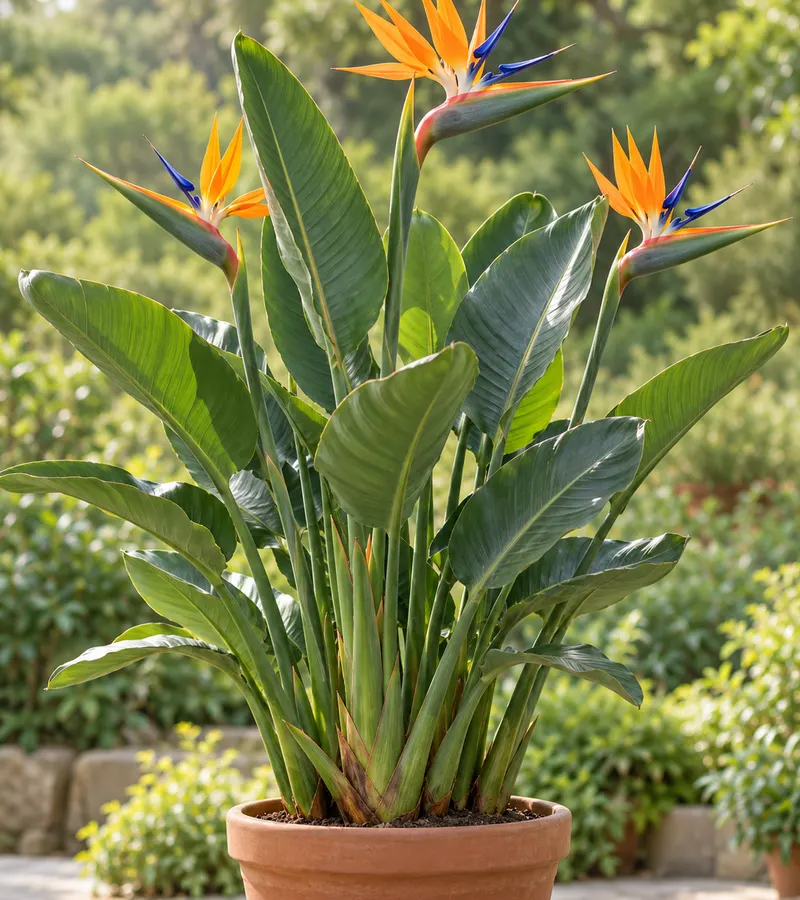
Orange and blue flowers like a bird's head above large glossy leaves.
Care and placement
Needs lots of light (about 4–6+ hours of sun) or very bright indirect light, watering when the top 5 cm is dry and regular feeding (RHS: monthly); flowers after a few years with enough light and a slightly snug pot.
Draft mature dimensions
Maximum height (cm): 120 cm · Maximum spread (cm): 100 cm
Things to consider
ASPCA lists Strelitzia reginae as toxic to dogs, cats and horses (mild nausea, vomiting, drowsiness; mainly from fruit and seeds); NC State rates it low severity. Keep pets and children from chewing fruit and seeds.
How to grow and care for it
Planting and pot
Plant in a large, deep pot or in the ground with loose, well-drained soil; it flowers better slightly pot-bound (a roomy pot delays flowering). Choose a sunny spot outdoors.
Light
RHS: full sun to partial shade (shade from hot sun under glass); other sources give 4–6+ hours of sun (6–8 outdoors) or very bright indirect light. Low light is the main reason it does not flower.
Watering
Keep moist in summer; water deeply when the top 5 cm is dry and never leave the pot standing in water; water sparingly when cool. Overwatering rots roots.
Feeding
RHS: balanced liquid fertilizer monthly while growing; Wisconsin Extension: heavy feeders, every 2 weeks in summer and monthly in winter; some sources use potassium-rich feed during flowering.
Pruning
Cut spent flower stalks and old or damaged leaves at the base; wipe dust off leaves with a soft cloth (avoid leaf-shine products).
Propagation
RHS and NC State: divide rooted suckers in spring. Division is faster and easier than seed (seed-grown plants take 4–7 years to flower; divided pot plants typically 3–5).
Pests and common problems
Usually pest-free; watch for mealybugs, scale and spider mites (which thrive in winter). For scale use horticultural or neem oil or scrape by hand, or insecticidal soap. Root rot if waterlogged.
For more flowers
To bloom its bird-head flowers: enough sun or light, steady feeding (potassium-rich when flowering), a slightly snug pot and patience until it matures. Orange and blue-purple flowers open on long stalks.