
Spider plant
Chlorophytum comosum
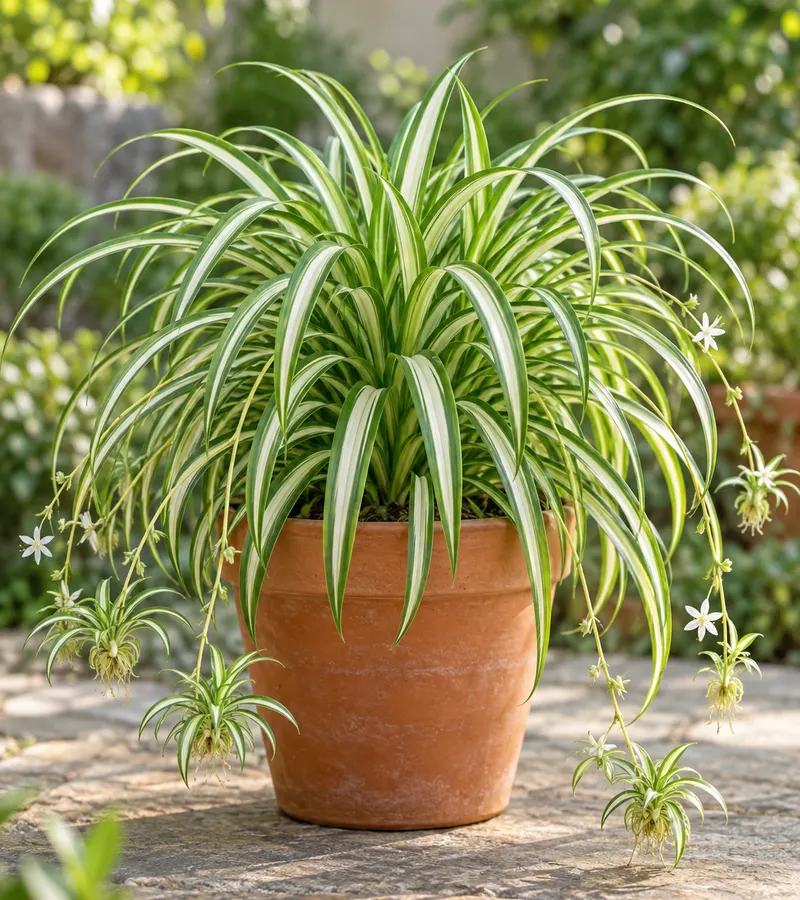
Fine arching leaves offer inspiration for a compact green corner.
Care and placement
Prefers medium indirect light, tolerates shade but not direct sun; keep the mix lightly moist and use filtered or rain water to avoid tip burn; keep above about 7 °C (45 °F).
Draft mature dimensions
Maximum height (cm): 50 cm · Maximum spread (cm): 60 cm
Things to consider
ASPCA lists spider plant as non-toxic to dogs and cats. Still discourage pets from chewing large amounts, which can upset the stomach.
How to grow and care for it
Planting and pot
Plant in a draining pot with a loose, well-drained mix. The thick roots like a slightly snug pot; move up when roots fill it. A hanging pot lets the plantlets cascade.
Light
Medium indirect light is enough and it tolerates deep shade. Direct sun burns leaves; too little light dims the variegation.
Watering
Keep the mix lightly moist in warm months: water when the top 2–3 cm is dry, drench, then empty the saucer. Let it dry a little longer when cool. Brown tips often come from chlorine/fluoride in tap water; use filtered, rain or settled water.
Feeding
Feed lightly: balanced liquid fertilizer at 1/4–1/2 strength about monthly from spring to autumn. Too much burns tips and reduces plantlets.
Pruning
Trim brown tips at an angle with clean scissors; remove old leaves and spent flower stalks at the base.
Propagation
Plantlets form on trailing stems: once a plantlet has 2–3 cm aerial roots, cut it off and pot it in moist mix (or root it in water first). You can also pin it into a small pot while still attached. Spring to early summer works best.
Pests and common problems
Brown tips come from tap water, dry air, drought or fertilizer salts; flush the mix every 2–3 months. Occasional spider mites and mealybugs; rot if waterlogged.
For plentiful, healthy leaves
For more plantlets: give enough bright indirect light, let roots get slightly crowded, feed lightly (excess reduces plantlets) and keep moisture steady; an oversized pot or lack of seasonal day/night change also reduces them.