
Peace lily
Spathiphyllum wallisii
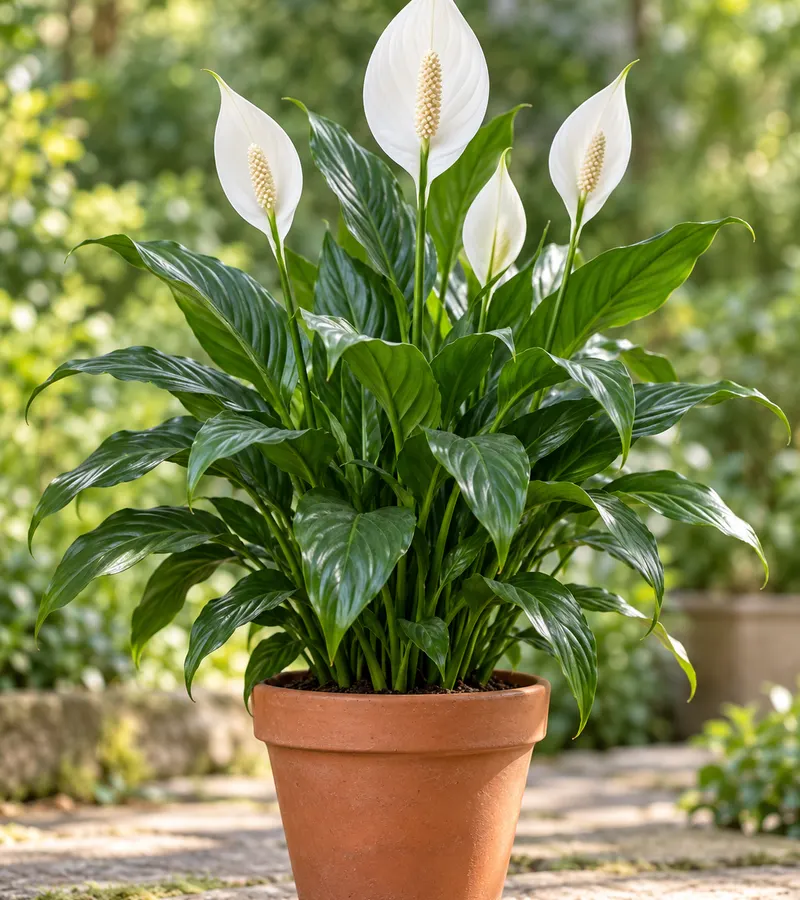
Glossy green leaves with elegant white spathes, happy in shade.
Care and placement
Prefers medium indirect light and tolerates shade with fewer blooms; water when the top 2–3 cm is dry, preferably with filtered or rain water, at 40–60% humidity.
Draft mature dimensions
Maximum height (cm): 60 cm · Maximum spread (cm): 50 cm
Things to consider
The genus Spathiphyllum contains insoluble calcium oxalates: toxic to dogs and cats, causing burning mouth, drooling, vomiting, difficulty swallowing (ASPCA). Keep pets and children from chewing leaves or flowers.
How to grow and care for it
Planting and pot
Plant in a draining pot with a loose, humus-rich mix. It flowers best slightly pot-bound; repot every 1–3 years in spring, going up only one pot size.
Light
Medium indirect light is best; lower light works but reduces flowering. Direct sun causes brown scorch marks and curled leaves.
Watering
Water when the top 2–3 cm is dry, usually every 7–10 days; drooping leaves signal thirst. Never leave the pot standing in water. Brown tips often come from tap-water fluoride or dry air; use filtered or rain water.
Feeding
Balanced liquid fertilizer at half strength every 4–8 weeks in the growing season; stop when it is cool. Excess fertilizer prevents blooming.
Pruning
Cut spent flower stalks and yellowed or damaged leaves off at the base with clean scissors.
Propagation
Divide at repotting: gently separate clumps, each with several leaves and roots; replant in indirect light with steady moisture and no fertilizer for at least a month.
Pests and common problems
Root rot from overwatering is the biggest threat. Mealybugs and spider mites are the main pests; use insecticidal soap, and keep air moving and leaves dry to limit fungus.
For more flowers
For more flowers (white spathes): give more bright indirect light (low light is the main cause of no bloom), keep roots slightly crowded, feed lightly on schedule and keep moisture steady, avoiding excess nitrogen.