
Snake plant
Dracaena trifasciata
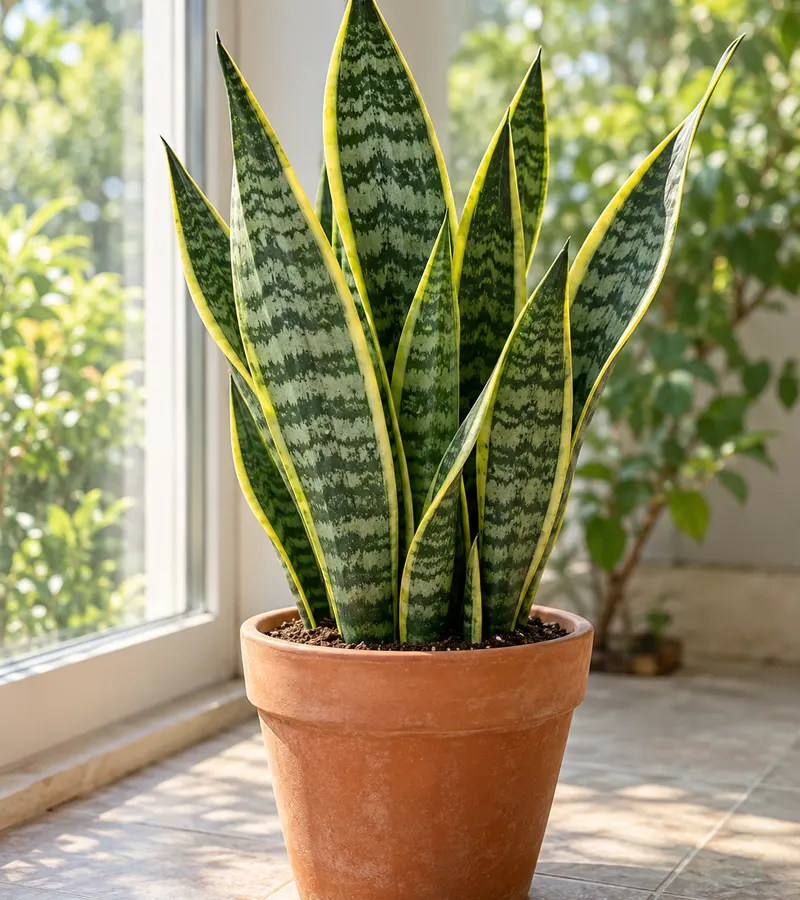
Upright, sculptural leaves for a small corner of the home.
Care and placement
Likes bright indirect light or 2–6 hours of direct sun and tolerates dim rooms; use a fast-draining mix and water sparingly. Handles dry air and cool rooms well.
Draft mature dimensions
Maximum height (cm): 100 cm · Maximum spread (cm): 60 cm
Things to consider
Toxic to dogs and cats (saponins): nausea, vomiting, diarrhea (ASPCA); NC State rates the poison severity as low. Keep leaves away from pets and young children.
How to grow and care for it
Planting and pot
Use a pot with drainage holes and a very fast-draining mix (cactus mix, or soil with perlite and coarse sand); avoid peat-heavy mixes that hold water. It grows slowly and likes being slightly rootbound; repot every 2–3 years in spring, going up one pot size.
Light
Best with direct sun for only part of the day (2–6 hours); it tolerates very low light but grows slowly. Harsh midday sun through glass can scorch the tips.
Watering
Let the mix dry out completely between waterings: roughly every 2–3 weeks in warm months and every 1–2 months when cool. Overwatering and rhizome rot is the most common way to lose it.
Feeding
Undemanding: use a balanced fertilizer at half strength every 1–3 months in the growing season and stop when it turns cool. Overfeeding causes brown tips and salt crust on the mix.
Pruning
Pruning is rarely needed; cut damaged, yellowing or broken leaves off at the base with a clean knife.
Propagation
Divide the clump: cut the rhizome into pieces that each keep leaves and roots, pot into dry mix and wait 5–7 days before watering. Leaf cuttings work but take 4–10 weeks and variegated forms revert to plain green; only division preserves variegation.
Pests and common problems
Mostly root rot from overwatering; occasionally mealybugs and spider mites. Treat with insecticidal soap or neem oil; for rot, unpot, trim affected roots and repot in dry mix. Cold turns leaves brown.
For plentiful, healthy leaves
For more and sturdier leaves, give steady bright light, water infrequently on schedule, and keep the plant slightly pot-bound, dividing once crowded. Indoors it rarely flowers.