
Donkey's tail
Sedum morganianum
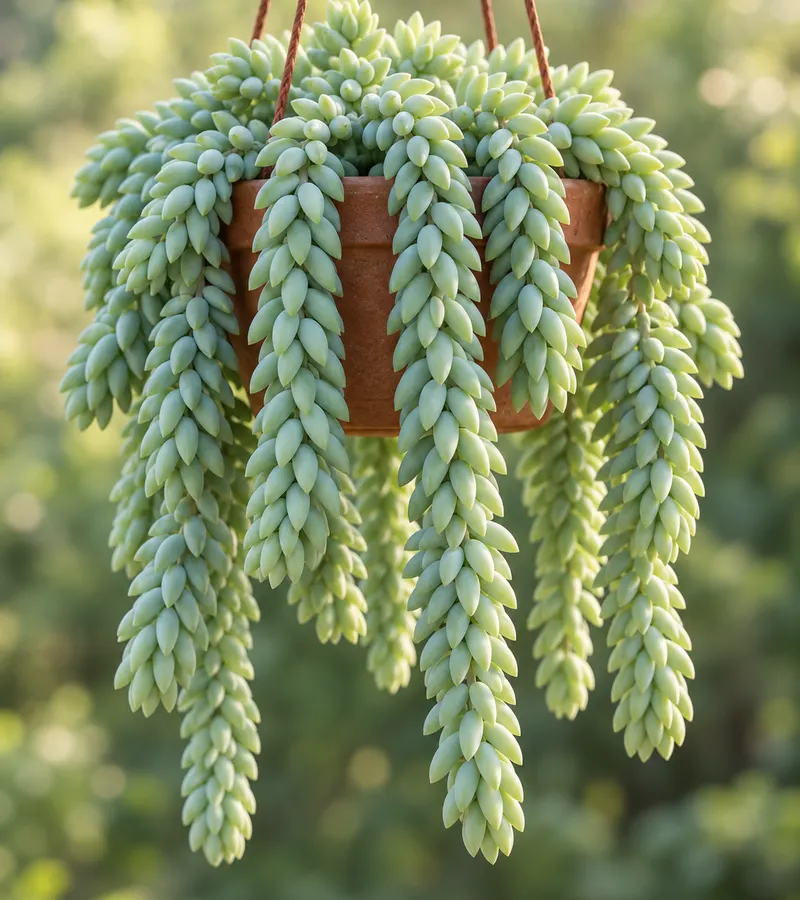
Trailing stems lined with plump leaves, ideal for hanging pots.
Care and placement
Needs bright light (partial to full sun), a fast-draining cactus mix and infrequent watering; leaves drop at a touch so use a hanging pot and handle rarely.
Draft mature dimensions
Maximum height (cm): 40 cm · Maximum spread (cm): 30 cm
Things to consider
ASPCA lists Sedum morganianum (burro's tail) as non-toxic to dogs, cats and horses. Still discourage pets from chewing leaves.
How to grow and care for it
Planting and pot
Use a fast-draining cactus mix in a hanging pot with drainage holes. Handle it little since leaves fall off; repot every 2–3 years.
Light
Needs bright light: a sunny window with several hours of direct sun is ideal; bright indirect light also works. Low light stretches stems and spaces leaves; acclimate gradually to stronger sun.
Watering
Let the mix dry completely, then water thoroughly: about every 10–14 days in the growing season, monthly or less when cool. Shriveled leaves mean it needs water; soggy soil rots stems at the base.
Feeding
Needs very little: diluted cactus fertilizer once or twice in spring and summer.
Pruning
Rarely pruned; only remove damaged or overlong strands and collect fallen leaves for propagation.
Propagation
Take 10–15 cm strands, strip the base leaves, let the cut callus for a few days, then set in cactus mix with little water; roots form in about 2 weeks. Fallen leaves laid on the mix also root in 4–8 weeks.
Pests and common problems
Mainly root and stem-base rot from overwatering, plus leaf spot and powdery mildew. Remove affected parts, repot in dry mix and cut back on watering.
For plentiful, healthy leaves
For thick, full strands: lots of sun, sparing water, sharp drainage, very light feeding, a fixed hanging spot and minimal handling. Mature, well-lit plants may bear pink flowers at the strand tips.