
Firecracker plant
Russelia equisetiformis
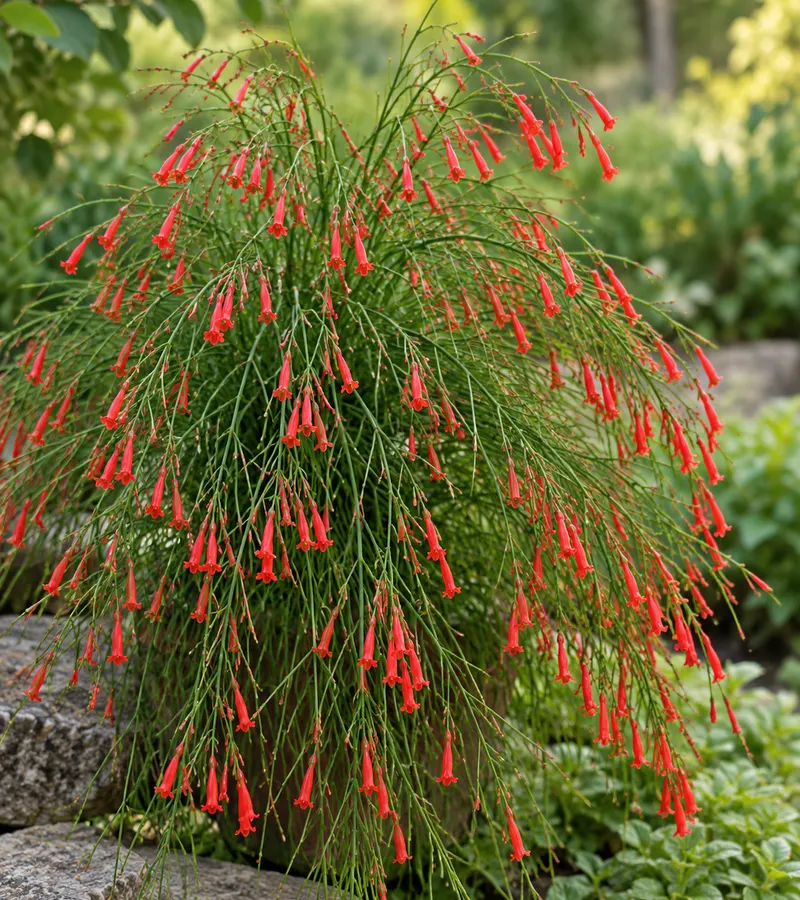
Slender drooping stems with tubular red flowers like small strings of firecrackers.
Care and placement
Needs 6–8 hours of sun for most flowers (tolerates light afternoon shade), well-drained soil, deep watering letting it partly dry; frost-tender; cut spent flower stems at the base for more blooms.
Draft mature dimensions
Maximum height (cm): 100 cm · Maximum spread (cm): 100 cm
Things to consider
There is no official toxicity rating for this plant, so it is not claimed safe or toxic. Take care: do not eat it or use it as medicine, wear gloves and wash hands after pruning, and keep children and pets from chewing it.
How to grow and care for it
Planting and pot
Plant in sun in well-drained soil (all-purpose mix with a little perlite or sand); pots need drainage holes. Arching stems suit hanging pots or wall edges.
Light
Full sun for the most flowers, tolerating light afternoon shade; part shade makes stems leggy and sharply cuts flowering.
Watering
Water deeply and let the soil partly dry between waterings; mature plants are drought-tolerant so keep them on the dry side; less in cool months. Waterlogging causes root rot.
Feeding
Balanced water-soluble fertilizer at half strength every 2 weeks (or monthly) from spring to autumn, or one slow-release dose in early spring.
Pruning
Cut spent flower stems at the base at any time for more blooms; to control size prune hard in early spring or cut the oldest 30–50% of stems back to about 15 cm in late winter.
Propagation
Take 10–15 cm tip cuttings in spring: scratch the base, dip in rooting powder, set in draining mix in indirect light above 10 °C under a loose bag; they root easily. Layering also works.
Pests and common problems
Prone to spider mites and whiteflies; root rot from overwatering and poor drainage is the main disease risk.
For more flowers
For many red flowers: 6–8 hours of sun, sparing water, regular removal of spent stems and a tidy early-spring prune. Tubular red flowers line the arching stems almost year-round in hot places.