
China rose
Rosa chinensis
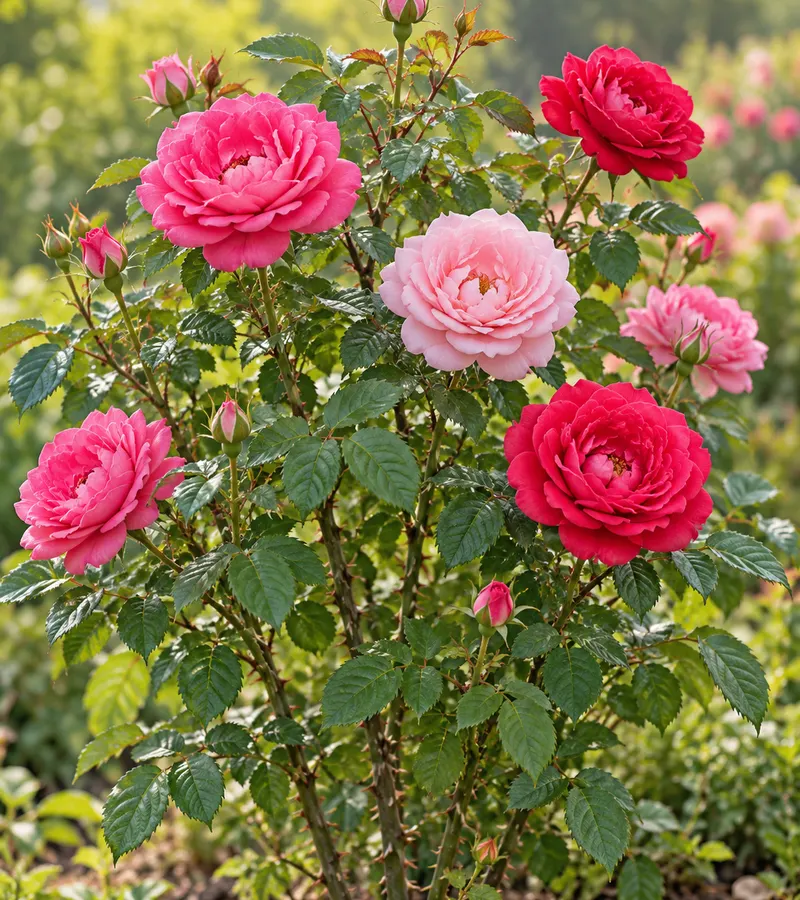
Flowers in repeated flushes, in many colours and scents; needs sun and pruning.
Care and placement
Needs at least 6 hours of sun, deep watering at the base with mulch, steady feeding in the growing season and good airflow to limit black spot and mildew.
Draft mature dimensions
Maximum height (cm): 120 cm · Maximum spread (cm): 90 cm
Things to consider
ASPCA lists roses (Rosa species) as non-toxic to dogs, cats and horses; thorns can injure. Wear thick gloves when pruning.
How to grow and care for it
Planting and pot
Plant in sun in loose, humus-rich, well-drained soil; use a large pot with drainage holes. Space plants for airflow to limit fungal disease.
Light
At least 6 hours of direct sun daily; light afternoon shade helps in very hot places. Less sun means fewer blooms.
Watering
Water deeply and infrequently, letting the soil dry slightly between sessions; more during flowering. Water at the base, avoid wetting leaves and mulch generously (NC State).
Feeding
Balanced rose fertilizer (e.g. 10-10-10) in early spring then every 4–6 weeks through summer; avoid heavy feeding late in the season. Compost or well-rotted manure also works.
Pruning
Most sources prune mainly in late winter or early spring: remove dead, diseased or damaged wood then thin crowded areas. Deadhead just above a leaf node to bloom again and extend the season.
Propagation
NC State: propagate by grafting or stem cuttings; sources say cuttings are more reliable than seed. Buying a grafted or established plant is the fastest, steadiest route.
Pests and common problems
Black spot, powdery mildew, rust and rose rosette — keep airflow, avoid wetting leaves, remove fallen leaves and destroy infected ones (do not compost). Aphids on new growth: strong water spray, insecticidal soap or neem oil.
For more flowers
For more blooms: enough sun, deep watering at the base, steady feeding in the growing season, timely pruning and regular deadheading; prevent disease to keep foliage healthy.