
Lady palm
Rhapis excelsa
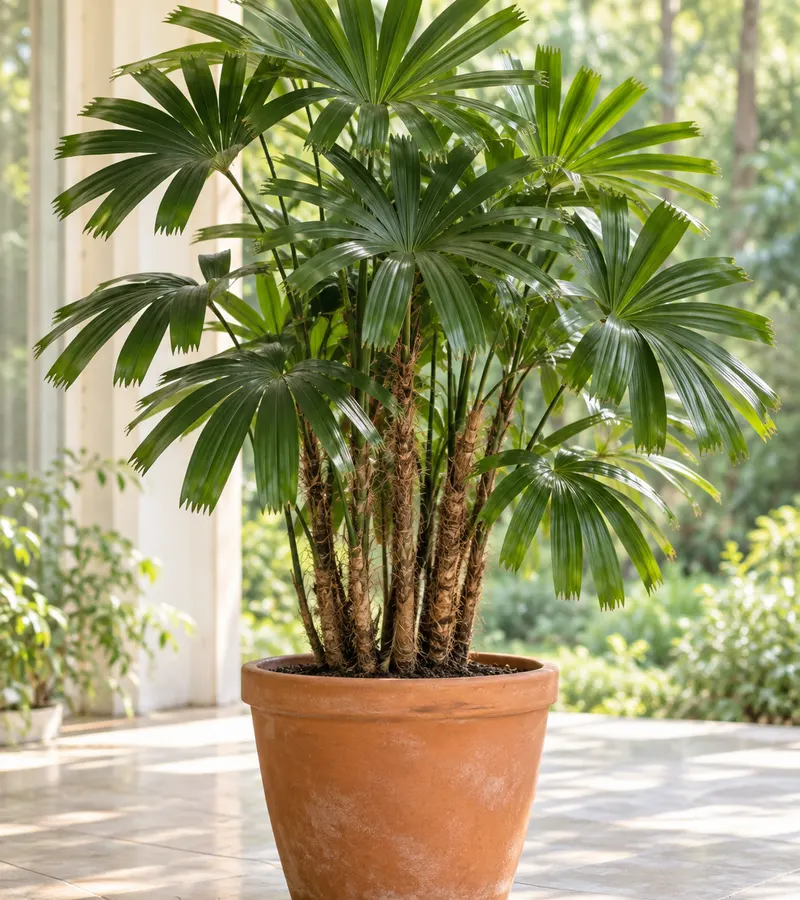
A clumping fan palm with tidy foliage, suited to large indoor pots.
Care and placement
Prefers bright indirect light and tolerates low light; not a heavy feeder and likes a snug pot; humidity from 50%.
Draft mature dimensions
Maximum height (cm): 200 cm · Maximum spread (cm): 150 cm
Things to consider
ASPCA lists Rhapis (lady palm) as non-toxic to dogs, cats and horses. Still discourage pets from chewing fronds.
How to grow and care for it
Planting and pot
Plant in a large, well-draining pot with a loose mix. It clumps and likes a snug pot; repot every other year in spring or when stems crowd.
Light
Bright indirect light; low light is tolerated with little or slow growth. Harsh sun scorches fronds.
Watering
Water when the top 2–3 cm is dry (a little moister in warm months, let the surface dry in cool months). Overwatering, especially in winter, is the greater threat. Sensitive to boron, fluoride and chlorine in tap water, which cause black tip burn; use filtered or rain water.
Feeding
Not a heavy feeder: water-soluble balanced fertilizer a few times a year, or every 4–6 weeks in the growing season, less when cool. Excess harms it.
Pruning
Cut dry or damaged fronds at the base; note scale can hide in the leaf sheaths.
Propagation
Divide in spring: separate the basal offshoots so each keeps roots attached and pot them in fresh mix.
Pests and common problems
Mealybugs, scale and spider mites (dry air); use neem oil or insecticidal soap. Root rots from Fusarium or Pythium occasionally occur when waterlogged.
For plentiful, healthy leaves
For a dense multi-stem clump: bright indirect light, clean water, light steady feeding, a snug pot and division once overcrowded. It rarely flowers indoors.