
China doll tree
Radermachera sinica
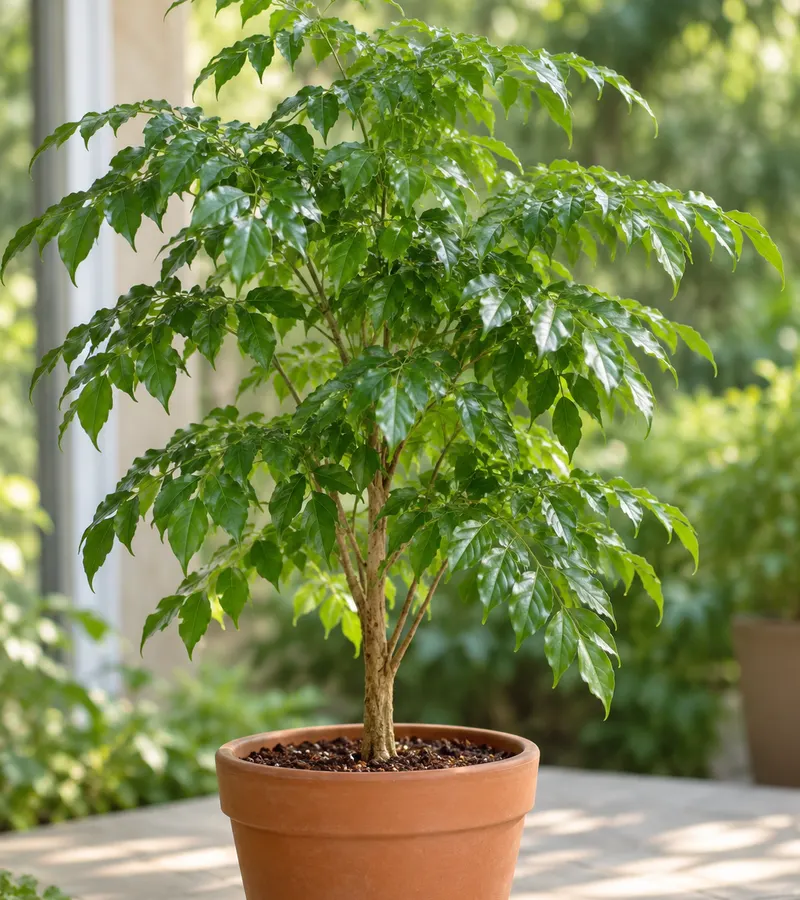
Fine glossy compound leaves, often placed in living rooms and offices.
Care and placement
Prefers bright indirect light, steady 18–27 °C, watering when the top 2–5 cm is dry and 40–60% humidity; drops leaves when moved or when light or temperature changes; prune in early spring.
Draft mature dimensions
Maximum height (cm): 150 cm · Maximum spread (cm): 80 cm
Things to consider
There is no official toxicity rating for this plant, so it is not claimed safe or toxic. Take care: do not eat it or use it as medicine, wear gloves and wash hands after pruning, and keep children and pets from chewing it.
How to grow and care for it
Planting and pot
Use a well-draining pot with a loose mix; repot when roots fill it, usually every 2–3 years in spring. Pick a permanent spot since it hates being moved.
Light
Bright indirect light; harsh sun scorches leaves; too little light gives thin, leggy shoots.
Watering
Let the top 2–5 cm dry then water. Underwatering drops green leaves; overwatering drops yellow leaves and rots roots. 40–60% humidity is enough.
Feeding
Balanced fertilizer at half strength in the growing season (monthly to every 2 weeks depending on source); none in cool months.
Pruning
Prune in early spring before new growth, cutting up to a third; cutting the main stem encourages side branches and a bushier shape.
Propagation
Take 10 cm tip cuttings in spring or summer: dip in rooting hormone, set in damp draining mix and cover with a clear bag or lid to hold humidity (critical). Air layering suits large woody plants; seed also works.
Pests and common problems
Spider mites, aphids, mealybugs and scale: neem oil or insecticidal soap. Leaf drop is usually caused by changes in light, water or temperature or by moving the plant.
For plentiful, healthy leaves
For a fine, dense canopy: steady bright indirect light, even temperature, correct watering, light feeding in warm months and early-spring pruning to branch. Fine glossy compound leaves suit living rooms and offices.