
Ming aralia
Polyscias fruticosa
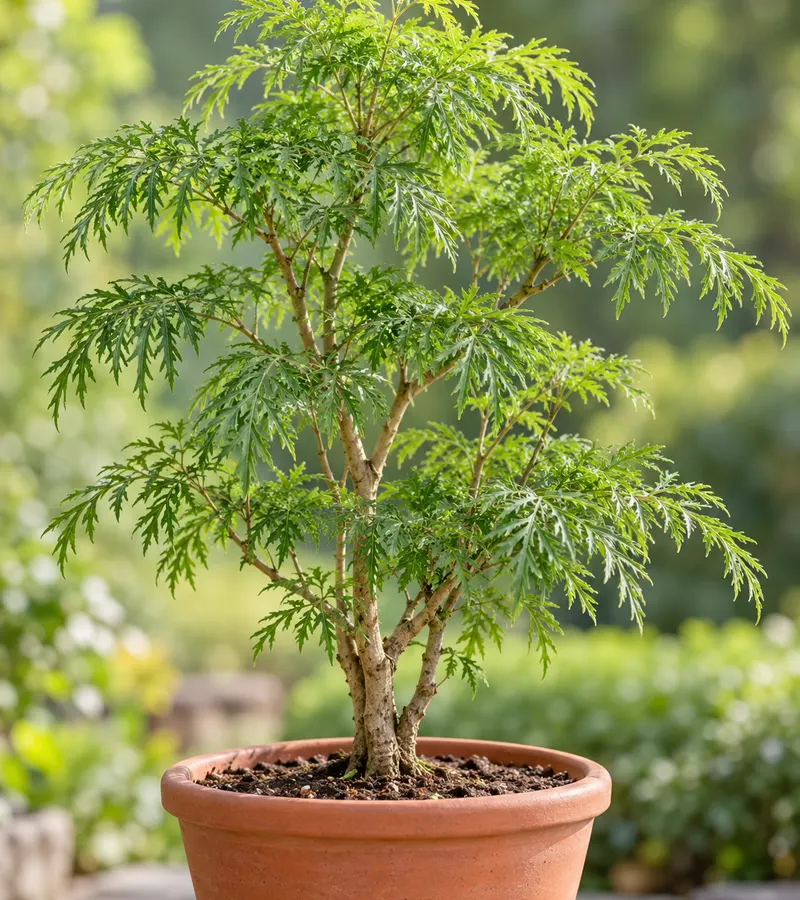
Finely cut leaves like a miniature tree, grown as ornamental and bonsai.
Care and placement
Prefers bright indirect light, high humidity and 18–29 °C; water once the top 2–3 cm is dry but never let the whole root ball dry; avoid cold drafts.
Draft mature dimensions
Maximum height (cm): 200 cm · Maximum spread (cm): 100 cm
Things to consider
The genus Polyscias contains saponins: ASPCA lists it as toxic to dogs, cats and horses (contact dermatitis, vomiting, anorexia). All parts are mildly poisonous if eaten. Keep from pets and children; do not use it as medicine without guidance.
How to grow and care for it
Planting and pot
Plant in a well-draining pot with a moist, loose mix (or train as bonsai); repot every 2–3 years.
Light
Bright indirect light; gentle sun is tolerated but hot midday sun scorches leaves. Too little light makes it sparse, leggy and leaf-dropping.
Watering
Let the top 2–3 cm dry before watering; prone to root rot if soggy, yet drying out the whole root ball causes heavy leaf drop. Water less when cool; keep humidity high.
Feeding
Balanced liquid fertilizer (e.g. 10-10-10) at half strength monthly from spring to autumn (some sources only spring and summer); flush salts every 2–3 months.
Pruning
Pinch growing tips to branch and thicken; trim bonsai regularly to keep it compact and remove suckers so the trunk thickens. It grows slowly so hard pruning should be gradual.
Propagation
Take ~10 cm tip cuttings in late spring or summer: cut below a node, strip lower leaves, dip in rooting powder, set in moist mix, cover with a bag and keep above 22 °C; roots form in 4–5 weeks but are slow and unreliable.
Pests and common problems
Aphids, mealybugs, scale, spider mites, nematodes and whiteflies, usually in dry conditions; spray soap or neem oil. Cold drafts drop leaves.
For plentiful, healthy leaves
For dense foliage: bright indirect light, high humidity, regular tip pinching, light feeding in warm months and never letting the root ball dry out.