
Buddhist pine
Podocarpus macrophyllus
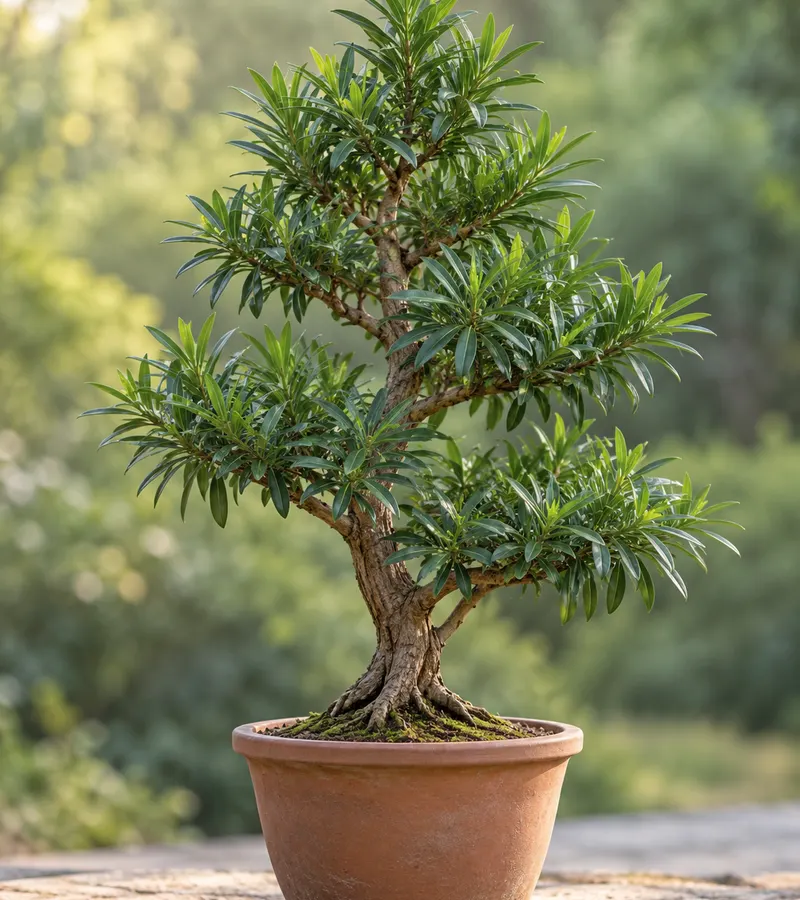
Narrow dark green leaves in an upright habit, great for bonsai and hedges.
Care and placement
Tolerates full sun to part shade in slightly acidic to neutral, well-drained soil with moderate watering; takes pruning extremely well so suits hedges and bonsai; not frost-hardy.
Draft mature dimensions
Maximum height (cm): 300 cm · Maximum spread (cm): 150 cm
Things to consider
ASPCA lists Podocarpus macrophyllus as toxic to dogs, cats and horses (vomiting, severe diarrhea; toxic principle unknown); NC State rates it low severity. Keep pets and children from chewing leaves or fruit; do not confuse it with highly toxic yew (Taxus).
How to grow and care for it
Planting and pot
Choose well-drained, slightly acidic to neutral soil; the most common mistake is planting where soil stays wet. Pots or bonsai trays need drainage holes.
Light
Full sun to part shade; indoors about 4–6 hours of direct sun (east or west window).
Watering
Keep moderately moist, letting the surface dry slightly between waterings; water regularly in the first growing season, then it is fairly drought-tolerant. Reduce when cool without letting it dry out. Overwatering browns tips and rots roots.
Feeding
Light feeding: balanced fertilizer every 4–6 weeks in the growing season, none when cool. Excess gives soft, weak growth and salt buildup.
Pruning
Tolerates pruning extremely well: trim lightly in the growing season and do structural pruning in late winter or early spring. Suits hedges, screens and topiary; tolerates urban conditions and salt spray.
Propagation
Cuttings: semi-hardwood in summer or softwood in early spring, set in moist, draining mix at high humidity; cutting bases rot easily. Seed is rarely used.
Pests and common problems
Scale is the most common indoor pest (waxy coat resists sprays); mealybugs; root rot and brown tips from overwatering.
For plentiful, healthy leaves
For a dense, glossy canopy: 4–6 hours of sun, moderate water, light feeding and regular trimming in the growing season. It has no showy flowers; grown for foliage and form.