
Chinese money plant
Pilea peperomioides
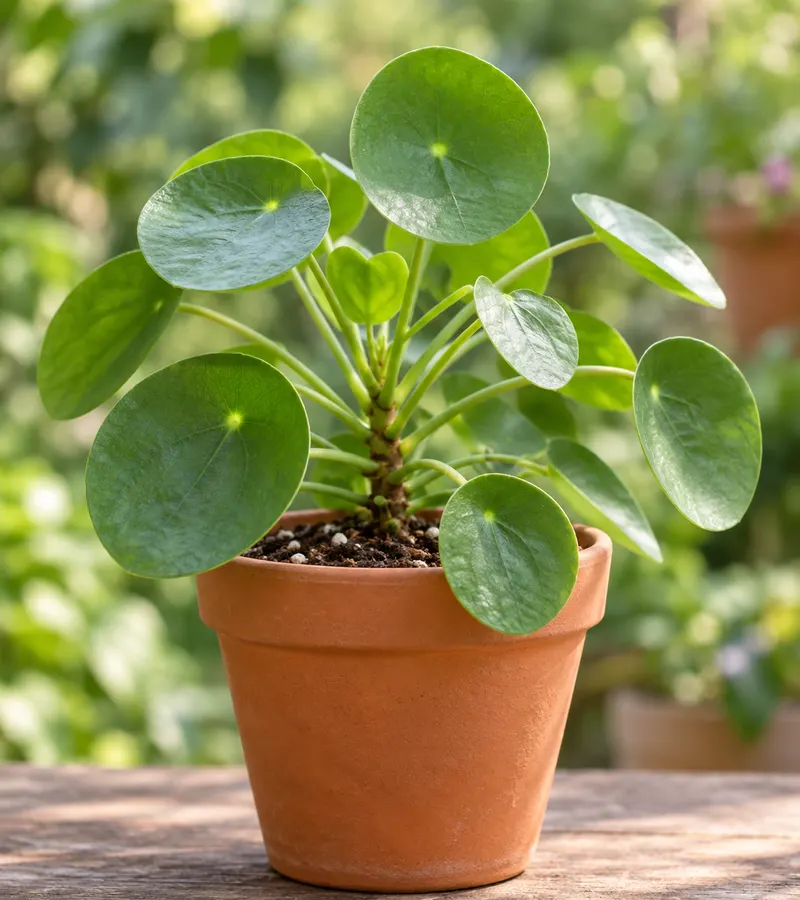
Coin-round leaves on slim stalks, ideal for a small desk.
Care and placement
Prefers bright indirect light and a weekly quarter-turn for even growth; water when the top 2–5 cm is dry; suits 18–27 °C, with leaf drop possible below about 10 °C.
Draft mature dimensions
Maximum height (cm): 30 cm · Maximum spread (cm): 30 cm
Things to consider
ASPCA lists Pilea species (e.g. friendship plant) as non-toxic to dogs and cats. Still discourage pets from chewing large amounts.
How to grow and care for it
Planting and pot
Use an airy, fast-draining mix (add perlite and bark) in a pot with drainage holes. Do not cover the surface with stones or pebbles, which blocks pups. Repot every 1–2 years in spring.
Light
Bright indirect light; east or west windows work. Too little light gives long stems, small leaves and fewer pups; harsh sun causes dry brown scorch spots.
Watering
Water when the top 2–5 cm is dry, drench and empty the saucer; less when cool. Never leave it standing in water. Yellowing, dropping leaves usually mean overwatering; brown edges mean dry air or underwatering.
Feeding
Diluted liquid fertilizer monthly in spring and summer; none in autumn and winter.
Pruning
Only remove yellowed or damaged leaves. Rotate the pot so it does not lean toward the light.
Propagation
Separate pups from the base or roots once they have their own roots: cut with a clean knife, let the cut callus for a few hours, pot in a small 8–10 cm pot of moist, draining mix and keep evenly moist for 2–3 weeks in bright indirect light. Water-rooted stem cuttings (4–6 weeks) also work but are less reliable.
Pests and common problems
Scale, mealybugs, spider mites and aphids may appear; fungus gnats when soil stays soggy. Soft, wet-looking spots are usually fungal from overwatering or water sitting on leaves. Curled, deformed leaves can signal low calcium.
For plentiful, healthy leaves
For many pups and even round leaves: enough bright indirect light, weekly rotation, light feeding in warm months and a pot neither too tight nor too big; low light reduces pups.