
Heartleaf philodendron
Philodendron hederaceum
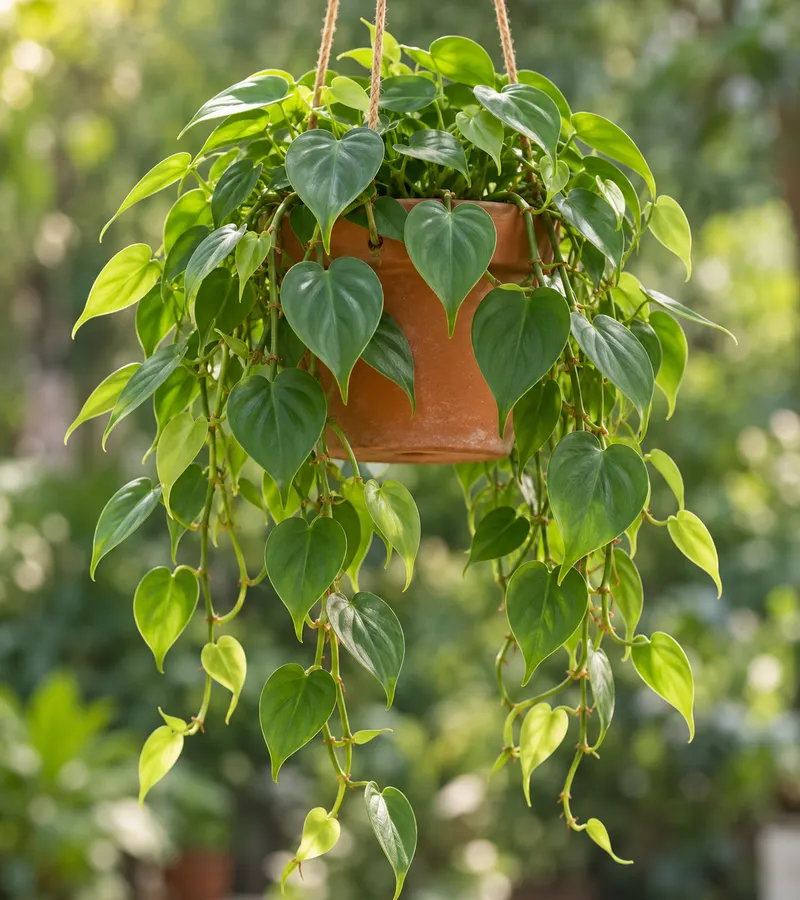
Soft heart-shaped leaves on trailing vines suit high shelves and hanging pots.
Care and placement
Prefers bright indirect light and tolerates lower light; water when the top 2–3 cm is dry, at 40–60% humidity and about 18–29 °C, away from cold drafts.
Draft mature dimensions
Maximum height (cm): 200 cm · Maximum spread (cm): 100 cm
Things to consider
Toxic to dogs, cats and horses through insoluble calcium oxalates: burning mouth, drooling, vomiting, difficulty swallowing (ASPCA). Keep children and pets from chewing leaves.
How to grow and care for it
Planting and pot
Plant in a draining pot or hanging basket with a loose mix with perlite or orchid bark. Let it trail or climb a moss pole. Repot every 2–3 years to refresh the mix.
Light
Bright indirect light is best; lower light works but vines get leggy with small, spaced leaves. Direct sun burns leaves.
Watering
Water when the top 2–3 cm is dry: roughly weekly in warm weather and every 10–14 days when cool. Yellow leaves usually mean overwatering.
Feeding
Feed balanced liquid fertilizer at half strength every 4–6 weeks in spring and summer; skip it in cool months.
Pruning
Snip leggy stems just above a node; pinching tips makes the plant fuller and bushier.
Propagation
Water cuttings are the most reliable: cut just below a node, remove lower leaves; roots appear in 2–3 weeks. Pot into loose mix when roots are about 2–3 cm. You can also root straight in moist mix.
Pests and common problems
Aphids, scale, spider mites, mealybugs and fungus gnats can appear, more so when overwatered. Treat with neem oil or insecticidal soap; for gnats, let the mix dry more between waterings.
For plentiful, healthy leaves
For dense, larger foliage: give enough bright indirect light, pinch regularly, feed steadily in warm months, and let it climb a moss pole (leaves grow larger when climbing).