
Moth orchid
Phalaenopsis amabilis
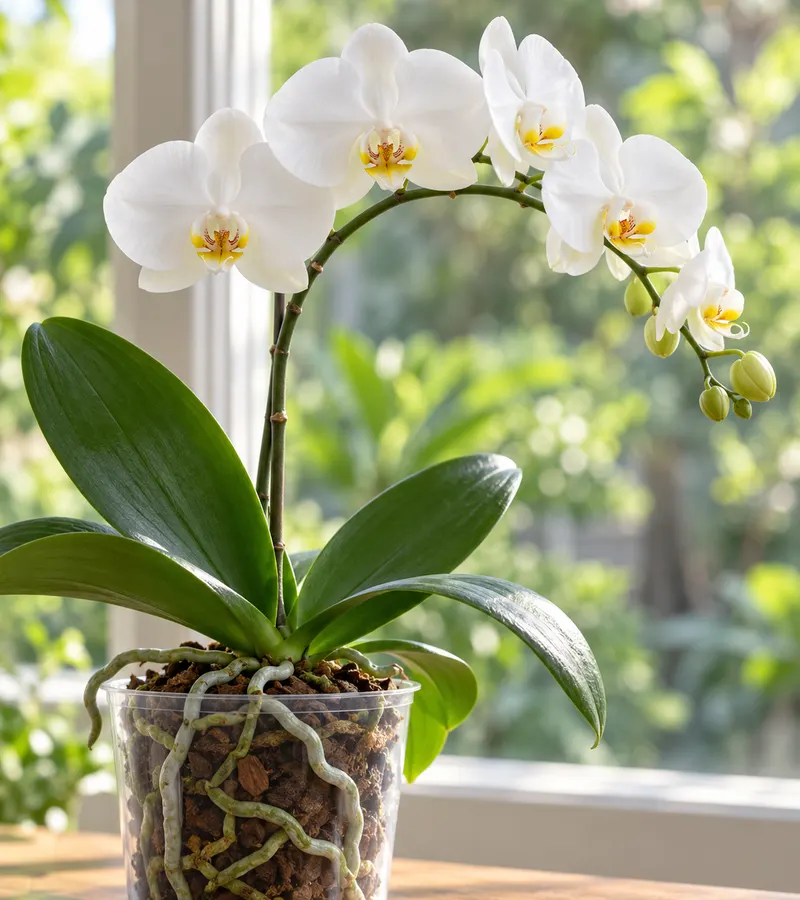
Arching sprays like a flight of butterflies, lasting weeks indoors.
Care and placement
Needs bright indirect light (east window), an airy bark mix, soaking then drying for 7–14 days; cooler nights for a few weeks trigger flower spikes.
Draft mature dimensions
Maximum height (cm): 60 cm · Maximum spread (cm): 40 cm
Things to consider
ASPCA lists moth orchid (Phalaenopsis) as non-toxic to dogs, cats and horses. Still discourage pets from chewing leaves or roots.
How to grow and care for it
Planting and pot
Use a loose, chunky mix: fir or pine bark with perlite and charcoal, NOT regular potting soil, in a clear, vented plastic pot. Repot every 1–2 years or when the mix breaks down, best after flowering; pick a pot only slightly larger than the roots and do not bury the crown; wait 7 days before watering after repotting.
Light
Bright indirect light (roughly 1,000–1,500 foot-candles, an east window); low light keeps it alive but it will not rebloom; harsh sun scorches leaves.
Watering
Soak, drain fully and wait until the mix dries: about every 7 days in a warm dry home, 10–14 days in a cooler humid spot. Silvery roots mean thirst. Water in the morning so leaves dry by night; water trapped in the crown causes crown rot (usually fatal). No ice cubes and never let the pot sit in water.
Feeding
Balanced fertilizer at 1/4–1/2 strength (one source suggests 30-10-10 for bark) every 2 weeks while growing; none when cool.
Pruning
A still-green spike may branch again; a fully brown spike is cut near the base. Trim dead or mushy roots when repotting.
Propagation
Propagated mainly from keikis on flower stalks or by dividing multi-crowned plants; most people buy established plants. (The sources checked give little detail on keikis; seed needs laboratory methods.)
Pests and common problems
Root rot from overwatering (brown mushy roots); buds shrivel and drop from chill, drafts or ethylene from fruit; crown rot from trapped water; mealybugs (insecticidal soap, neem or alcohol). Moving the plant once spikes emerge can drop buds within hours.
For more flowers
To rebloom: enough light comes first; for a mature plant, nights of about 15–18 °C for 2–6 weeks in the cool season trigger a spike; then return to a warm spot with normal watering and feeding; the spike takes about 3 months to open its first flowers; do not move the plant once spikes emerge.