
Petunia
Petunia × atkinsiana
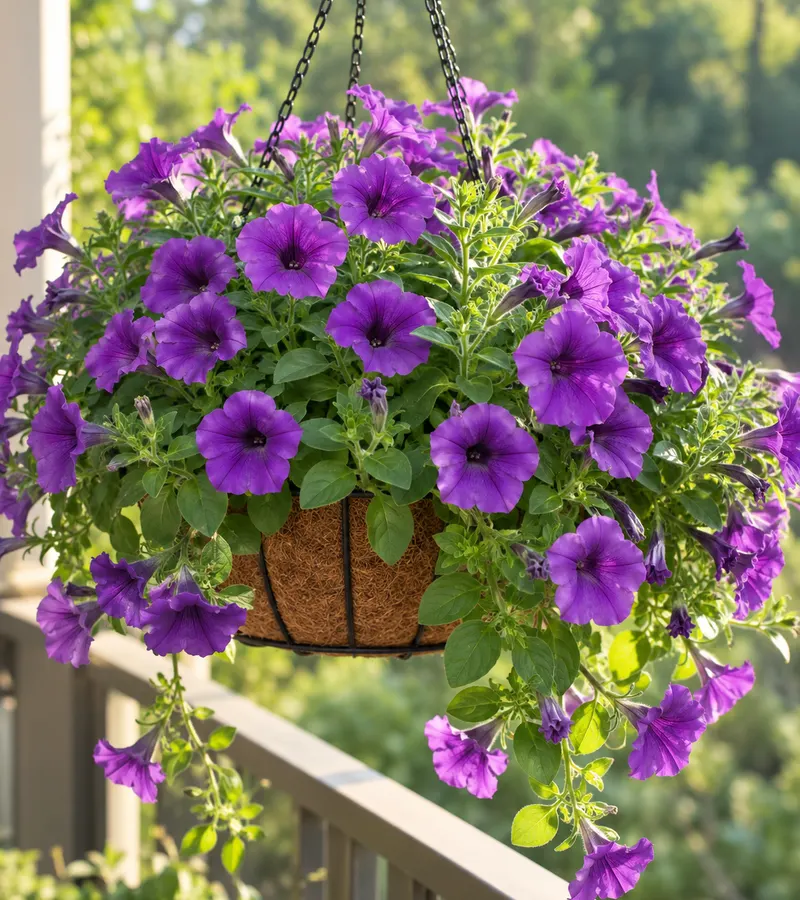
Multi-coloured trumpets spilling from hanging pots, liking cool sun.
Care and placement
Needs full sun (5–6+ hours); containers dry out fast so water often at the base; feed regularly; prefers cool climates (Đà Lạt, northern cool season).
Draft mature dimensions
Maximum height (cm): 30 cm · Maximum spread (cm): 40 cm
Things to consider
ASPCA lists Petunia species as non-toxic to dogs, cats and horses. Still discourage pets from chewing large amounts.
How to grow and care for it
Planting and pot
Plant in hanging baskets or wide pots with a loose, humus-rich, well-draining mix and drainage holes. Space moderately for airflow.
Light
Full sun, at least 5–6 hours; shade gives fewer flowers, longer gaps between flushes and leggy stems.
Watering
Containers dry fast: in hot weather water every 1–2 days (small hanging baskets in peak heat may need it twice a day); water at the base and avoid wetting flowers and leaves to prevent botrytis and petal blight. Keep evenly moist, not soggy.
Feeding
Balanced fertilizer every 2–3 weeks (or a 10-30-20 bloom booster every 2 weeks); avoid high nitrogen which favours leaves over flowers.
Pruning
Deadhead for more flowers; pinch tips for bushiness; when leggy or tired mid-season, cut back by a third (some sources to about 10 cm) with a light feed for a new flush in about 2 weeks. Wave types need little deadheading or pinching.
Propagation
Seed (very fine, surface-sown, needs light) or tip cuttings; named hybrids are usually cloned by cuttings to keep colour. (The sources checked give little detail on cuttings.)
Pests and common problems
Aphids (water spray, insecticidal soap); caterpillars (hand-pick); the main disease is botrytis and petal blight in humid weather and when flowers and leaves stay wet.
For more flowers
For abundant blooms: enough sun, steady base watering, regular balanced feeding, deadheading and cutting back when leggy.