
Bunny ears cactus
Opuntia microdasys
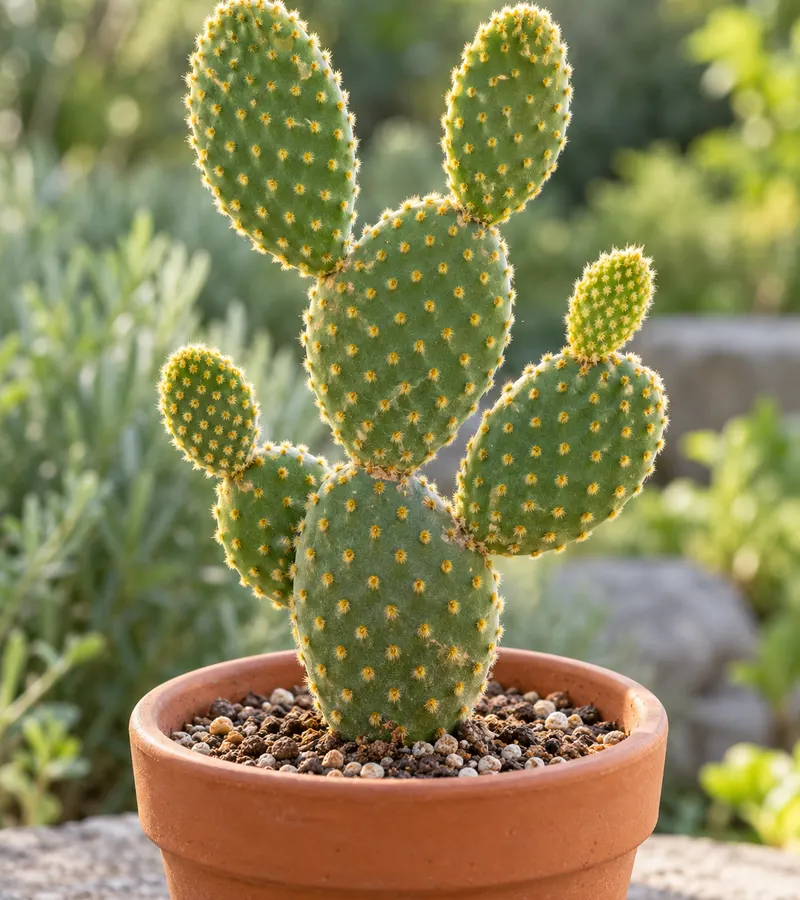
Flat pads like bunny ears dotted with tiny tufts of fine bristles.
Care and placement
Needs lots of sun (about 6 hours), a fast-draining cactus mix and infrequent watering with full drying; 18–29 °C (65–85 °F); protect from frost; wear gloves because of the tiny barbed bristles.
Draft mature dimensions
Maximum height (cm): 50 cm · Maximum spread (cm): 60 cm
Things to consider
ASPCA lists Opuntia as non-toxic to dogs, cats and horses, but the tiny barbed glochids detach easily and embed in skin and mucous membranes, causing itching and burning. Wear thick gloves when repotting; keep away from children and pets.
How to grow and care for it
Planting and pot
Use a very free-draining cactus mix (add perlite or coarse sand) in a pot with drainage holes. Handle with thick gloves or folded newspaper; repot every 2–3 years.
Light
Lots of sun: about 6 hours of direct sun daily, tolerating partial shade; indoors, use the sunniest window.
Watering
Water thoroughly but rarely, letting it dry completely (about every 2–3 weeks when warm, 4–6 weeks when cool). Prone to root rot; shriveling pad tips can point to overwatering.
Feeding
Diluted cactus fertilizer every 4–6 weeks in spring and summer; avoid high-nitrogen formulas; stop in autumn and winter.
Pruning
Only remove damaged or rotting pads at the joint, wearing gloves and using a clean knife.
Propagation
Pad cuttings: with gloves, twist or cut a pad at the joint using a clean knife, let it callus for at least a week (the most important step), plant upright in free-draining mix and water very little until rooted (2–6 weeks when warm). Seeds work but are slower.
Pests and common problems
Spider mites, scale and mealybugs: wipe pads with alcohol-soaked cotton. Root rot when overwatered, especially in cool months; shrivelled pad tips suggest too much water.
For plentiful, healthy leaves
For more new pads and flowers: lots of sun, sparing water, sharp drainage, light low-nitrogen feeding and a cool, dry winter rest. Mature plants bear yellow flowers, seldom seen indoors.