
Oleander
Nerium oleander
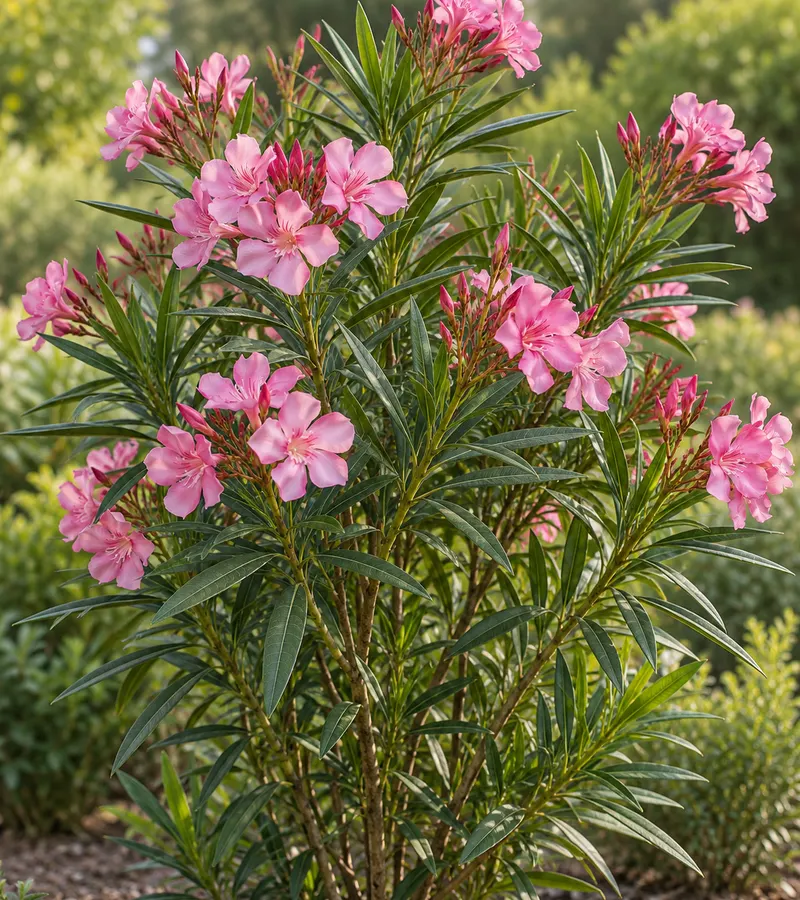
Pink or white flowers that handle sun, but every part is highly poisonous.
Care and placement
Needs full sun (6–8 hours) and fertile, well-drained soil; drought-tolerant once established; prune lightly after flowering; the WHOLE PLANT IS HIGHLY TOXIC.
Draft mature dimensions
Maximum height (cm): 300 cm · Maximum spread (cm): 200 cm
Things to consider
HIGHLY TOXIC: every part contains cardiac glycosides; NC State rates the poison severity as high; ASPCA notes drooling, abdominal pain, diarrhea, depression and death in dogs, cats and horses. Sap irritates skin and burning smoke is also toxic. Wear gloves when pruning, never burn clippings, and do not plant where children or pets can reach it.
How to grow and care for it
Planting and pot
Plant in full sun in fertile, well-drained soil (NC State). Place it away from children's play areas and pet-frequented spots.
Light
Full sun, about 6–8 hours daily; NC State: full sun to partial shade. Shade sharply reduces flowering.
Watering
Drought-tolerant once established, needing infrequent watering; drip irrigation at the base is better than overhead sprinklers since wet foliage encourages bacterial leaf spot.
Feeding
Not a heavy feeder: balanced 10-10-10 twice a year or slow-release in early spring. Too much nitrogen gives foliage over blooms.
Pruning
NC State: prune lightly and regularly after flowering and not after early autumn so next year's buds are kept. Remove no more than a third of live growth per session. Wear gloves, wash hands and tools; never burn clippings.
Propagation
Semi-hardwood cuttings 10–20 cm long in late spring to summer, lower leaves removed, dipped in rooting hormone and set in draining mix; roots in 3–6 weeks. Seed also works (NC State). Wear gloves.
Pests and common problems
Prone to bacterial leaf spot (angular water-soaked lesions turning brown) when foliage is wet, and oleander leaf scorch. Aphids, mealybugs and scale may appear. Avoid overhead watering and remove diseased parts.
For more flowers
For abundant flowers: full sun, little nitrogen, light pruning at the right time after flowering and watering at the base. Pink, white or yellow flowers open from spring to autumn.