
Boston fern
Nephrolepis exaltata
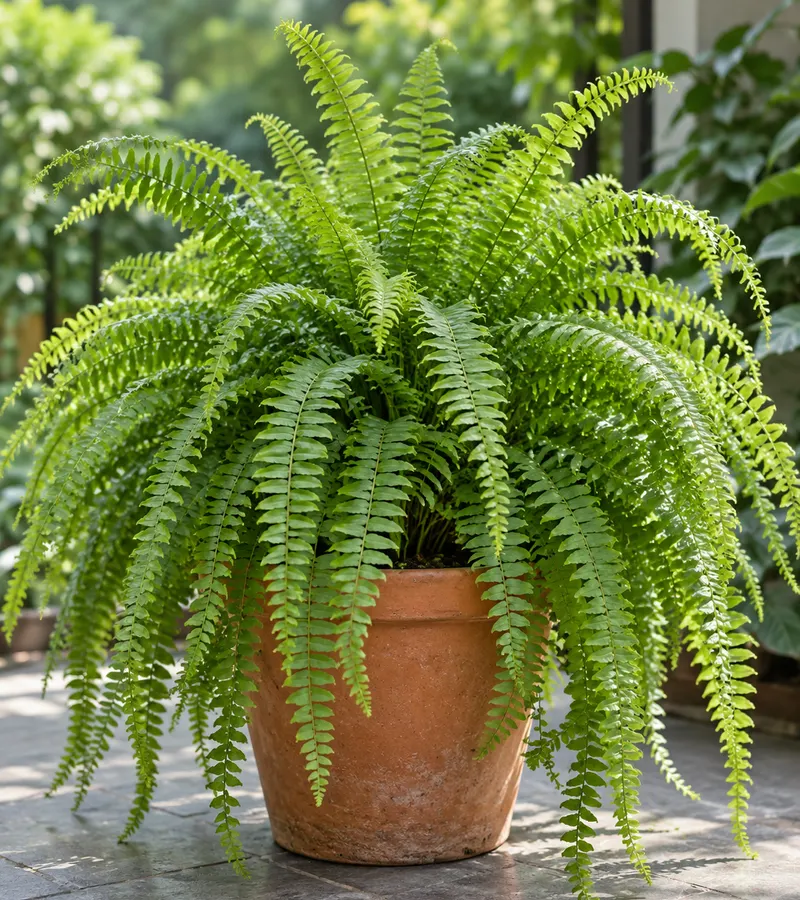
Arching feathery fronds bring cool green to a shaded balcony.
Care and placement
Prefers bright indirect light (no harsh midday sun) and high 50–70% humidity; keep the mix evenly moist but not waterlogged; avoid dry drafts.
Draft mature dimensions
Maximum height (cm): 60 cm · Maximum spread (cm): 80 cm
Things to consider
ASPCA lists Boston fern (Nephrolepis exaltata) as non-toxic to dogs, cats and horses. Still discourage pets from chewing large amounts.
How to grow and care for it
Planting and pot
Use a loose, peat- or humus-rich, well-draining mix. Set the crown level with the surface; burying it invites rot. Repot when roots fill the pot at the start of the growing season.
Light
Bright indirect light: east or north window, or 1–2 m back from a sunny window. Harsh midday sun scorches fronds; a few hours of morning sun is tolerated.
Watering
Keep evenly moist: water thoroughly then let the top 1–2 cm dry (2–3 times a week in hot weather, about weekly when cool). Humidity matters most: below 40% fronds shed and tips brown; use a humidifier or a bright bathroom.
Feeding
Feed lightly in the growing season: half-strength liquid fertilizer monthly (or every two weeks). Excess burns fine roots and crisps tips.
Pruning
Cut old, dry or fully brown fronds off at the base; do not leave green stalks half-cut.
Propagation
Divide in spring: cut or tease the root ball into sections with several fronds and healthy roots, pot in fresh mix, and keep humid in bright indirect light until established.
Pests and common problems
Spider mites, scale and mealybugs are common in dry conditions (webs, speckled fronds, sticky residue): raise humidity, wipe with soapy water, use insecticidal soap or neem, isolate affected plants. Crown rot if planted too deep.
For plentiful, healthy leaves
For a dense, lush arching crown: keep humidity high, the mix evenly moist, light bright and indirect, feed lightly and regularly, and repot when roots fill the pot. Ferns do not flower or fruit.