
Prayer plant
Maranta leuconeura
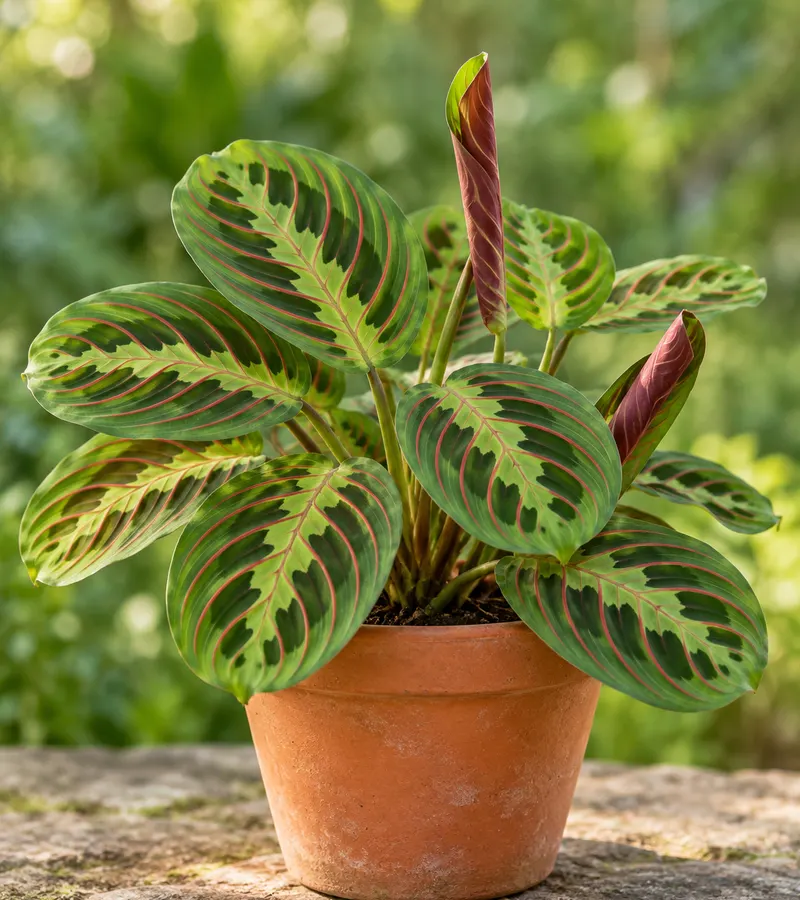
Leaves fold up at night like praying hands, with striking red veins.
Care and placement
Prefers bright indirect light, 50–60%+ humidity and 18–27 °C (65–80 °F); keep the mix evenly moist, with filtered or rain water.
Draft mature dimensions
Maximum height (cm): 35 cm · Maximum spread (cm): 40 cm
Things to consider
ASPCA lists prayer plant (Maranta, family Marantaceae) as non-toxic to dogs, cats and horses. Still discourage pets from chewing large amounts.
How to grow and care for it
Planting and pot
Use a well-draining, peat-rich mix in a pot with drainage holes. Roots are shallow; a moderately wide pot suits. Repot every 1–2 years in spring.
Light
Bright indirect light. Dimmer light survives but gets leggy; direct sun scorches leaves.
Watering
Water when the top 2–3 cm is dry, keeping it evenly moist but not soggy. Sensitive to fluoride and chemicals in tap water: use distilled or rain water. Brown tips usually mean dry air or hard water.
Feeding
Balanced liquid fertilizer at half strength every 2–4 weeks in the growing season; stop when cool.
Pruning
Cut yellowed or browned leaves at the base; trimming long stems encourages new shoots.
Propagation
Division is the most reliable (nearly always works): split the root ball into sections with roots and leaves and pot in fresh mix in spring or early summer. Water cuttings of 10–15 cm stem with a node also work, with a lower success rate.
Pests and common problems
Spider mites are the main pest, worse in dry air; thrips and mealybugs are rarer. Chronic low humidity causes slow decline. Waterlogging rots roots.
For plentiful, healthy leaves
For abundant, bold-patterned leaves: high humidity, clean water, steady bright indirect light, light feeding and repotting when crowded. It rarely flowers indoors; grown for foliage.