
Easter lily
Lilium longiflorum
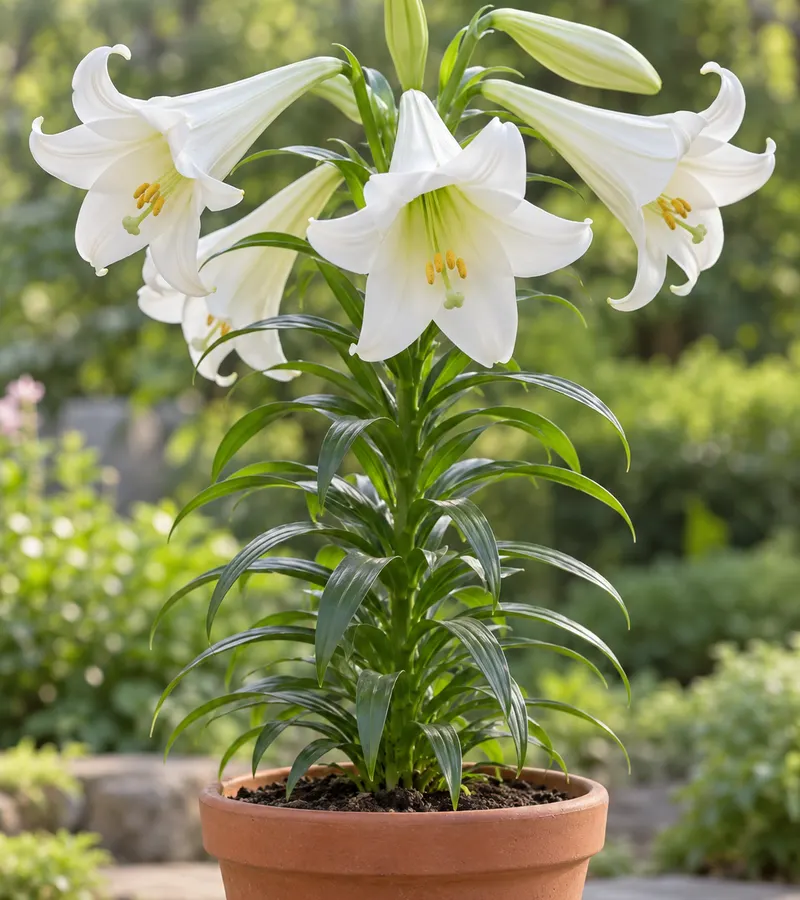
Pure white trumpet flowers, richly scented and blooming seasonally.
Care and placement
Needs bright indirect light indoors or sun to part shade outdoors (shade from late sun), cool roots and moist but not soggy soil; EXTREMELY TOXIC TO CATS.
Draft mature dimensions
Maximum height (cm): 90 cm · Maximum spread (cm): 30 cm
Things to consider
EXTREMELY TOXIC TO CATS: every part (even pollen licked off fur) can cause vomiting, inappetence, lethargy, kidney failure and death from small amounts (ASPCA, Easter lily). Dogs and people usually get only digestive upset. Snip off the anthers; do not keep lilies in homes with cats; if a cat may have eaten any, go to a vet at once.
How to grow and care for it
Planting and pot
Plant bulbs 10–15 cm deep in sun to part shade (shade from late sun) in humus-rich, well-drained soil with cool roots; use a tall pot with drainage holes. A potted gift plant can go outdoors after the cold passes.
Light
Indoors: bright indirect light away from drafts and radiators; outdoors: full sun to part shade, about 6–8 hours of sun with the base shaded.
Watering
Keep soil moist, not soggy; overwatering yellows leaves and kills the plant. If the pot is foil-wrapped, remove it when watering so it drains fully. Keep watering after bloom until the foliage dies back.
Feeding
While blooming indoors one source feeds every 2 weeks; after flowering keep the green leaves to feed the bulb and fertilize every few weeks; outdoors fertilize twice over summer and mulch.
Pruning
Snip off the pollen-covered anthers to prevent stains, extend bloom life and reduce pollen exposure for cats (University of Minnesota Extension); remove spent flowers but keep green stems and leaves.
Propagation
Separate bulblets in autumn, store in peat over winter and replant in spring (2–3 years to flower); scales can also be separated and packed in moist medium at 18–27 °C for 45–60 days. Seed is uncommon for named cultivars.
Pests and common problems
Yellow leaves usually mean overwatering; bulbs rot in soggy mix. Ask local extension about local pests and disease (aphids, botrytis).
For more flowers
For long-lasting white trumpets: bright indirect light, cool temperatures, moist soil, regular feeding in bloom and removing anthers; after flowering feed the foliage so the bulb stores energy (in cool regions it may bloom again next season).