
Arabian jasmine
Jasminum sambac
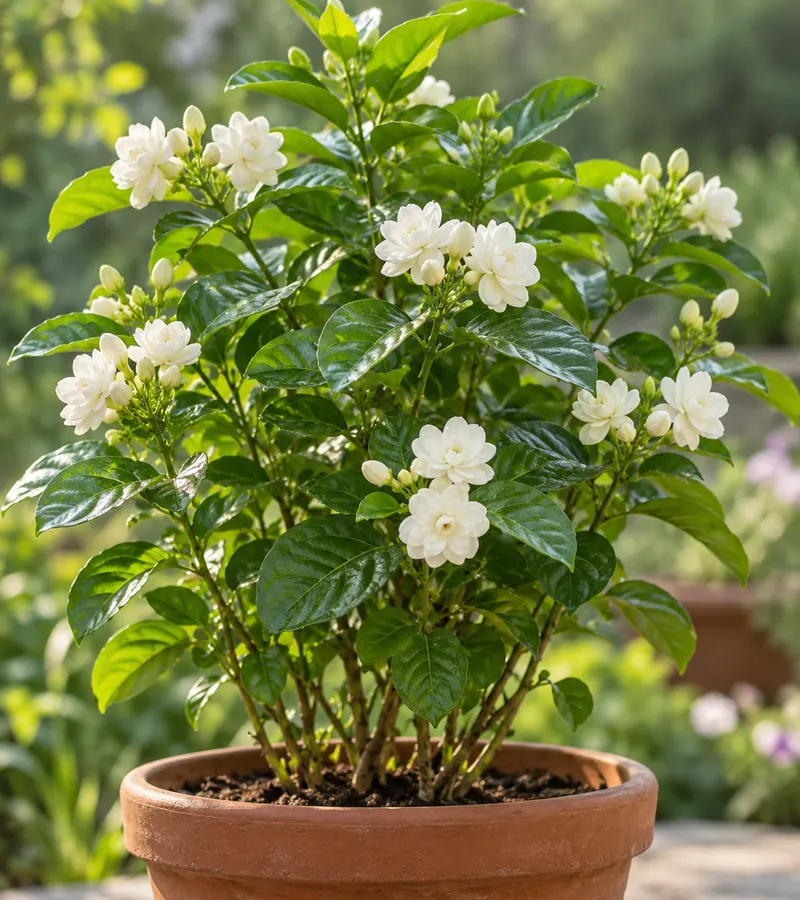
Small intensely fragrant white flowers, tied to scented tea and summer evenings.
Care and placement
Likes full sun to part shade (6–8 hours of sun for most flowers), well-drained soil and even watering when the top 2–3 cm is dry; flowers on healthy new growth.
Draft mature dimensions
Maximum height (cm): 150 cm · Maximum spread (cm): 100 cm
Things to consider
ASPCA lists Jasminum species as non-toxic to dogs, cats and horses. Still discourage pets from chewing large amounts of leaves or flowers.
How to grow and care for it
Planting and pot
Plant in a large, well-draining pot with a loose mix and give a stake or shape it as a bush; or plant in a sunny bed. Repot when roots fill the pot.
Light
Full sun to part shade; more sun means more buds. Indoors, a very bright window. In extreme heat, give some shade from prolonged harsh sun.
Watering
Water regularly in the growing season when the top 2–3 cm is dry; reduce in cool months but do not leave the root ball dry for long. Overwatering rots stems and roots.
Feeding
Balanced water-soluble fertilizer every 4–6 weeks in spring and summer (or low-nitrogen, or a high-phosphorus feed monthly to support blooms); less in autumn and winter.
Pruning
Prune in early spring or after the main flush to keep shape, remove dead stems and push new growth (about a third can be cut). Deadhead spent blooms for more flowers.
Propagation
Softwood cuttings in spring or semi-hardwood in summer, 10–15 cm long with lower leaves removed and the end dipped in rooting hormone; roots form in 4–6 weeks. Layering also works.
Pests and common problems
Abrupt changes in light, temperature or watering drop unopened buds; overwatering rots roots and stems. Fertilizer cannot make up for weak light or damaged roots.
For more flowers
For abundant fragrant flowers: lots of sun, on-schedule feeding (low-nitrogen or phosphorus-rich), regular pruning and deadheading, and steady watering without abrupt changes. Flowers form on healthy new growth.