
Bigleaf hydrangea
Hydrangea macrophylla
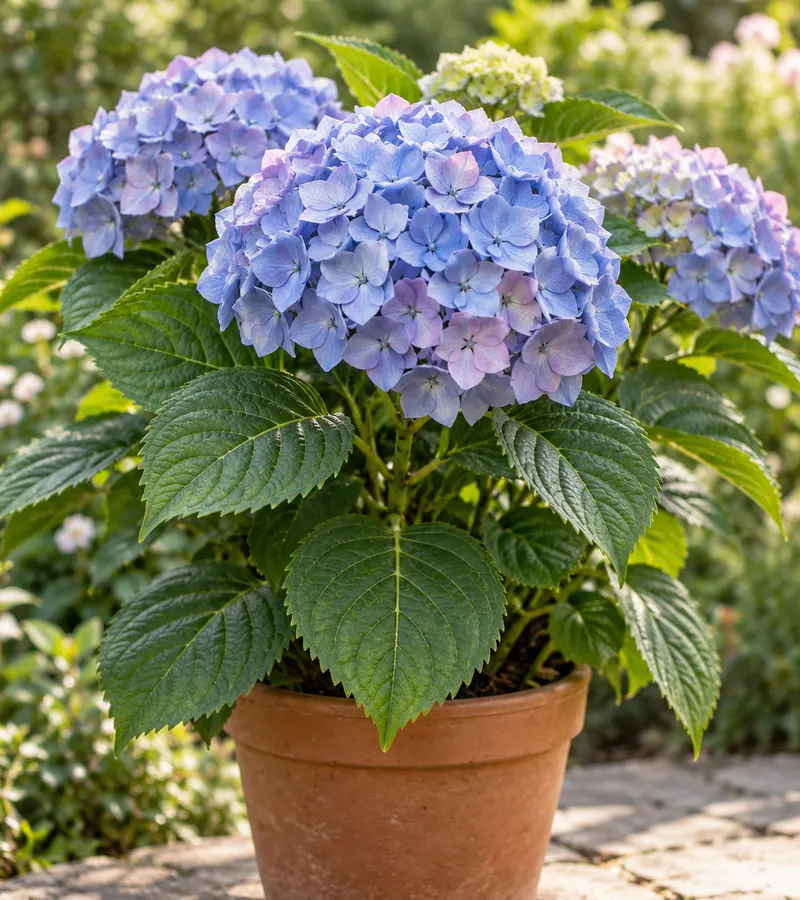
Big flower heads shift colour with soil acidity, preferring cool places like Đà Lạt.
Care and placement
Prefers part shade (morning sun, afternoon shade), moist humus-rich well-drained soil and cool climates (e.g. Đà Lạt); flower colour depends on soil pH; avoid hot, dry sites.
Draft mature dimensions
Maximum height (cm): 120 cm · Maximum spread (cm): 120 cm
Things to consider
Hydrangea contains cyanogenic glycosides: ASPCA lists it as toxic to dogs, cats and horses (vomiting, diarrhea, depression; true cyanide poisoning is rare); NC State rates it low severity. Keep pets and children from chewing leaves or flowers.
How to grow and care for it
Planting and pot
Plant where it gets morning sun, afternoon shade and shelter from wind, in humus-rich, moisture-retentive but draining soil; mulch away from the stem. Use a large pot with drainage holes if potted.
Light
Needs afternoon shade in hot regions; tolerates more sun where it is cooler. Hot, dry, exposed sites wilt and scorch it.
Watering
Keep soil consistently moist and never dry (about 2.5 cm of water per week per 90 cm of plant height, per one source); mulch well. Avoid waterlogging.
Feeding
Not a heavy feeder: one slow-release dose in early spring is often enough; avoid late-season feeding. For blue flowers avoid high-phosphorus feed (it blocks aluminium uptake) and aim for pH about 5.0–5.5; for pink aim for pH about 6.0–6.5 (lime raises pH, aluminium sulfate lowers it).
Pruning
Depends on cultivar: traditional types flower on old wood so only remove dead stems after flowering; reblooming types tolerate light spring pruning. If too large, prune by late summer (temperate-zone timing from the source).
Propagation
Softwood cuttings in spring or early summer: take 10–15 cm pieces with at least two nodes, strip lower leaves, dip in rooting hormone and set in moist, draining mix out of direct sun.
Pests and common problems
Wilting and leaf-edge scorch in hot dry weather or drought; flower colour shifts with soil pH. Powdery mildew, leaf spot, aphids and spider mites may occur; keep airflow and water at the base.
For more flowers
For plentiful flowers in the desired colour: afternoon shade, moist soil, adjust pH to the colour you want, light spring feeding and avoid cutting bud-bearing old wood. In hot regions large blooms are harder to achieve.