
Wax plant
Hoya carnosa
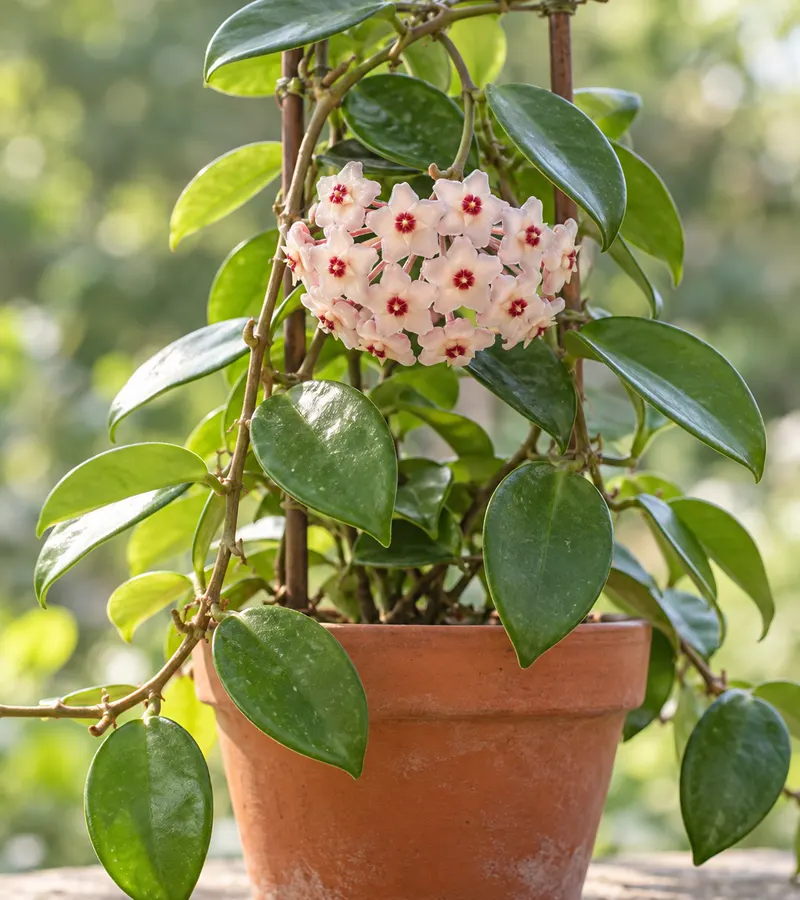
Thick glossy leaves and lightly scented star-shaped waxy flower clusters.
Care and placement
Likes bright indirect light (tolerates gentle morning sun); water like a succulent, letting the mix dry between waterings; prefers being slightly pot-bound.
Draft mature dimensions
Maximum height (cm): 200 cm · Maximum spread (cm): 80 cm
Things to consider
ASPCA lists Hoya carnosa as non-toxic to dogs, cats and horses. The white sap may mildly irritate sensitive skin.
How to grow and care for it
Planting and pot
Use a chunky, fast-draining mix (bark, perlite, peat) in a small pot with drainage holes; it blooms best slightly pot-bound. Give a small trellis or hoop to climb.
Light
Bright indirect light to bloom; low light survives but grows slowly and never flowers. Gentle morning sun is fine.
Watering
Let the mix dry, then soak: roughly every 10–14 days in summer and every 3–4 weeks in winter or low light. Overwatering gives soft, wrinkled leaves and root rot.
Feeding
Balanced fertilizer at half strength monthly in spring and summer; a higher-phosphorus bloom booster in early spring can help mature plants flower; skip October to February.
Pruning
Do not cut the spent flower stalk (peduncle): Hoya reblooms from the same spur year after year. Trim only damaged or overlong vines away from the spurs.
Propagation
Stem cuttings with at least two leaves and a node: let the cut callus for 24 hours, then root in water or moist sphagnum; rooting is rather slow.
Pests and common problems
Mealybugs (white cottony clusters in leaf joints), scale (hard brown bumps), fungus gnats, aphids and spider mites. Soft, wrinkled leaves with wet soil point to root rot.
For more flowers
For more flower clusters: plenty of bright indirect light, keep roots snug, water dry-then-soak, feed phosphorus in early spring and keep old spurs; do not move or turn the plant once buds form, since even small light changes can drop them.